Tasting a Malbec
Tasting
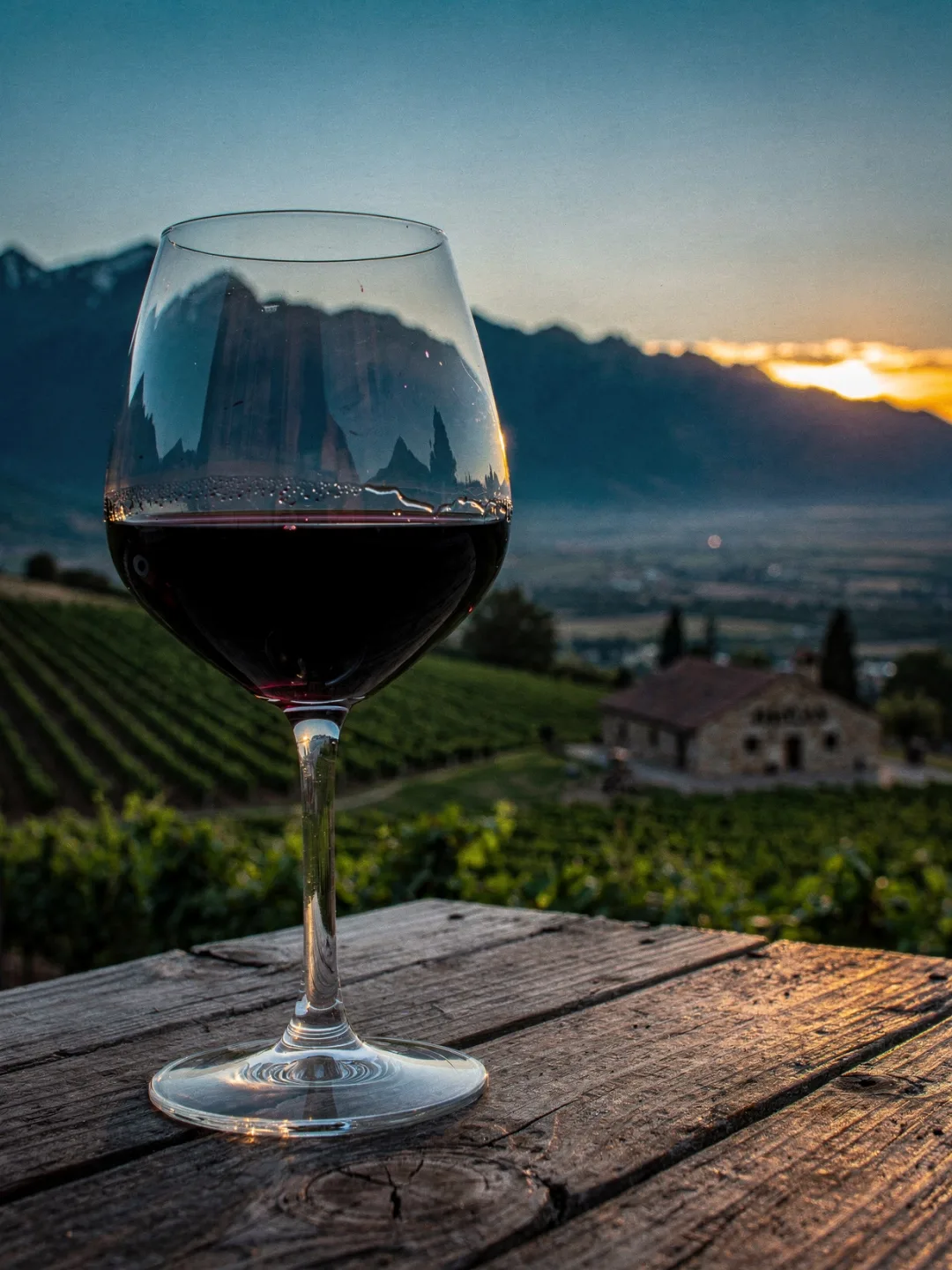
Hold a glass of Malbec from Mendoza up to the light, and you'll hardly see through it. The color ranges from deep purple to almost black, with a rim that barely turns brick-red even in older vintages. This isn't a cellar trick. It's this variety's skin, thick enough to deliver plenty of pigment.
Smell it twice: once with the glass still, once after swirling. In the still glass, fruit usually comes first — plum and dark cherry, along with a hint of violet that appears this clearly in hardly any other red wine variety. After swirling, heavier notes follow — cocoa and vanilla, if oak was involved. Sometimes something smoky joins in too, which many associate with grilled meat, though it has nothing to do with it.
In the mouth, pay attention to two things separately. You feel the acidity along the sides of the tongue — noticeably fresher in wines from high altitude like Gualtallary than in a Malbec from the warm plain. The tannin, by contrast, feels surprisingly round, almost velvety — softer than in Cabernet, and that's exactly what makes Malbec, for many, a gateway into bold red wines.
A comparison helps place the variety. Set a Bonarda next to the Malbec: paler in color, lighter in tannin, with a scent that leans more toward red berries than dark ones. Anyone who tastes both in succession immediately understands why Malbec became the leading variety while Bonarda remained a reliable number two.
Finally, count. How long does the flavor linger after you swallow? With a well-made Malbec from the Valle de Uco, twenty seconds is no rarity, with fruit that fades only slowly. This length can't be manufactured in the cellar. It comes from the altitude, from the cold of the nights, and from a variety that found its true home in this desert.