The short answer
The right serving temperature depends on the wine's style and on your own taste. Served too warm, the alcohol pushes to the front. Too cold, and the aroma stays hidden, while the mouthfeel changes too. "Room temperature" is useless as a rule for exactly this reason.
Start With a Small Comparison
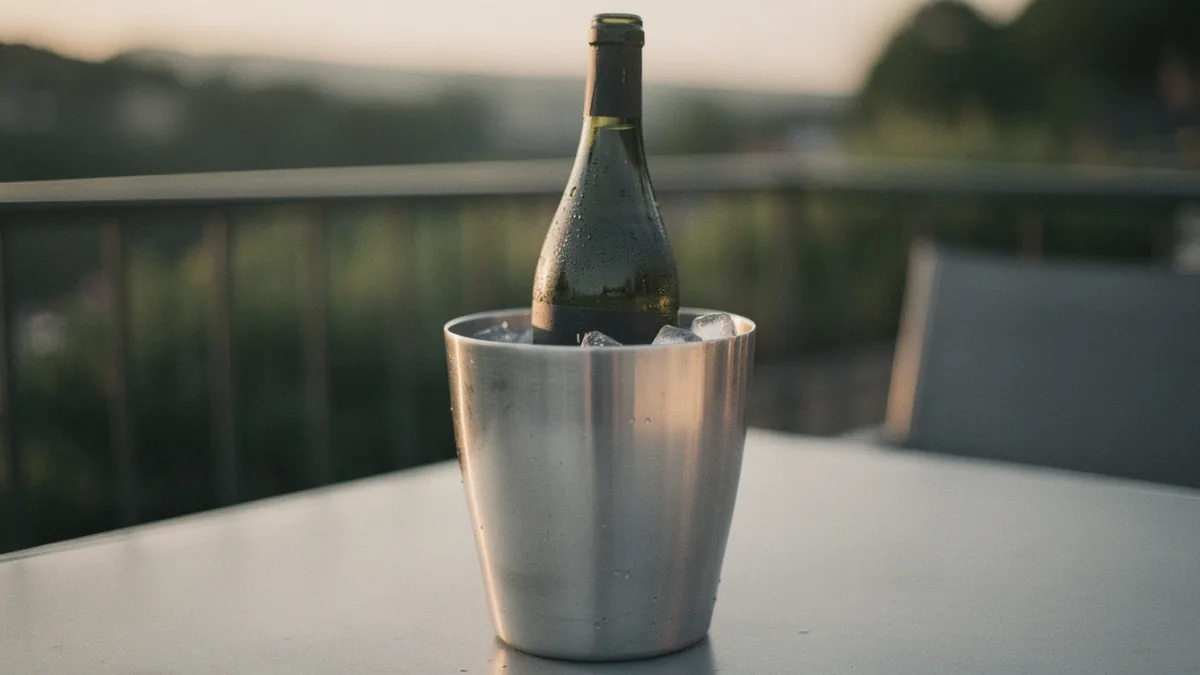
Try the same wine first chilled, then a bit warmer. Notice whether the aroma comes through more clearly. Does the alcohol stand out more? Does the mouthfeel become more pleasant? With red wine, a light chill is often worth trying. Served very cold, the tannins tend to feel firmer and sharper.
You don't need to hit one perfect number. The temperature note on the back label is a good starting point, not an order. If a wine feels too warm to you, chill the bottle and pour smaller amounts afterward.
Two glasses are enough for a comparison. Pour one straight after chilling from the same bottle. Let the second sit in the room for a while. Then taste them side by side. Most people notice the difference right away, even though it's the same wine in both glasses.
A wine in the glass never stays at its starting temperature anyway. It absorbs the warmth of the room, and the hand around the glass helps that along considerably. So it's better to pour a bit too cool. The temperature rises on its own; you have to actively help it drop.
Don't Confuse Serving With Storing
A cool storage spot protects your supply. Just before the meal, the bottle can be brought deliberately to the temperature you want. For a typical Pinot Noir, 16 to 18°C (61–64°F) is a good starting point. In many living rooms today, it's noticeably warmer than that.
During a long meal, don't set white wine or sparkling wine next to a hot dish or in the sun. It's better to top up the glasses in small amounts. That way, not the whole pour sits warm for ages. With an unfamiliar wine, you can ask the producer for a serving recommendation. Advice on that specific bottle helps more than any general chart.
Storing means: keeping things evenly cool over weeks and months. Serving means: adjusting the temperature right before the meal to what you want for that evening. If you treat both the same, you'll pull the red wine straight out of a warm room. Then it comes across as flabby and alcoholic. The fridge is a perfectly legitimate tool for that final stretch.
The room itself also changes over the course of an evening. The kitchen, candles, and guests all add warmth. What suited the first glass might be too warm by the third. If you notice the wine losing its edge, put the bottle back in the cool spot for a bit and pour smaller amounts.
Too Warm, Too Cold: The Usual Mistakes
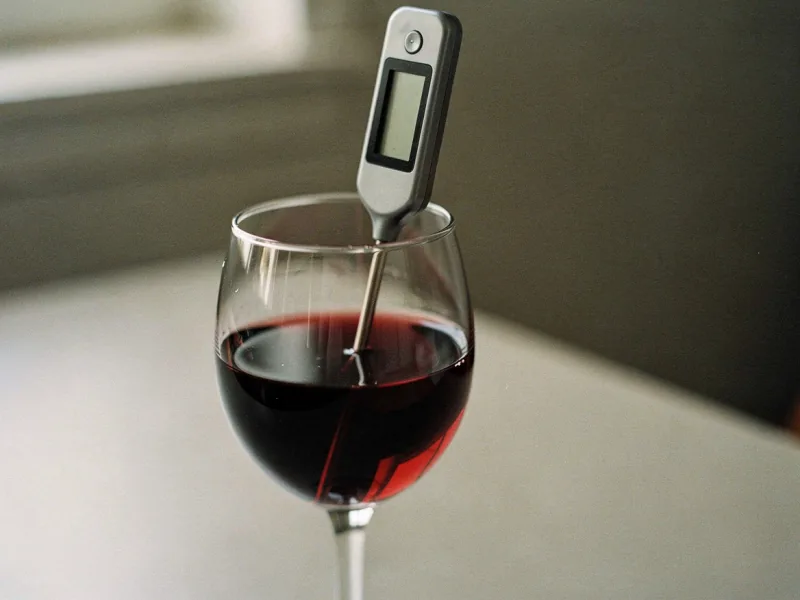
The most stubborn misconception is room temperature. The formula comes from homes that were heated far cooler than today's. Taken literally, it usually means serving red wine too warm. That's exactly when the alcohol pushes forward — something nobody actually wants to taste.
The opposite mistake is the ice-cold white wine. Very cold, it's refreshing at first but gives off hardly any aroma. Subtle differences between two bottles disappear entirely. If you want to know what a white wine can really do, let it warm up in the glass for a few minutes and try again.
What to Go By Day to Day
The note on the back label is the simplest starting point, if there is one. It's a suggestion, not an exam question. Drink one glass exactly as recommended. Serve the next one slightly differently. After a few bottles, you'll know whether you prefer it cooler or warmer than the label suggests.
Jot down what you liked, even if it's just a quick note on your phone. With red wine, the light-chilling experiment is especially worth trying, since many people never bother. If the tannins feel firm and sharp, it was too cold — just let the glass sit for a few minutes.