Lamb & Pears
Wine & Food
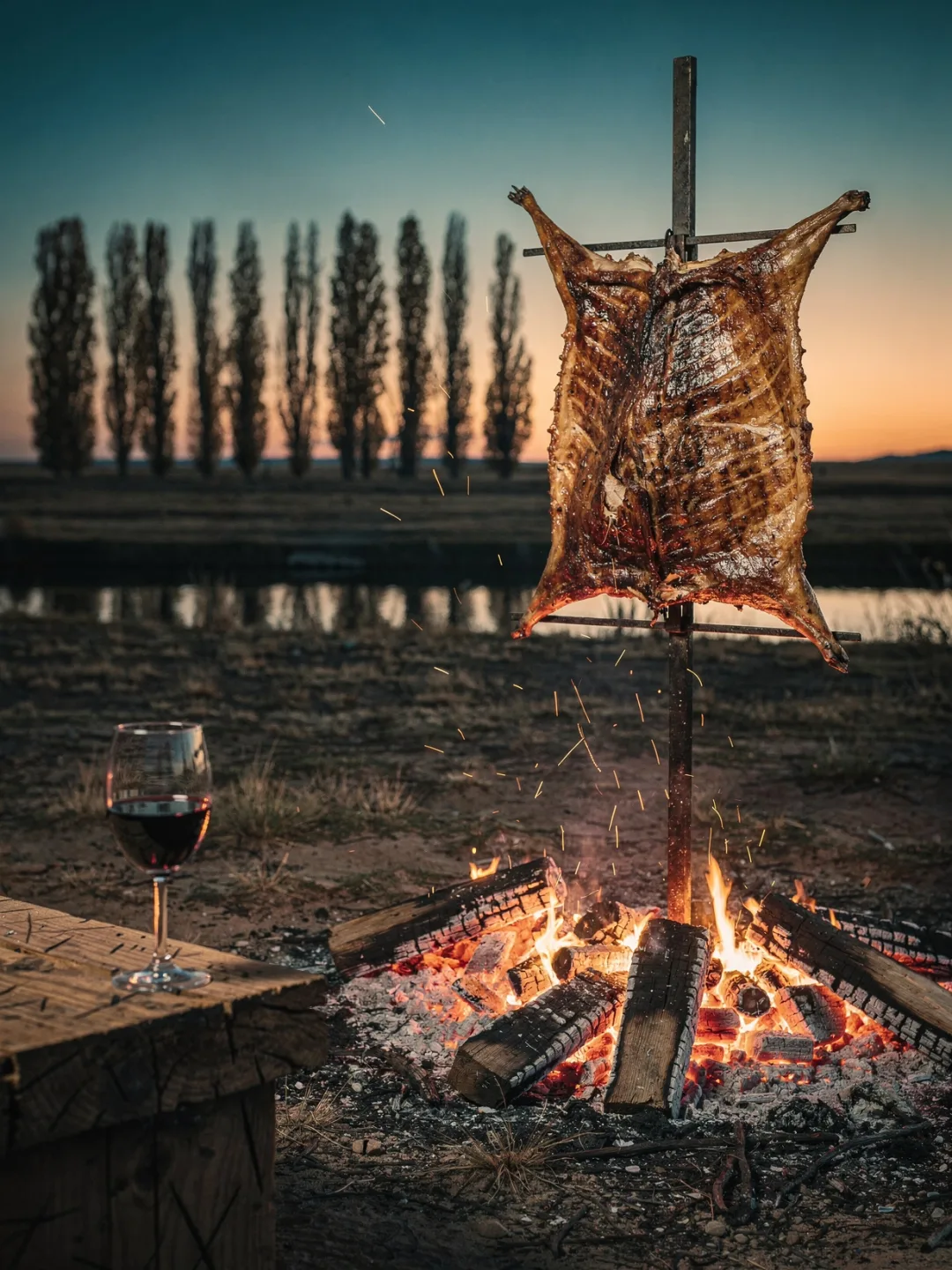
Cordero patagónico is more than a dish — it's a protected name. Since 2014, only lamb born south of the Río Colorado and raised on mother's milk and open pasture may carry the name. Practically the entire wine region of Neuquén and Río Negro falls within this zone. Cooked on a spit over open embers, al asador, the meat stays dark on the outside and tender within, with a slightly wild, herbal note.
Patagonian Malbec pairs with this better than any import could. Its lively acidity cuts through the fat that renders out of the lamb during slow cooking, while its tannin binds to the protein instead of turning bitter on the palate. A softer, sweeter red would taste flat next to this meat—what's needed here is edge.
The valley's second great harvest isn't grapes, but pears and apples. The Alto Valle supplies the bulk of Argentina's fruit crop, and this closeness to the orchard shapes the local kitchen too. A roasted pear with a touch of cinnamon, served alongside a spoonful of rosa mosqueta jam made from wild rosehips, is a classic Patagonian dessert—simple, since nobody here ever had to travel far for sugar.
This dessert calls for no dry wine, but a Cosecha Tardía. This late-harvest style, made from overripe Sémillon or Sauvignon Blanc grapes, shows a golden color and pronounced sweetness. The rule behind it is simple, yet constantly broken: the wine must be sweeter than whatever sits beside it on the plate, or it will suddenly taste sour and thin next to the pear.
Not every pairing here is obvious. The robust Cabernet Sauvignon that some bodegas have kept alive since the Bordeaux imports of 1909 suits a root-vegetable stew far better than delicate lamb—its tannin is too coarse for the fine grain of a young cordero. Get this wrong once, and you'll immediately understand why in Patagonia people so often ask which meat is being served before they open the bottle.