Cherry against Cherry
Tasting
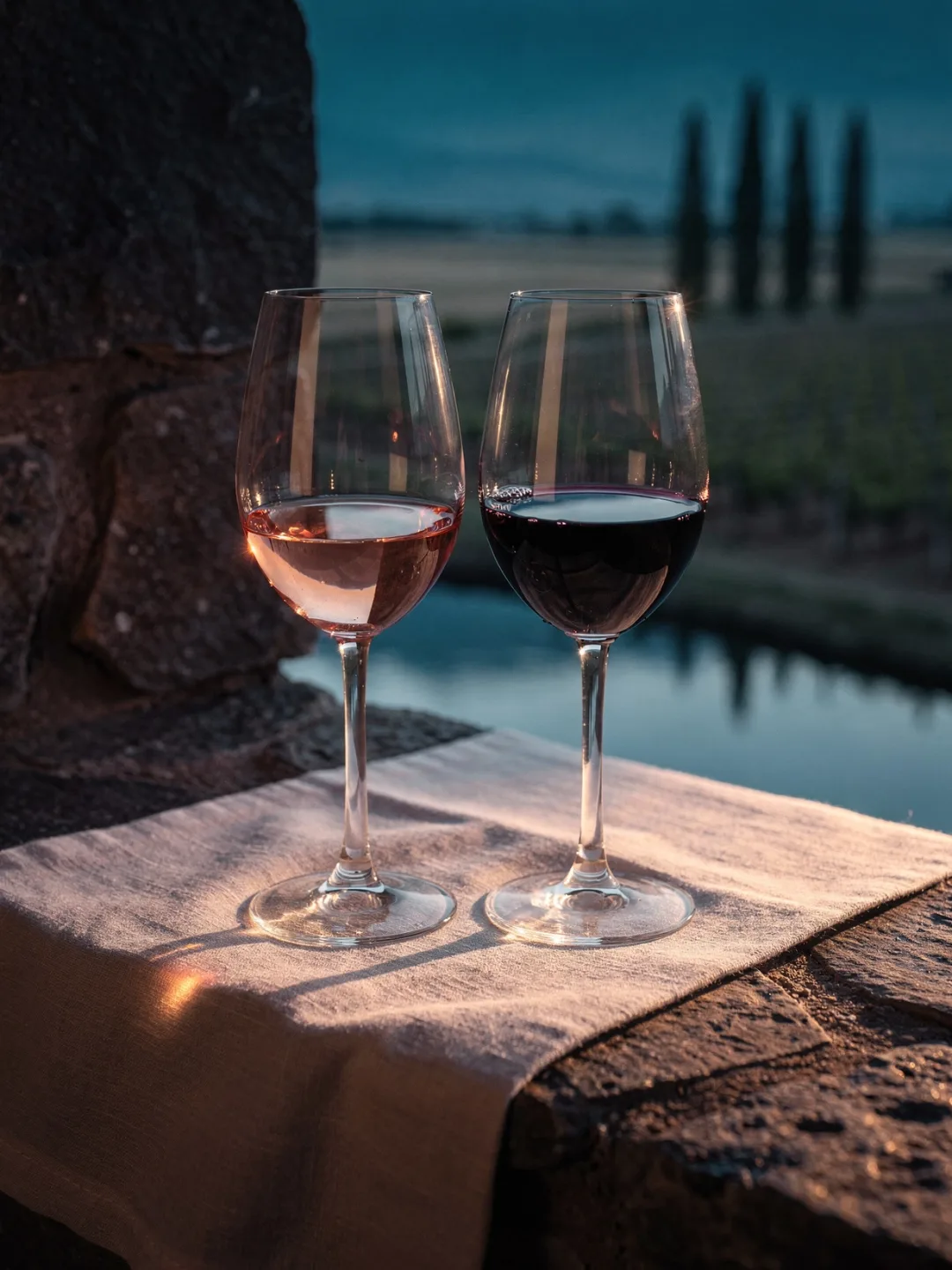
Two glasses side by side reveal more than any description could. A Pinot Noir from the Alto Valle, a Malbec from Neuquén, both tilted slightly against a white sheet of paper. The Pinot Noir shows a pale, almost translucent red at the rim, while the Malbec stays dark violet even at the edge. This color difference alone tells you how thick the two grapes' skins were before pressing.
When nosing, do it twice: once calmly over a still glass, once after a vigorous swirl. In the still glass, the Pinot Noir shows bright cherry first, then something earthy, almost like damp leaves — typical of the cool nights in which it ripens. The Malbec, held still, smells more of violet and dark plum. Only after swirling does the spicy, almost peppery note emerge, a gift from the Alto Valle's dryness.
On the palate, acidity and tannin sit in different places, and you can feel them separately. Acidity announces itself along the sides of the tongue, gets the saliva flowing, and keeps the wine lively despite its cool origin. Tannin, by contrast, feels like a rough coating on the gums. In the Pinot Noir, this coating is fine as silk; in the Malbec, it's noticeably grippier, without turning harsh.
Finally, count the seconds the flavor lingers after swallowing. Two seconds is short; fifteen is remarkable. It's precisely that large day-night temperature swing in the vineyard — those twenty degrees that preserve the grapes' acidity — that gives both varieties a finish that lasts longer than their moderate alcohol content would suggest.