Cool, Lean, Controlled
Winemaking
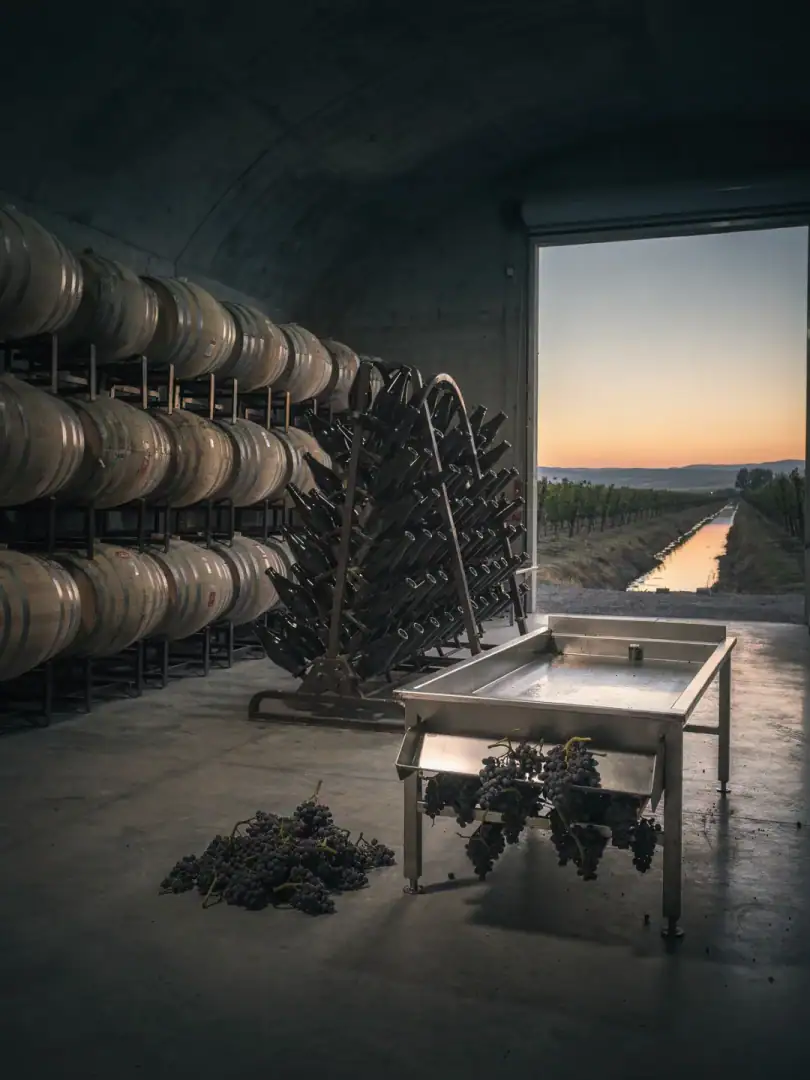
In the cellar, the work often begins even before harvest — namely, with the decision of how much water a vine is even given. Since it rarely rains here, every drop comes from the canal, and cutting back irrigation shortly before picking concentrates the aromas in the berry instead of diluting them. This control over irrigation is the real difference from winemaking in wetter countries. Here, it's the canals of Neuquén and Río Negro that decide, not the chance of rainfall.
With Pinot Noir, the cellar stays hands-off. Many bodegas ferment part of the grapes as whole clusters rather than destemmed, which makes the wine lighter and more floral. They press early, before too much tannin can leach from the skins. New oak is used sparingly, often for only a fifth of the barrels, so that vanilla and toast don't mask the delicate cherry fruit.
Malbec can handle more intervention, though still less than in warmer Mendoza. Maceration time — the period when juice and skins ferment together — often runs to two weeks instead of four, since the grapes naturally bring enough color and structure already. Extracted any longer, the already-taut Patagonian Malbec would turn hard and dry rather than juicy.
One bodega in Mainqué shows just how far restraint can go. Noemía farms biodynamically, uses no purchased yeasts, and lets fermentation begin with the wild yeasts that live naturally on the grape. It's riskier, but in the winemaker's view, more honest to what actually grows on the site.
From that same coolness comes something else entirely: sparkling wine made by traditional bottle fermentation. It's usually a blend of Chardonnay with some Pinot Noir. The second fermentation happens in the very bottle it will later be poured from, and it requires exactly the high acidity that the Alto Valle's climate gives the grapes. Without that acidity, sparkling wine from Patagonia would be nothing more than a copy of the great originals.