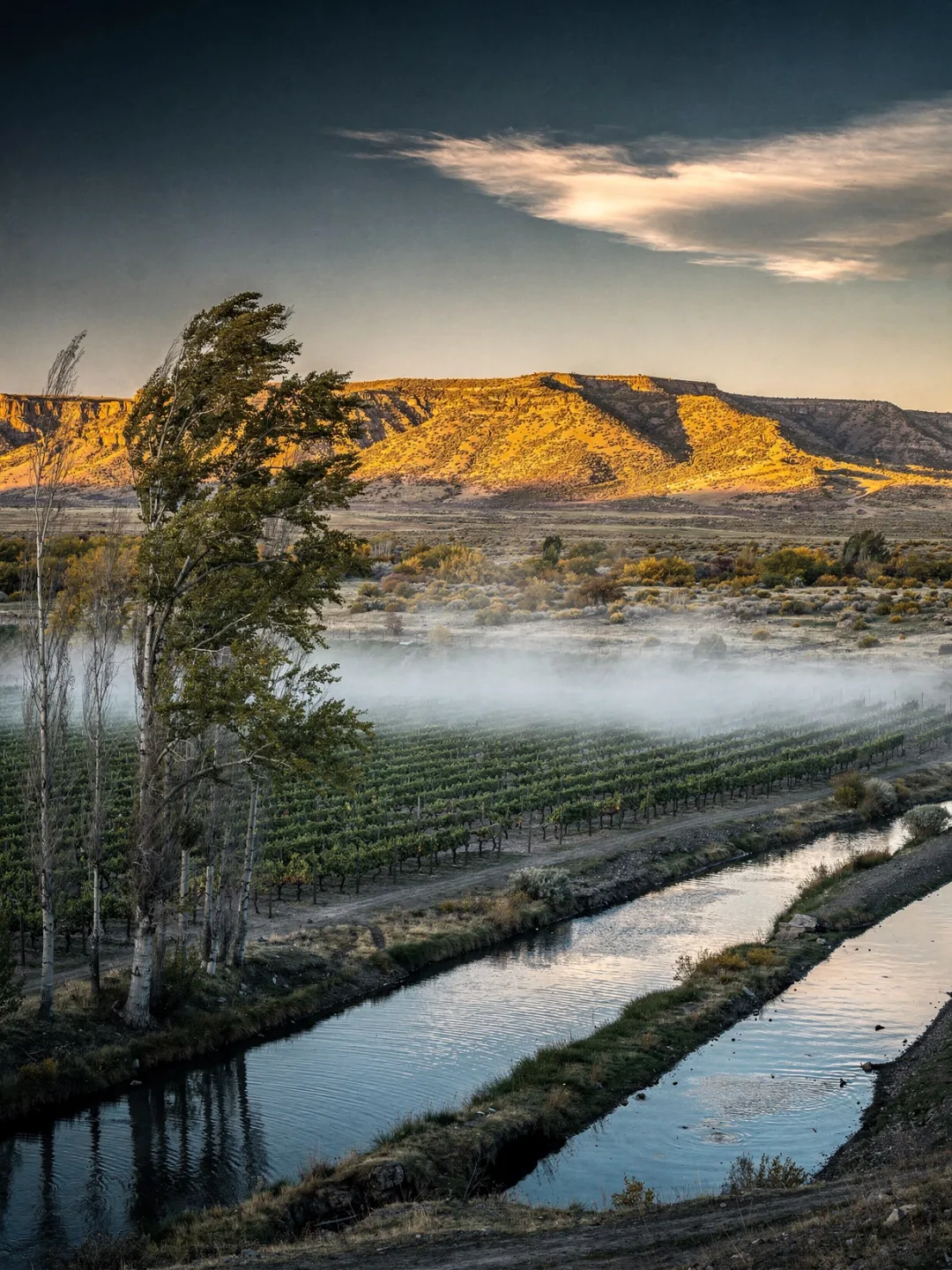
Wind, Desert, Diurnal Range
Climate
Thirty-nine degrees south latitude, two hundred to four hundred meters above sea level, under two hundred millimeters of rain a year: on paper, the Alto Valle is a desert, not a wine region. And yet wine comes from it. Responsible are a river, an early-twentieth-century canal network, and a temperature swing that would make life difficult for vines almost anywhere else.
In summer, the thermometer climbs above thirty degrees Celsius during the day and often falls below ten at night — a difference of up to twenty degrees between noon and midnight. The grape ripens by day and recovers by night. It's precisely this swing that locks in the acidity that makes wines both ripe and fresh at once. Without these cold nights, there would be no Pinot Noir here worthy of the name.
Then there's the wind, blowing almost constantly from the west and southwest across Neuquén and Río Negro. On many days it blows over twenty kilometers per hour, with gusts well above eighty. It dries the grapes after rain and keeps fungal diseases at bay, which means comparatively little spraying is needed here. Its price is mechanical stress: young shoots snap, leaves tear. That's why long rows of poplars, so-called alamedas, still stand along many chacras, planted as windbreaks. Their numbers have been shrinking in the Alto Valle for decades.
Rain barely falls. But the sun shines more than three hundred days a year, and in midsummer it stays light well into the evening. Irrigation comes exclusively via canals that distribute river water from the Río Negro and Río Neuquén to the plots. Without access to a canal here, you simply can't plant, no matter how good the soil might otherwise be. As a result, harvest begins later than in the warmer north of Argentina, often not until March or even April.