Blossom & Bitterness
Tasting
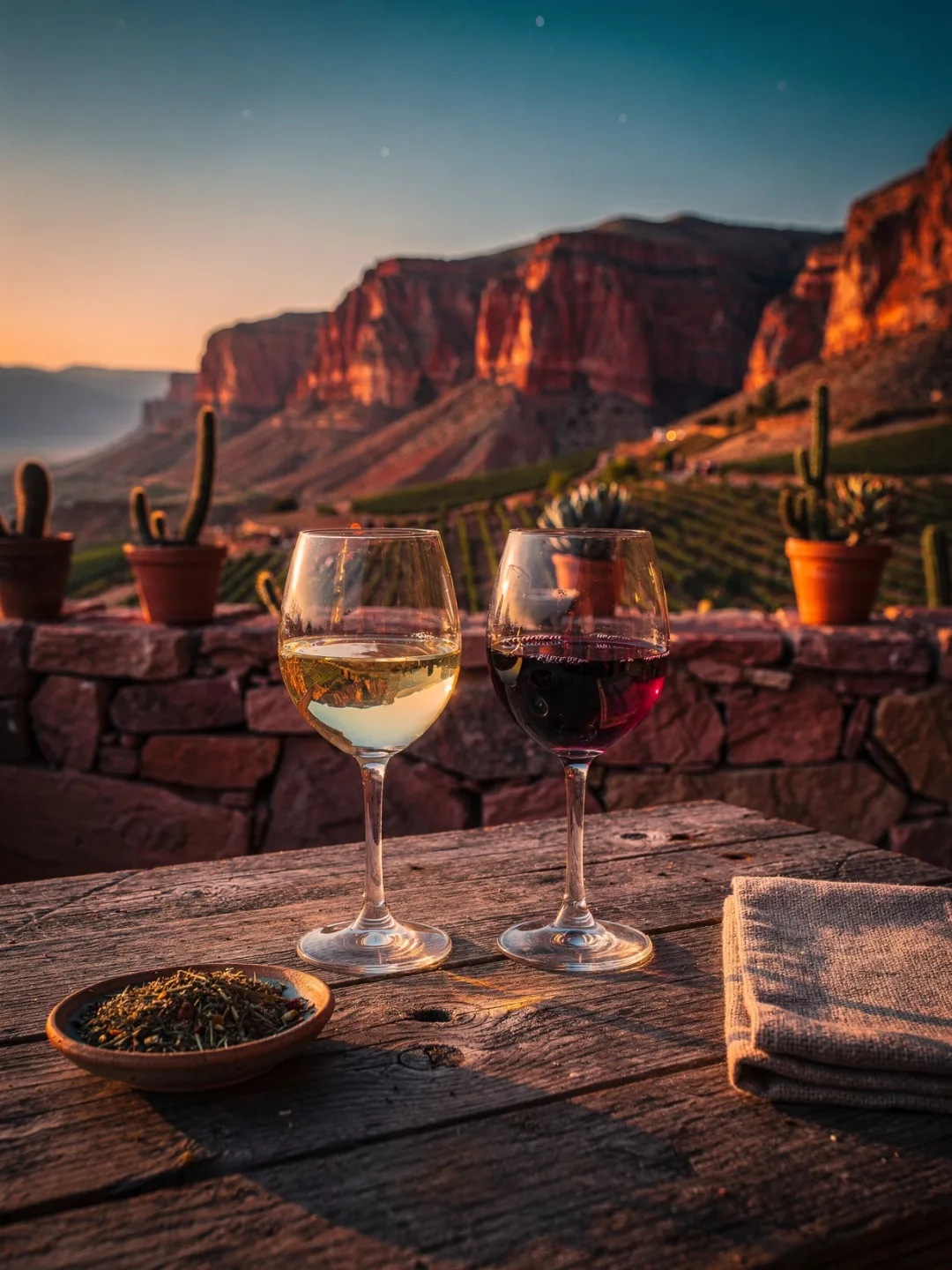
Hold a glass of Torrontés up to the light, and the color reveals almost nothing — pale yellow, sometimes with a hint of green. More unassuming than almost any other aromatic white wine. The nose immediately makes up for it: rose blossom, orange blossom, plus citrus peel, an aromatic profile that recalls Muscat more than a typical Argentine white.
This is exactly where newcomers get tripped up. Smell alone leads you to expect a sweet wine. In the mouth, the opposite happens: Torrontés from Cafayate is almost always dry, with pronounced acidity and a slightly bitter finish reminiscent of almond skin. This bitterness isn't a flaw. It comes from the thick skin and is part of the variety's character.
With Malbec de altura, the altitude shows itself right away in the color: deep, nearly opaque violet, darker than most Malbecs from lower-lying Mendoza. On the nose, black fruit comes first, blackberry and plum. A note of violet follows, one that's actually rare to find in sun-ripened grapes.
In the mouth, pay attention to two separate things. The tannin sits firm yet ripe on the palate — a result of the long hours of sunshine that ripen the seeds just as thoroughly as the flesh. The acidity, meanwhile, stays lively despite the warmth, preserved throughout ripening by the cold nights.
Finally, count how long the flavor lingers. With a simple Torrontés, it's a few seconds, defined by the bitterness in the finish. With a serious Malbec de altura from a site like Altura Máxima, fruit and minerality often carry on for half a minute or longer. That very length is what separates a true high-altitude wine from one that merely wants to taste like altitude.