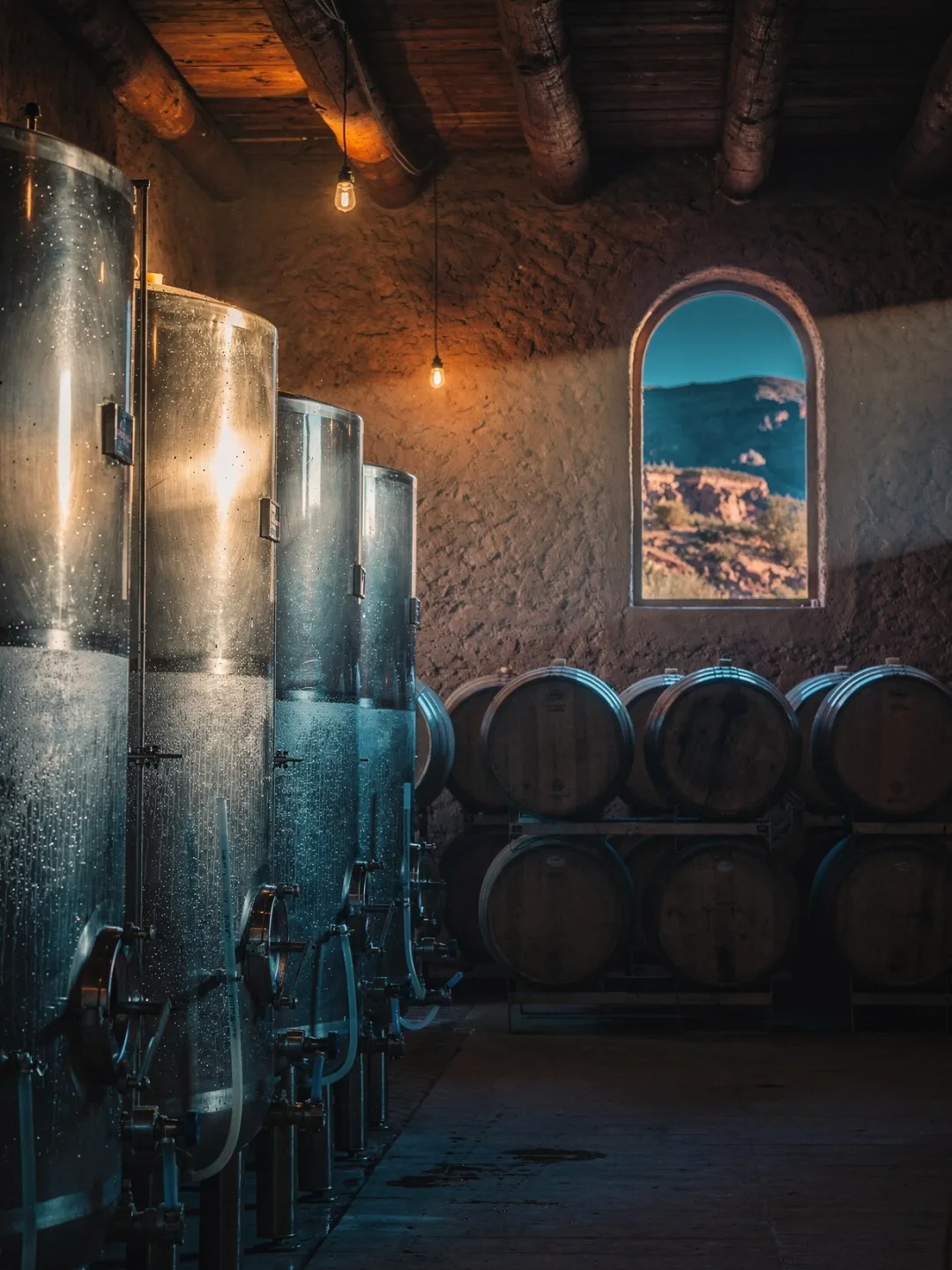
Stainless Steel & Barrique
Production
Whoever vinifies Torrontés in Cafayate is fighting mainly against the grape itself. The thick skin, formed to withstand the intense altitude sun, is packed with bitter compounds. Press too hard, and they end up in the wine. Most bodegas therefore harvest early in the morning, chill the grapes immediately, and press as gently as possible.
A cold fermentation follows, often at just twelve to fifteen degrees Celsius, almost always in stainless steel rather than oak. A barrique would simply overwhelm the variety's floral aromas. After fermentation, the wine ages for a few months, sometimes just weeks, before bottling — Torrontés is meant to be drunk young, not cellared.
Malbec de altura demands almost the opposite. The same intense sun that gives Torrontés its bitter compounds gives Malbec thick skins full of color and tannin. This time, the bodega wants exactly that in the glass. The must therefore spends longer on the skins, often two to three weeks, with careful but repeated pump-overs to extract color without letting the young tannins make the wine harsh.
In terms of aging, the region has had a famous consultant since the 1980s: the French oenologist Michel Rolland. Starting in 1988, he worked alongside Arnaldo Etchart to reshape the red wines at Bodega Etchart. Later, with San Pedro de Yacochuya, he founded his own bodega in Cafayate. His style favored ripe tannins and often new French barrique.
Some bodegas today blend carefully: new French oak for their flagship wines, used barrels or pure stainless steel for simpler lines. Twelve to eighteen months in barrel is common for ambitious Malbecs, followed by further aging in bottle.