Huarpes & Pedernal
Region & History
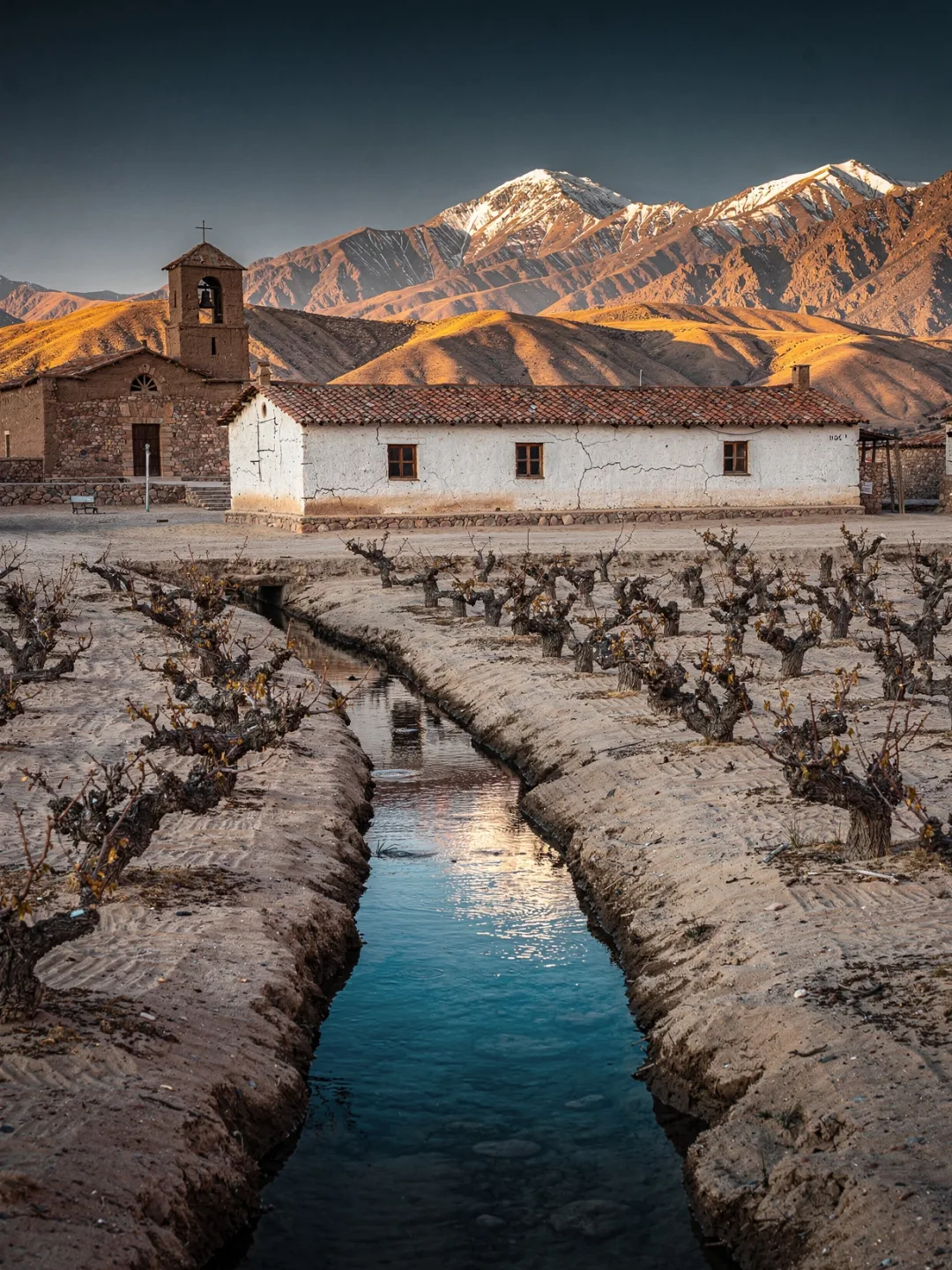
The Huarpe people called their land Cuyum Mapu, Land of Sand, long before a single vine stood here. They dug canals. These canals carried meltwater from the Andes down into the desert — acequias that still supply every field in the province of San Juan today. Without this water, there would be nothing here but stone and thistle. That was true for corn and squash, and later just as true for the vine.
The first vines arrived from Chile across the Andes in the 1550s, brought by settlers who would soon found the city itself. In 1562, Captain Juan Jufré proclaimed San Juan de la Frontera, and with the first houses came the first vineyards. Wine served the Mass as much as trade, since San Juan sat right along the route between Santiago de Chile and Buenos Aires.
The most important Sanjuanino of the nineteenth century was Domingo Faustino Sarmiento, born in 1811 in this very city and later President of Argentina. He had European grape varieties imported, including Cabernet Sauvignon and Merlot. He pushed the expansion of irrigation with the same zeal he applied to building schools. For him, wine was a mark of progress.
On January 15, 1944, an earthquake measuring 7.4 struck the province, killing roughly ten thousand people; nearly every adobe house collapsed. The city had to be completely rebuilt. Yet the wine industry kept growing: within that same decade, the volume of wine produced doubled compared to 1940. From then on, San Juan focused on bulk production — cask wines, grape must, and raisins for the whole country.
This focus held for nearly fifty years. Only in the 1990s did a small number of winegrowers begin moving higher into the foothills. There, the nights are cooler and the soil is leaner. In 2007, the national wine institute INV officially recognized the Valle de Pedernal as its own Indicación Geográfica. It's named after the pale flint gravel that breaks through the earth everywhere there. Since then, San Juan has become far more than just Argentina's second-largest wine province, producing around a fifth of the country's wine — it's also home to some of the country's most exciting new vineyard sites.