Syrah & Raisins
Grape Varieties
A single variety has given San Juan its current reputation, and only within the last three decades. Syrah arrived in the country back in the 1960s but long remained a sideline next to Malbec and Cabernet Sauvignon. Only after DNA analysis in 1999 revealed that the variety is a cross of Dureza and Mondeuse Blanche did winegrowers in San Juan begin taking it seriously. They discovered a climate that suited it better than almost anywhere else in Argentina.
Around 60,000 hectares of vines grow in the province, at an average elevation of 630 meters. A good fifth of all Argentine Syrah grows here. That makes San Juan the country's second-largest growing area for the variety after Mendoza, but the one with the strongest identity — nowhere else does a single grape variety define an entire province's image the way it does here. The grapes deliver deep color, plenty of black pepper on the nose, and soft tannins that feel approachable even young.
Alongside it stands Bonarda. This old, hardy variety has been grown in San Juan for generations, long before the current Syrah boom. It yields generously, brings mild acidity, and a note of ripe plum. For a long time it served mainly everyday wine. Only with more careful harvesting is it increasingly becoming a wine with ambitions of its own.
Among the white varieties, one name often causes confusion. Torrontés Sanjuanino is not the same as the aromatic Torrontés Riojano from Cafayate. The Sanjuanino version tastes noticeably more neutral, almost unremarkable, and usually ends up in blends or table wine rather than in its own bottle. Anyone looking for a floral Torrontés should therefore ask about origin, not just the name on the label.
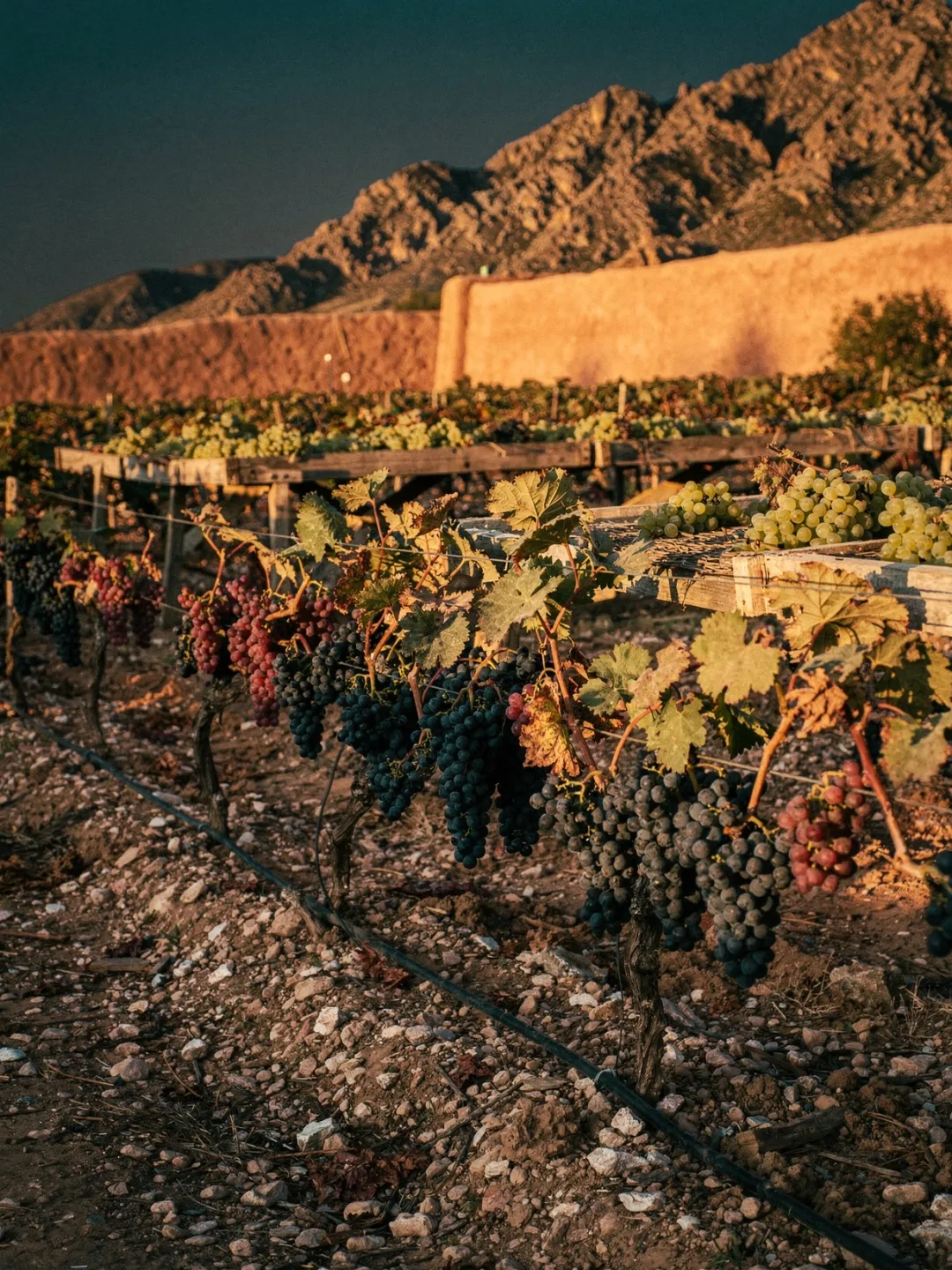
A large share of San Juan's vineyard area doesn't produce wine at all. Around ninety percent of Argentina's table grapes and ninety-five percent of the country's raisin production come from San Juan. The most important variety for this is Sultanina. Drive through the Valle de Tulum and you'll see just as many raisin dryers as wineries — two industries from the same plant family.