Night Harvest & Mosto
Winemaking
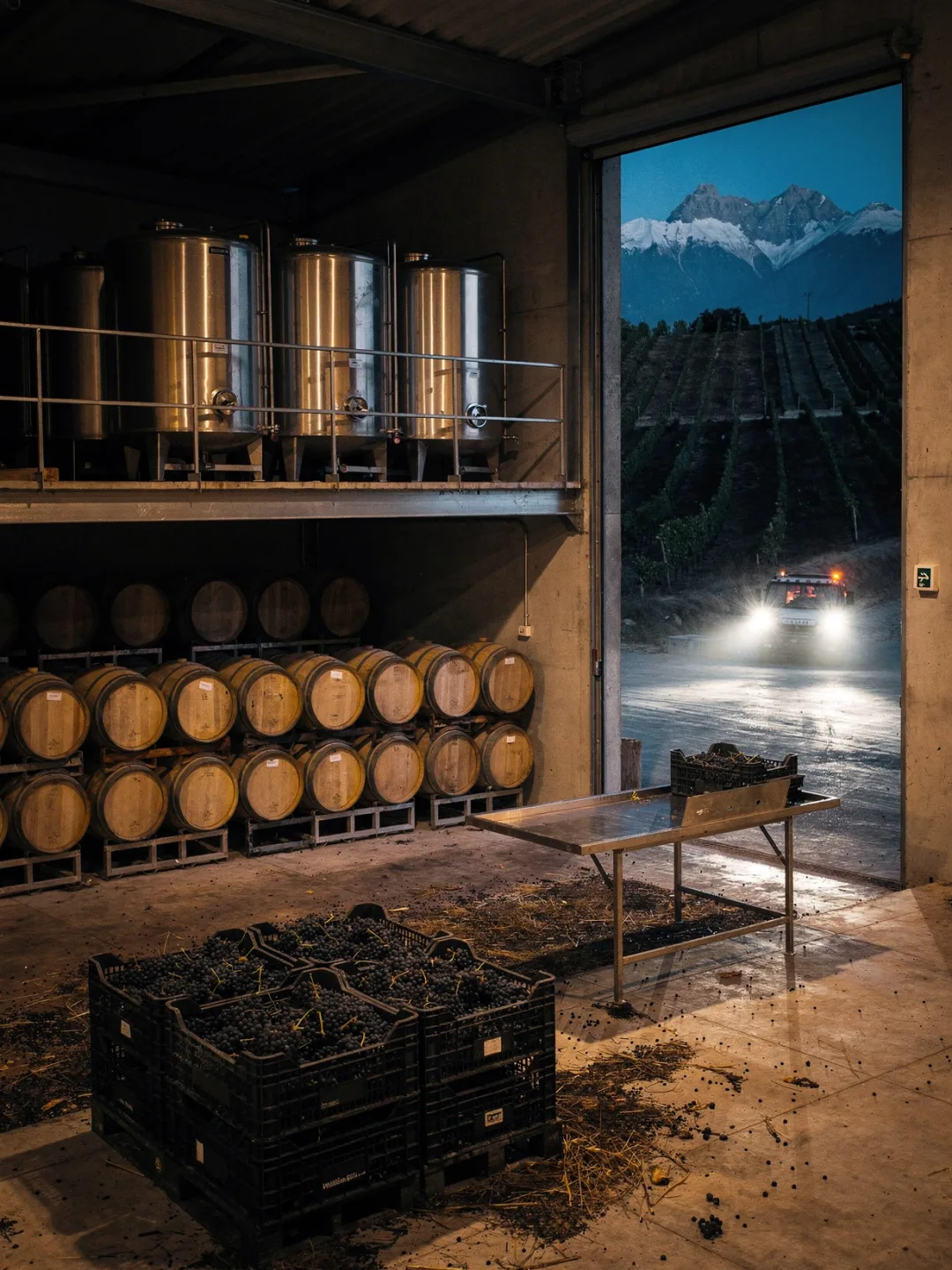
Anyone picking grapes in San Juan in February or March often does it in the dark. By afternoon, temperatures in the Valle de Tulum easily climb past thirty degrees Celsius. Whatever gets picked during the day arrives at the cellar already carrying that heat. That's why harvest often begins at dawn. For premium Syrah, headlamps and refrigerated trailers come into play, bringing the grapes to processing temperature within minutes.
Water management has changed too. For decades, vines in the Tulum valley were irrigated through open canals that flooded entire plots — high yield, little concentration. In Pedernal and Calingasta, newer estates instead use drip irrigation. Each plant gets exactly the amount of water it needs, no more, and the berries stay smaller and more concentrated.
In the cellar, Syrah must spends two to three weeks on the skins, long enough for color and tannin, but short enough not to bury the peppery aroma under too much tannic structure. Afterward the wine typically ages in French rather than American oak, often only partly new, so that vanilla and toast don't mask the pepper.
A second cellar operation runs in parallel and rarely gets mentioned: San Juan processes more grapes into mosto, concentrated grape juice for the food industry, than any other province in Argentina. Over ninety percent of these mosto grapes are Cereza, a hardy, unremarkable variety that never sees a wine glass. Just a few kilometers away in Pedernal, winegrowers meanwhile fight for every extra gram of extract in their Syrah.
In the end, what matters is the balance between heat and control. Fermented too warm, the wine loses its fruit to alcohol. Handled too cautiously, all that Sanjuanino sunshine turns into nothing more than a flat, sweet mass. The best estates in the province have found exactly this balance over the past twenty years.