Tasting a Syrah
Tasting
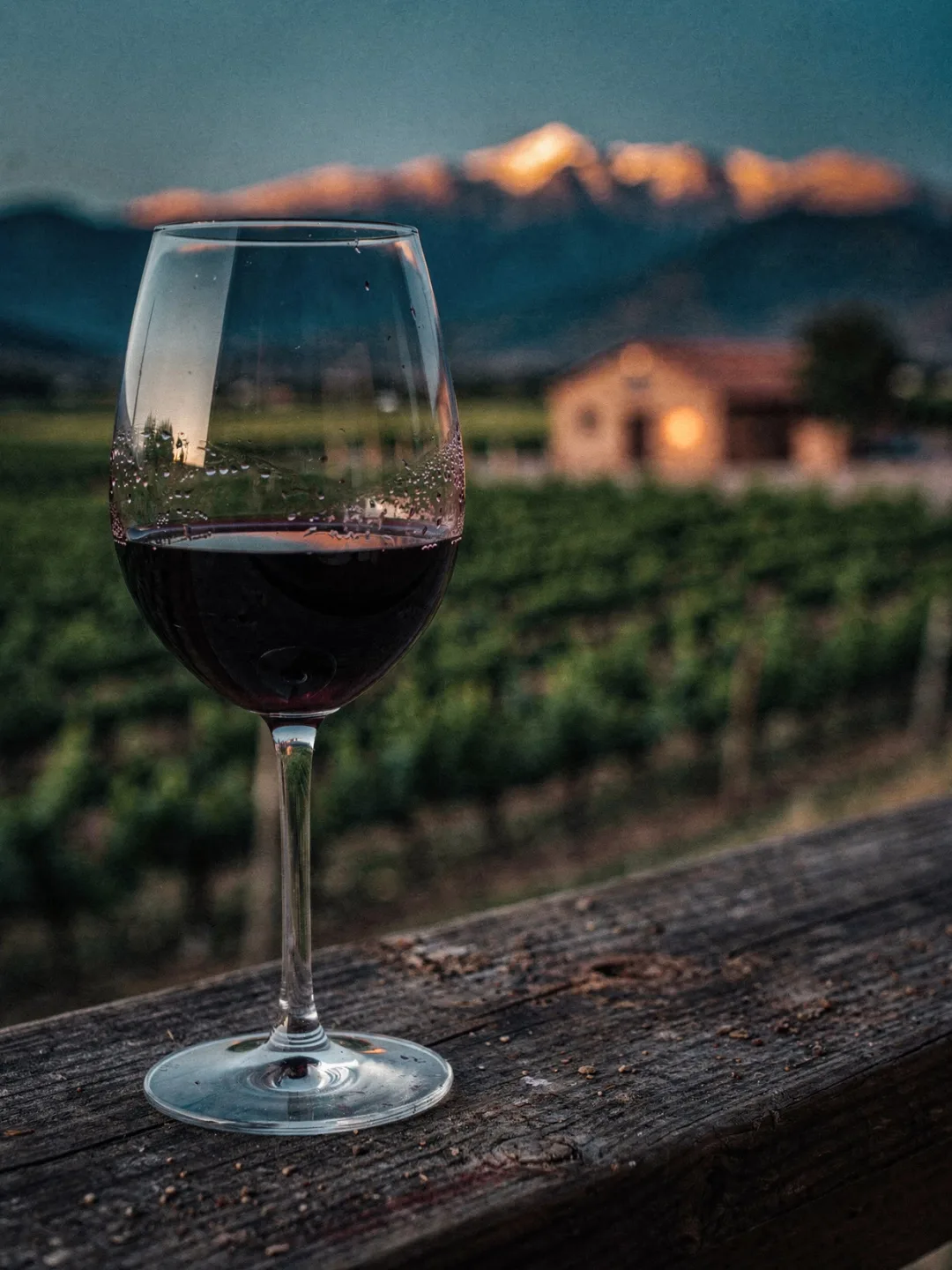
Hold a glass of Syrah from San Juan against a white sheet of paper. Barely any light passes through at the rim; the color ranges from deep garnet to almost black-violet, denser than in nearly any other Argentine red. That's down to the sun: San Juan ranks among the sunniest wine regions in the world, and more light means more pigment in the skin.
Smell twice — once with the glass still and once after swirling. First comes black fruit: blackberry and ripe plum, alongside the famous black pepper note that few Syrahs from San Juan lack. After swirling, something smoky or leathery often follows, especially if the wine has spent time in oak.
From higher-altitude sites like the Valle de Pedernal, something else joins in: a green, herbal note of thyme or lavender, preserved in the berry by the cooler nights. Wines from the lower Tulum valley, by contrast, smell rounder and sweeter, with less of that herbal edge.
On the palate, pay attention to the interplay of warmth and acidity. Sanjuanino Syrah often carries fourteen percent ABV or more, noticeable as a slight burn at the back of the palate, and a good bottle balances this with enough acidity and fruit rather than simply tasting strong. The tannin feels grippy but not harsh, ripe enough to finish smoothly in the mouth.
In the end, length is what counts. A simple blend from the Tulum valley fades after a few seconds. A carefully made Pedernal Syrah carries its pepper on long after you've swallowed. That difference is exactly what separates an everyday wine from the bottle worth a special trip.