Chocolate & pepper
Tasting
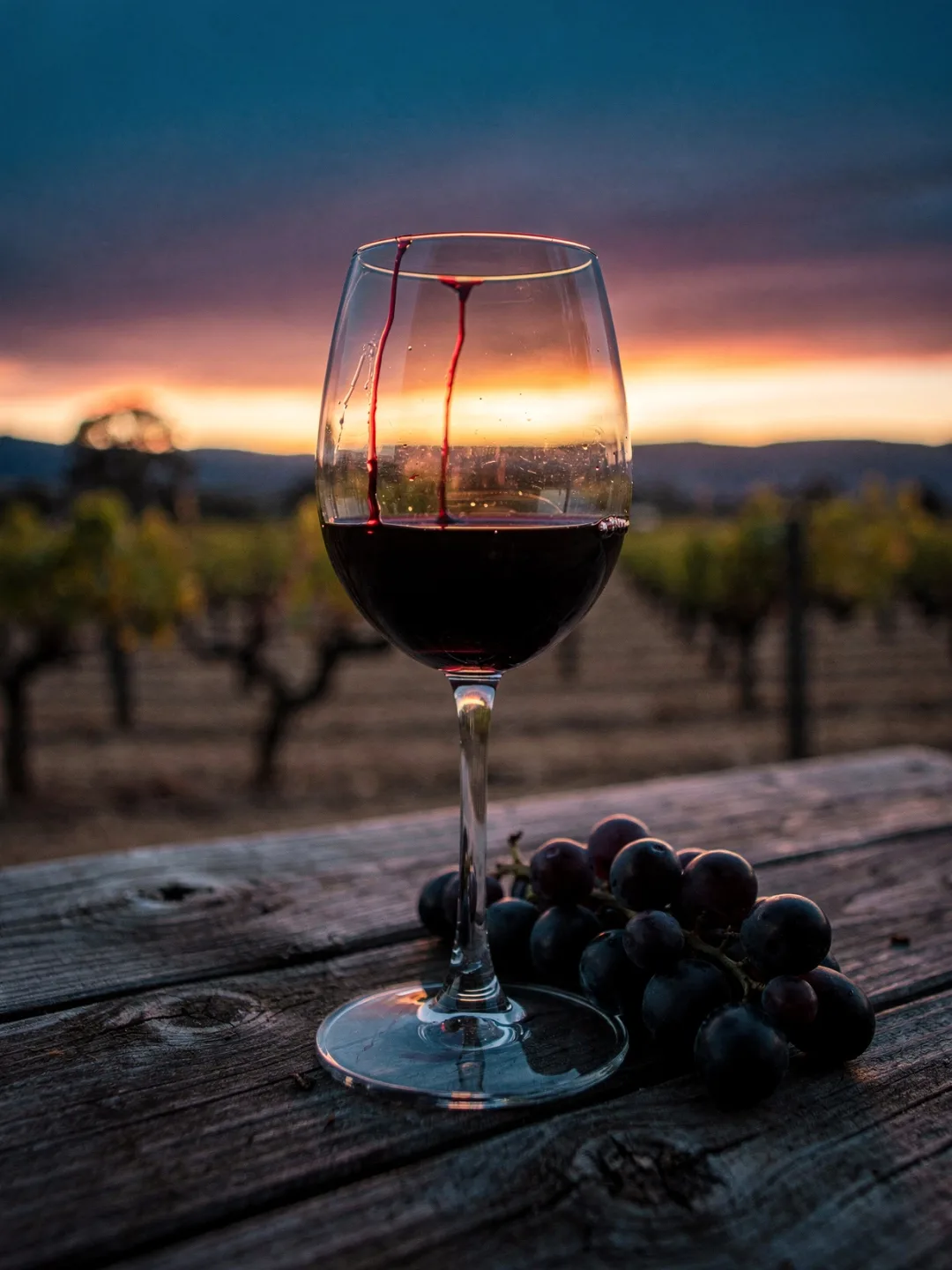
A young Barossa Shiraz shimmers almost black in the glass. Only after years does its rim shift toward brick red. Even on the nose, the difference from cooler wine regions is clear: ripe blackberry, dark plum, plus a hint of licorice and dark chocolate, sometimes a peppery note reminiscent of freshly ground black pepper.
On the palate follows what the alcohol level promises: plenty of body, a warm, almost sweet sensation on the finish. The tannins feel firm in young wines and turn velvety with age. That's why classic producers age their wines for years in barrel and bottle before releasing them. This particular tannin needs time.
Anyone tasting two bottles from different zones of the Barossa Grounds project side by side will taste the soil difference more directly than any explanation could convey. A wine from the Northern Grounds, with its red clay, often feels denser and darker in fruit. A wine from the sandier Southern Grounds, by contrast, tastes brighter and more approachable, sometimes almost red-fruited.
Alongside this, a second style has established itself over the last two decades. In the region, it's called the new wave. These winemakers favor earlier harvest dates, lower alcohol, and less visible oak, instead of late, overripe picking and lots of new wood. This lets the fruit itself and the variety's peppery spice come through more clearly. Sometimes only a few hundred meters of vineyard separate the two styles.
That's why tasting in the Barossa Valley always calls for comparison. A young, powerful Shiraz next to a mature one shows how firm tannins turn to velvet over time. Add a cool Riesling from the neighboring Eden Valley alongside them, and the difference between valley floor and higher elevation becomes tangible on the palate too.