Terra Rossa, Slate
Soils
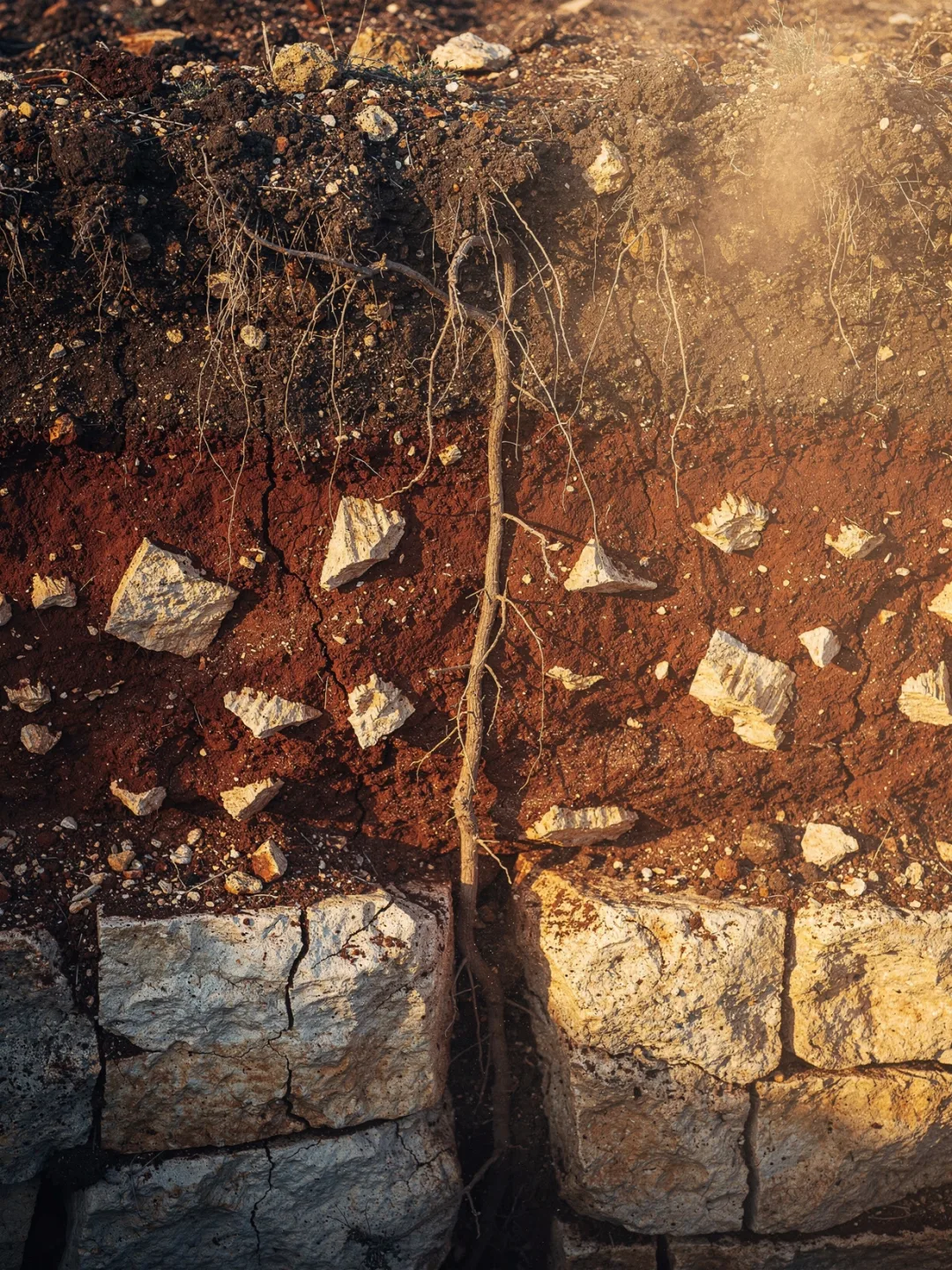
Dig a spade's depth into a vineyard near Watervale. You'll hit red, almost blood-colored clay. This is Terra Rossa, iron-rich clay formed over broken limestone. The limestone below stores water like a sponge. In dry weeks, it slowly releases it again.
This combination explains why Watervale Rieslings often seem approachable even young. The limestone reflects warmth back up into the grape, the clay holds enough moisture for even ripening, and together they produce wines with ripe fruit that rarely taste hard or green. Drive a few kilometers east from there, and the soil changes radically.
Around Polish Hill, blue-grey slate replaces limestone, thinly layered and poor in nutrients. The root has to squeeze between the plates and finds little water. It therefore digs deep, resulting in small, thick-skinned berries. Small berries mean more skin relative to juice, and the skin holds acidity, aromatic compounds, and a stern, almost saline undertone.
This very difference between two soils, just a few kilometers apart, explains half the valley's reputation. A winemaker who farms both sites harvests two Rieslings in the same year that could hardly taste more different, even though the cellar work is identical — same yeast, same tank, same temperature. The difference arises entirely outside, in the ground.
One misconception persists stubbornly: that the soil somehow tastes in the glass because the root absorbs minerals and passes them along. That's not quite true. What arrives are dissolved salts in such tiny quantities that no tongue could detect them, because the soil works through a detour — through water, warmth, and the depth it forces a root to reach. With Terra Rossa and slate, this detour is especially pronounced in the glass.
Dark, sandy loam with organic material from rotted grass and root remnants.
The root: This is where fine roots sit, gathering whatever the sparse winter rain leaves behind.