Elevation Beats Heat
Climate
By day, a sun burns here that should, by rights, forbid Riesling altogether. In midsummer, the thermometer climbs to thirty-five to thirty-eight degrees Celsius, a level at which acidity in the berry simply vanishes elsewhere. Clare Valley lies inland, continental in character, without any cooling sea breeze — on paper, a place for fat, blowsy wines.
At night, the picture flips completely. Temperatures drop to twelve to fifteen degrees Celsius, sometimes lower, and this twenty-degree swing within a few hours saves the acidity. The vine ripens by day, cools by night, and the aromatic compounds don't evaporate in the heat. Without this nightly plunge, there would be no Riesling here capable of aging twenty years in the cellar.
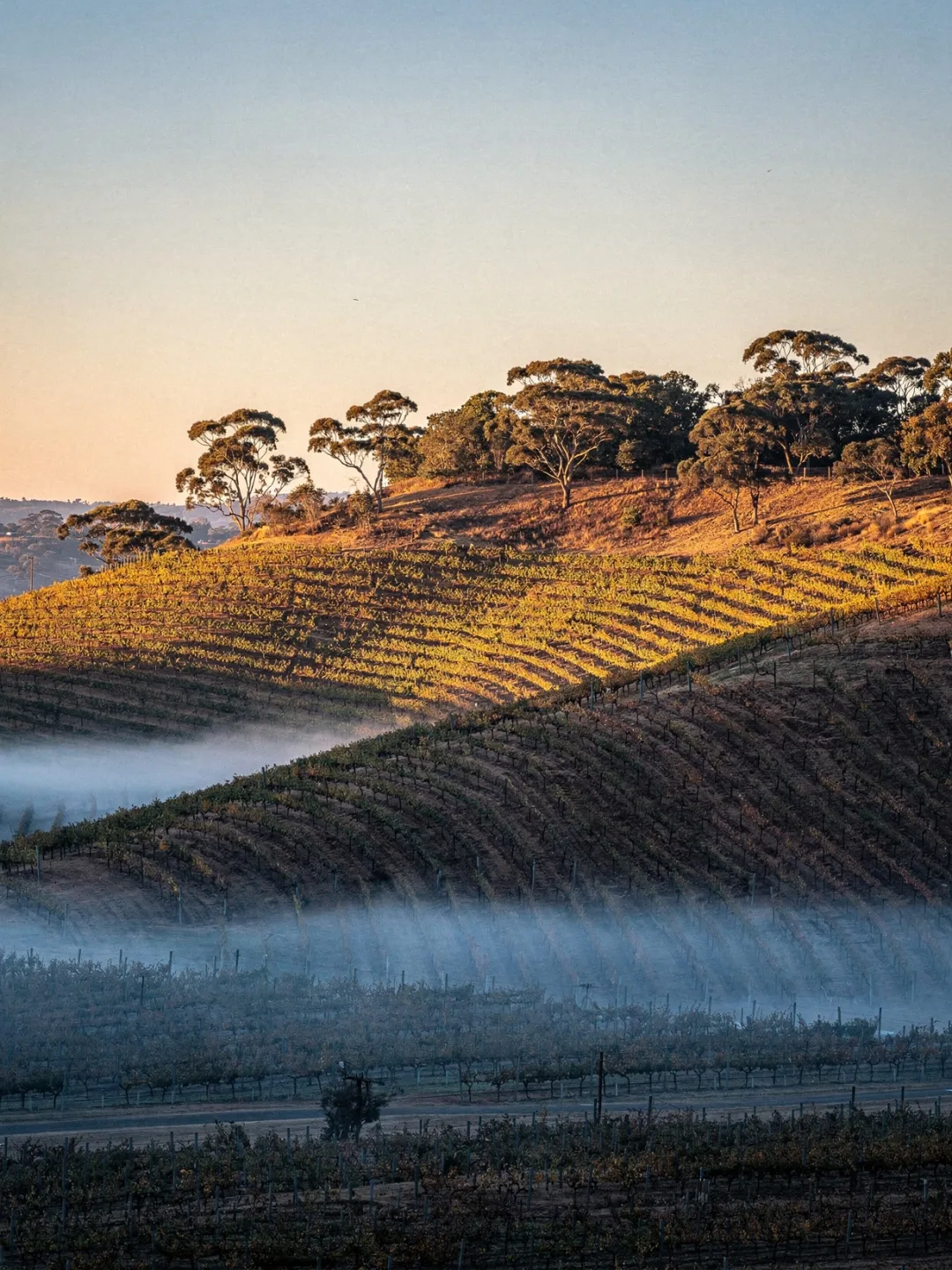
Elevation makes the difference between the sub-regions. The vineyards sit at an average of four hundred to five hundred meters. But at Mount Horrocks, some sites climb above six hundred. Every extra step of elevation cools the nights further and often pushes harvest back by weeks — and Watervale, sitting lower, is picked noticeably earlier than the vineyards around Polish Hill.
Rain falls almost exclusively in winter. Summer stays largely dry. That sounds convenient, but it also means: without drip irrigation, the vine would genuinely go thirsty in some years. Only the old, deep-rooted bush vines at Wendouree still get by entirely without artificial irrigation, and that makes their wines taste denser and more concentrated than most of their neighbors'.
For Riesling, this interplay of hot days and cold nights is really the region's key trick. Nowhere else in Australia does a white variety hold onto its acidity so reliably over decades. That's why a ten-year-old Riesling from Clare Valley only really comes into its own with age. It then shows notes of honey, toast, and that famous petrol note connoisseurs love and beginners often find puzzling.