Irish, Jesuits, Screw Cap
Region & History
An Irish landowner gave this area north of Adelaide its name, long before a single vine stood here. Edward Burton Gleeson named his estate Inchiquin, after a place in County Clare, Ireland. When he founded a town nearby in 1842, he simply renamed it: Clare. The vines followed soon after.
As early as 1840, explorer John Horrocks had planted the first vines near Penwortham, two years before the town even had a name. Gleeson himself planted around eight hundred vines on his land, more out of curiosity than any real plan. Officially, Clare Valley has counted as a Geographical Indication of the Mount Lofty Ranges zone since 1999, registered with Wine Australia. What began as an experiment became the livelihood of an entire valley — today the vineyards stretch fifty kilometers, from Auburn to beyond Clare, broken up by wheat fields and sheep pastures.
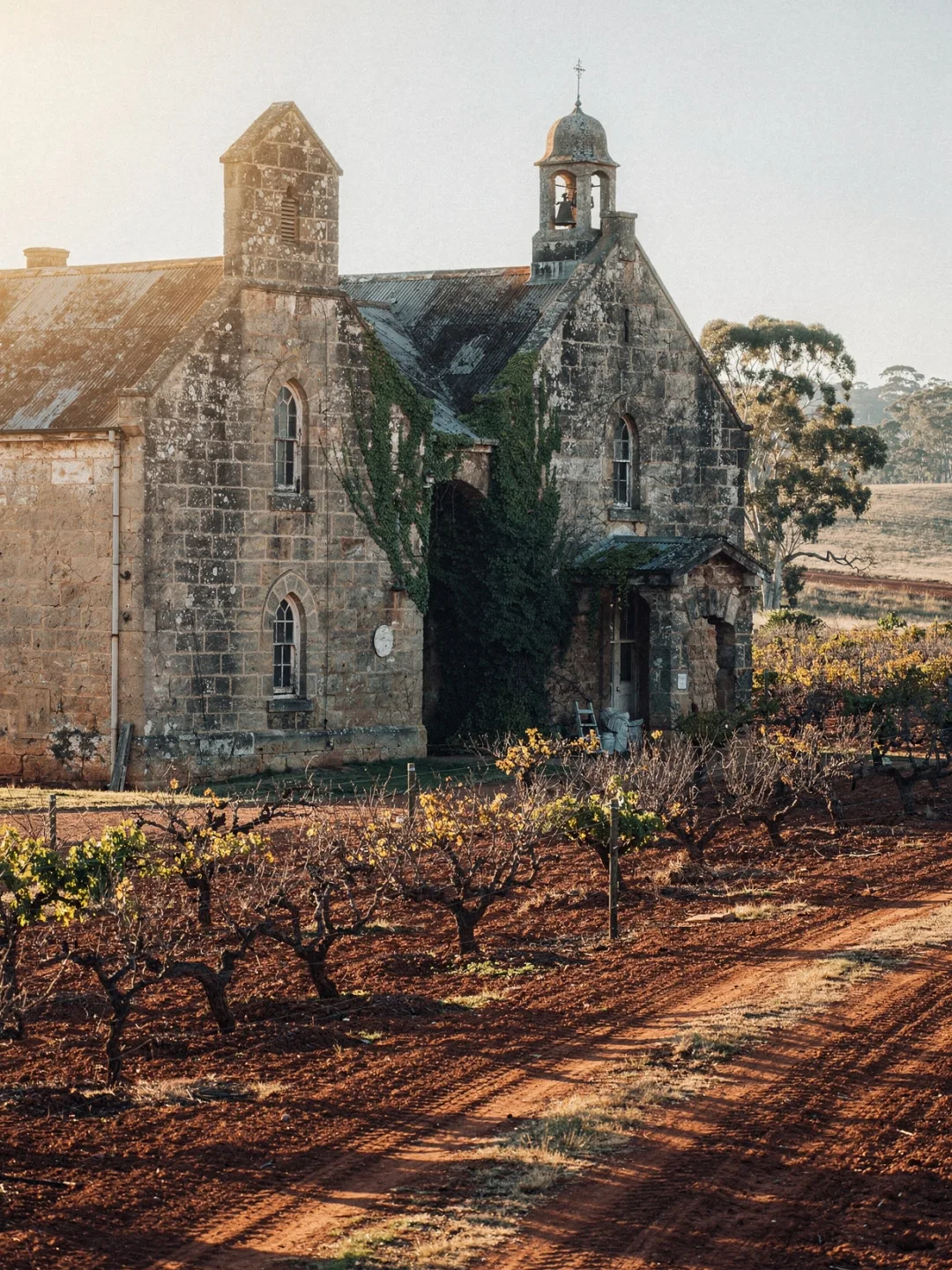
Nine years later, Austrian Jesuits arrived in the valley, driven out by unrest in Europe. They needed sacramental wine for their congregation and founded a vineyard at Sevenhill in 1851, named after the seven hills of Rome. To this day, Sevenhill Cellars presses wine in the same fieldstone buildings — the oldest winery in the whole valley, run by priests who teach altar servers and prune vines on the side.
At the southern edge of the valley stand vines older than anyone's memory of who planted them. A. P. Birks established Wendouree winery in 1893, vine by vine, with new parcels added right up until 1920. Shiraz, Cabernet Sauvignon, Malbec, Mataro, and Muscat grow there without irrigation, as bush vines rather than on wire, and are still hand-harvested today. Tony and Lita Brady took over the twelve-hectare estate in 1974. They've changed almost nothing.
The next shift didn't come from the vineyard, but from the bottle. In 2000, a good dozen Riesling producers from Clare Valley sealed their entire vintage with a simple screw cap instead of cork. Jeffrey Grosset from Auburn led the charge. Critics called it a stylistic breach on fine-dining labels. Twenty years later, half of Australia screws its bottles shut, and nobody talks about cork taint anymore.