Limestone Water & Oak
Winemaking
Before a Coonawarra red wine ever reaches the tank, the limestone beneath the vineyard has already done its work, since the groundwater in the limestone layer beneath the Terra Rossa often supplies the vines with moisture year-round. A winemaker therefore hardly needs to irrigate artificially. Where water must be carefully rationed in many other Australian wine regions, this is a rare advantage.
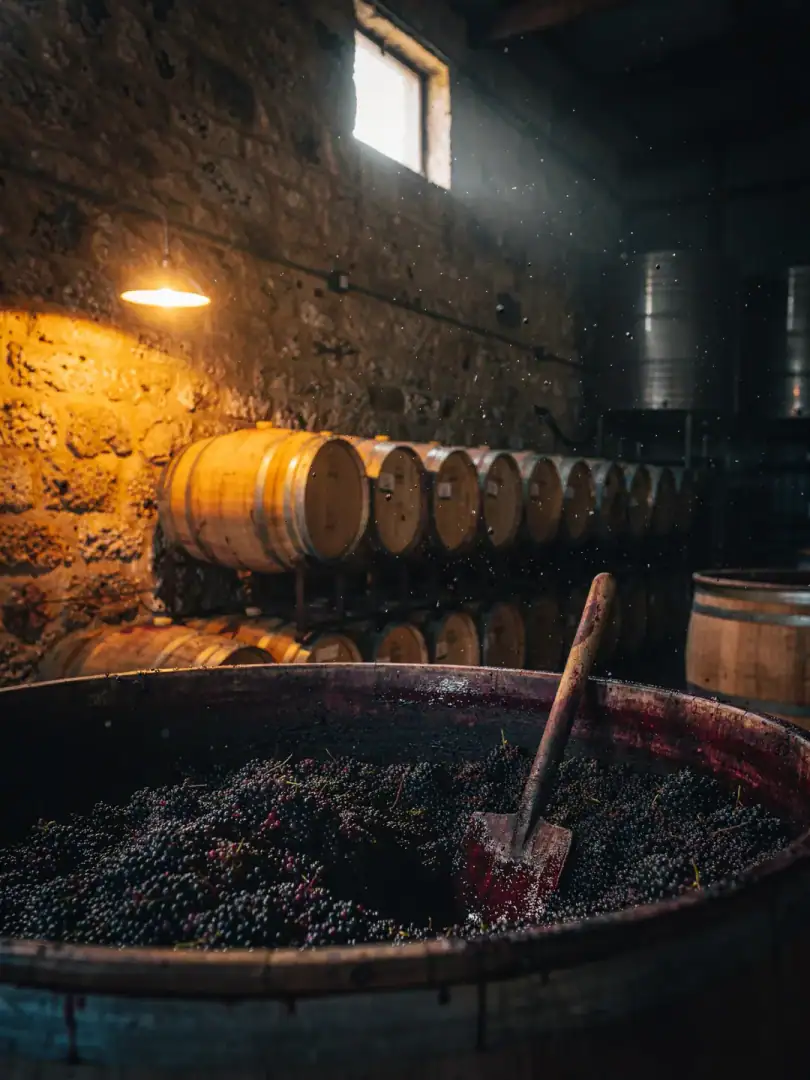
In the cellar, the must, meaning grape skins and juice together, often sits for longer with Cabernet Sauvignon than elsewhere. Sometimes this takes three to four weeks. This extended time draws color and tannin from the small, thick-skinned berries that the lean soil produces. Too short a maceration would sacrifice much of what the vine worked hard to build up in the vineyard.
Afterward, the wine matures in oak barrels, traditionally American oak with its notes of coconut and vanilla. In recent decades, more estates have turned to French oak. It tastes more refined and doesn't mask the cool, minty side of the Cabernet. Some producers blend both barrel types within the same vintage.
One particularity dates back to the very beginnings: blending Cabernet Sauvignon with Shiraz in the same wine, formerly simply called Claret. The robust, spicy Shiraz fills gaps that the more austere Cabernet leaves open. Conversely, the Cabernet balances out the sometimes overly soft fullness of the Shiraz. Single-varietal bottlings are more common today, but the old blend never entirely disappears from Coonawarra's cellars.