Bordeaux Glass for Tannin
Glassware
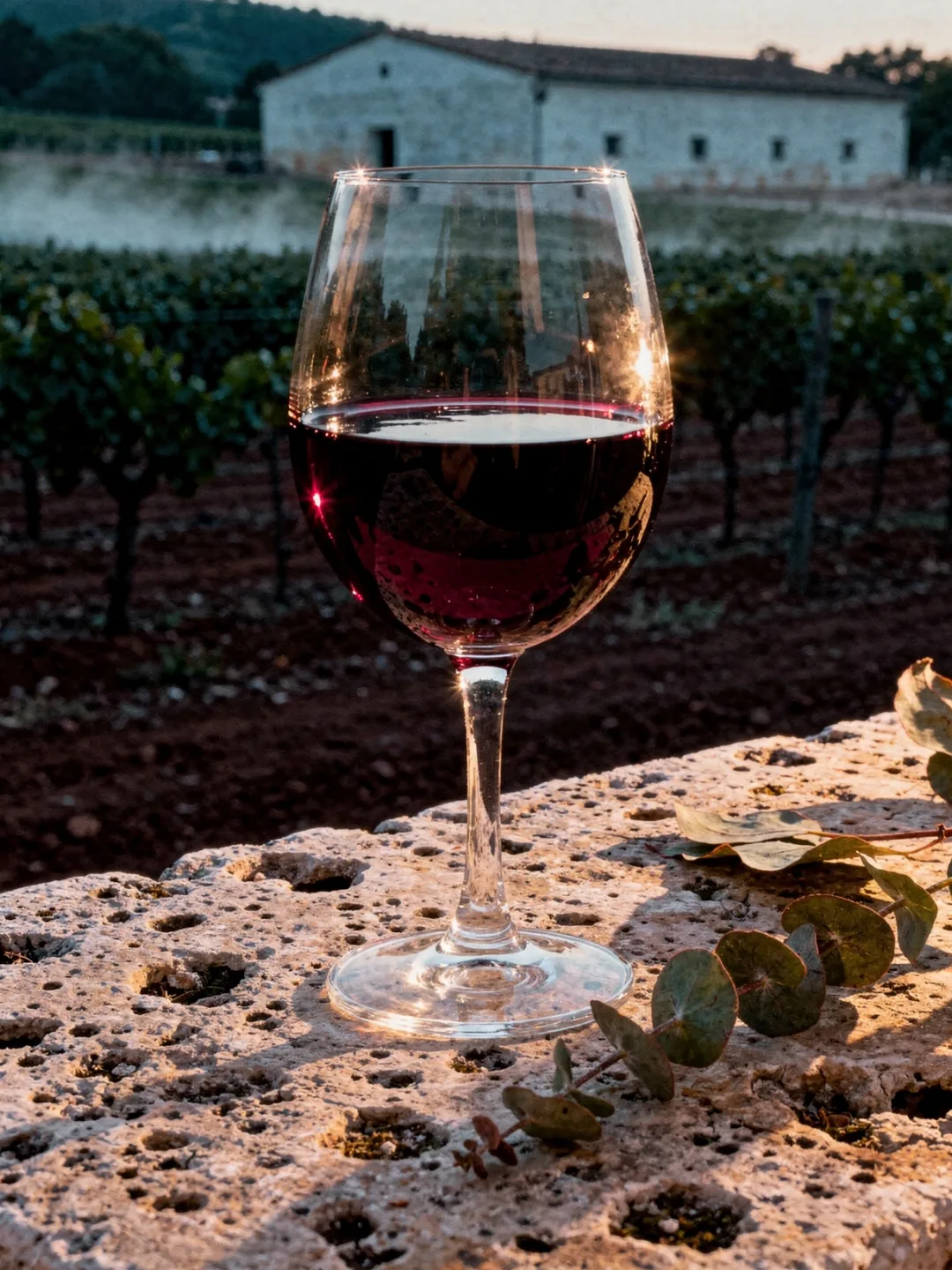
A Cabernet Sauvignon from Coonawarra needs room in the glass, more than most other red wines. Its tannin, the dry, furry grip in the mouth, is often stern in its youth. A narrow glass pushes exactly this grip forward instead of softening it. A large, bowl-shaped Bordeaux glass, by contrast, gives the wine room to take in oxygen before it reaches the tongue.
This large surface actually changes what you smell. Freshly poured, a Coonawarra Cabernet often carries a cool hint of mint or eucalyptus, along with dark fruit like cassis and blackberry, but a small glass holds this aroma tight together and makes it seem sharp. In a large glass, the mint is allowed to blend with the fruit instead of overpowering it.
With a wine like the John Riddoch, decanting is worthwhile too. It's the rare top Cabernet from the Wynns estate, made only in exceptional years from less than one percent of the finest grapes. An hour of air in a decanter opens up the fruit before the wine even reaches the glass. For simpler Coonawarra reds, a vigorous swirl in the glass is enough.
Anyone who instead reaches for a small, narrow glass gives up exactly what Coonawarra is famous for: the tension between firm tannic structure and cool, almost peppermint-like freshness. A large glass turns that tension into balance.
Temperature matters too. Served too cold, the wine seems hard and closed; too warm, and it loses its cool freshness. Just below room temperature, around eighteen degrees Celsius, a Coonawarra Cabernet shows both at once: power and coolness.