Gilbert, Stanitzki, Henschke
Region & History
In 1847, the Englishman Joseph Gilbert planted the first vines in the Eden Valley on his property, Pewsey Vale. The cuttings came from the Rheingau, imported by his neighbor William Macarthur, and from them grew the region's first Riesling planting. A colonial journalist tasted the wine in 1861 and wrote that it was "fragrant, delicate and pure" — finer, he said, than many an imported German hock. For a young colony, that was a steep compliment.
Around the same time, other settlers arrived from a very different direction. Lutheran emigrants from Silesia and Brandenburg, fleeing religious pressure back home in Prussia, founded their own communities in the hills around Springton. Friedrich Herbig moved here in 1855. He and his wife first lived in a hollow eucalyptus trunk on the edge of town, since no house had yet been built, and two of his children were born there before he finally built a hut in 1860.
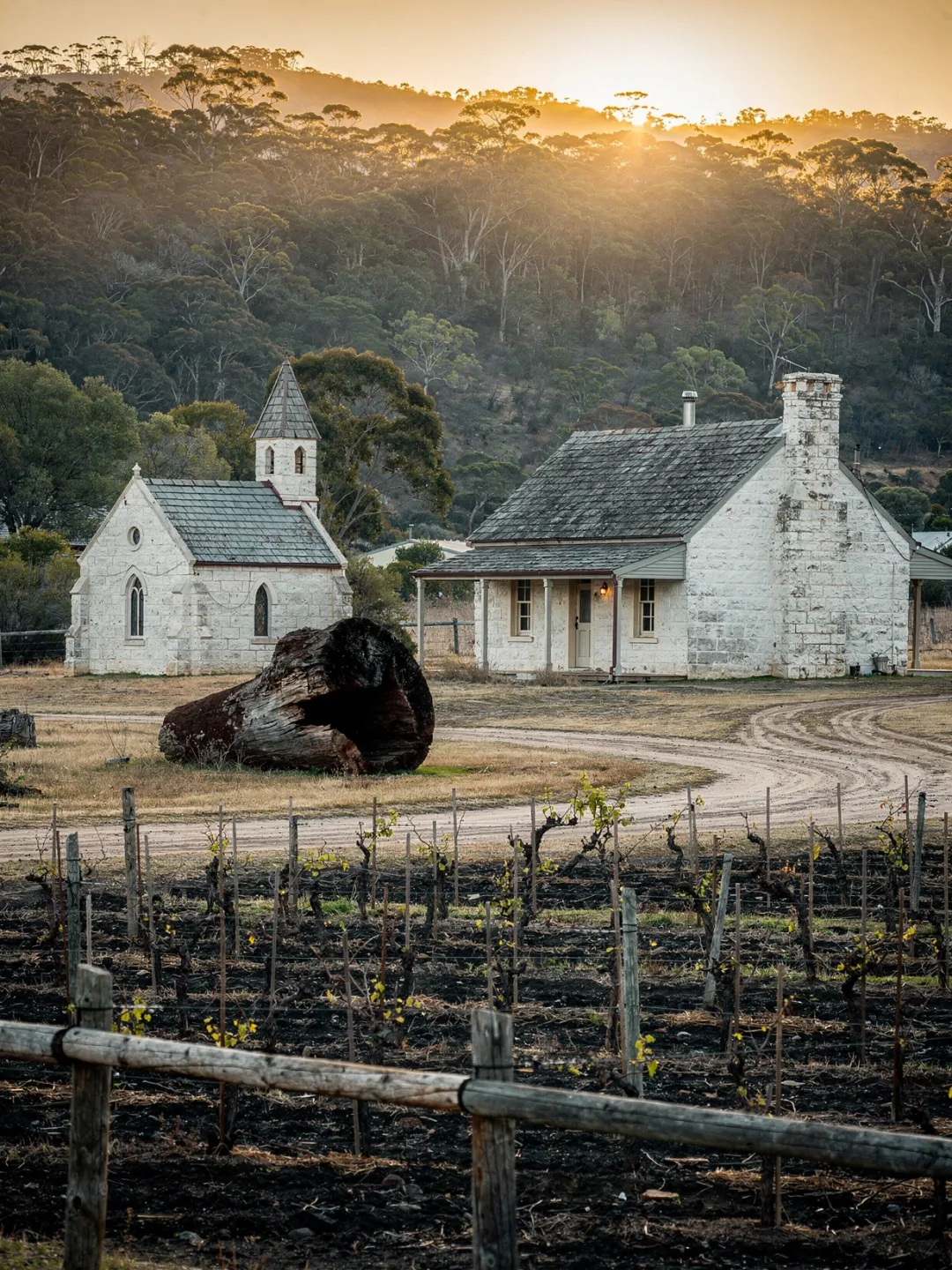
The region's most famous vineyard traces back to one of these settlers. Around 1860, Nicolaus Stanitzki planted Shiraz vines on a plot of land that would later be named Hill of Grace, after the Lutheran church next door. Because phylloxera never reached South Australia, these vines still grow ungrafted on their own roots today — just as they were planted more than one hundred and sixty years ago. A further block was added in 1910, planted by the new owner, Paul Gotthard Henschke.
It wasn't until 1958 that Cyril Henschke bottled the first standalone Hill of Grace vintage. What had been a family vineyard became one of the country's most sought-after red wines. Pewsey Vale, meanwhile, had already lived through a different story: by the early twentieth century, the vineyard had fallen into neglect and was nearly abandoned. Only in 1961 did Wyndham Hill-Smith propagate new vines from the last surviving stock and replant the old vineyard.
Officially, the Eden Valley has existed only since 1997, when the region was registered as its own geographical indication within the Barossa zone. In 2001, High Eden was added as a separate subregion for the highest, coolest sites. On paper, that's a young boundary. In the vineyard, it holds the history of two waves of immigrants who settled the same hills at different times, for entirely different reasons.