Sand, Clay, Basalt
Soils
Dig a hole in the valley floor near Pokolbin, and you won't get far before fine, pale sand starts sifting through your fingers. This is the soil Semillon has grown in for generations. It's alluvial. Sandy, loose, poor, with a heavier clay layer underneath that holds onto the last bit of moisture through summer.
Winemakers call this contrast between loose sand on top and dense clay below a texture-contrast soil. The vine roots easily at first, then meets resistance, and that very resistance forces it to dig deep instead of spreading out in the top layer.
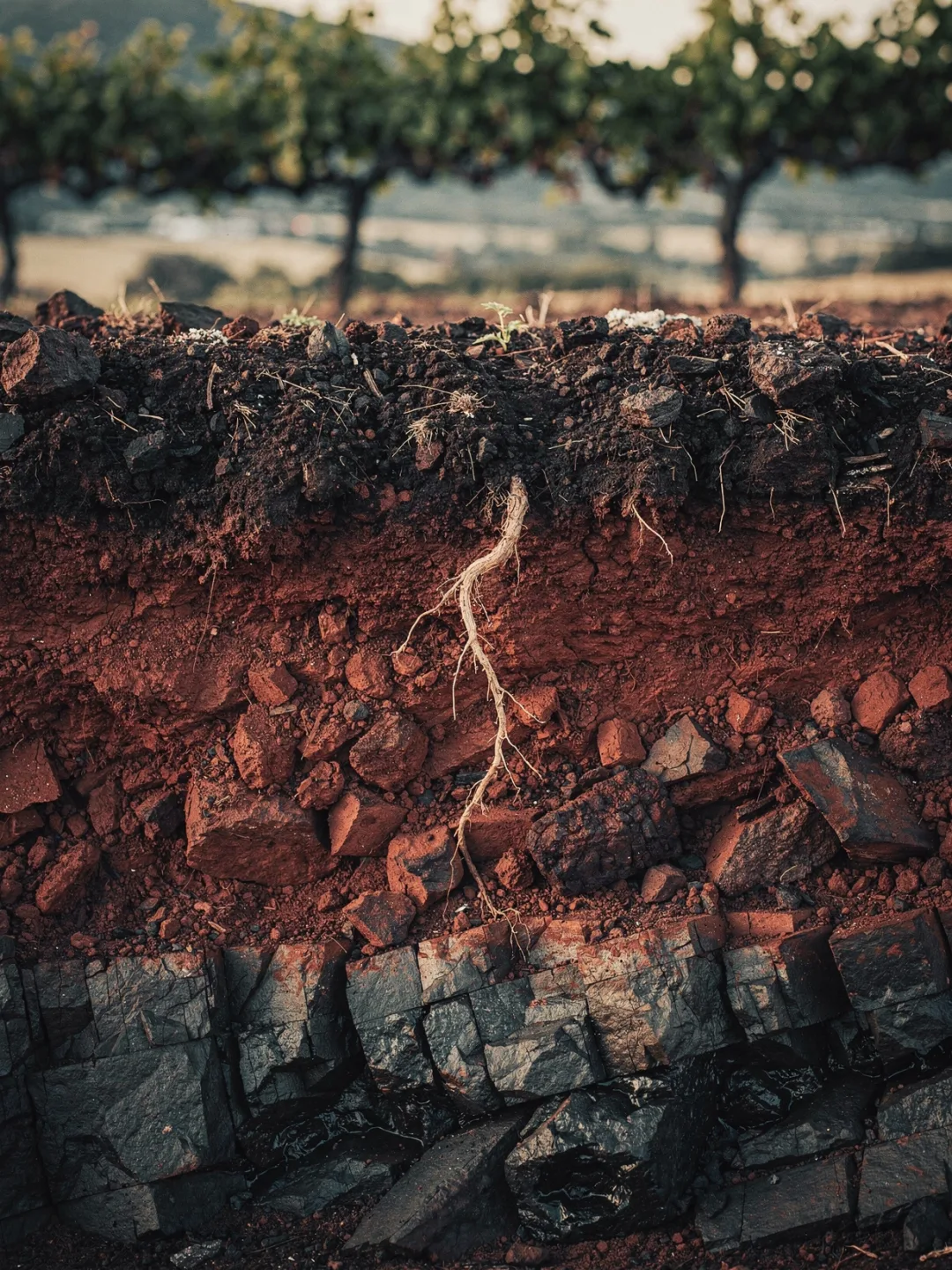
Drive just a few kilometers on to the Brokenback Range, and everything changes. Here the soil comes from weathered volcanic rock, deep red, rich in iron, and noticeably more fertile than the sand down in the valley. Shiraz and Chardonnay favor these slopes, since the rock retains warmth while still letting water drain well.
You can taste the difference in the glass. Semillon from the sandy valley floor stays lean and citrusy. Shiraz from the red basalt slopes, by contrast, feels denser and darker, with more tannin, that dry, furry sensation in the mouth that comes from the skins. Two soils, a few kilometers apart, two entirely different wine styles.
One misconception persists here too: that the vine tastes minerals from the rock and passes them on into the glass. The rock only acts through warmth and water balance, never directly in the mouth. What ultimately counts is how deep a root had to go to survive, not what kind of stone it had to bore through.
A thin, dark layer of decomposed grass and leaves, rarely thicker than a hand's width on the slopes of the Brokenback Range.
The root: This is where the fine roots sit, absorbing the first rains after drought.