Heat, Rain, Early Harvest
Climate
The Hunter lies closer to the equator than any other well-known Australian wine region, and the climate behaves accordingly: subtropical, humid, oppressively hot in summer. The average January temperature is 22.7 degrees Celsius, and harvest already begins in that very month. Elsewhere in Australia, growers at this time would still be waiting for flowering.
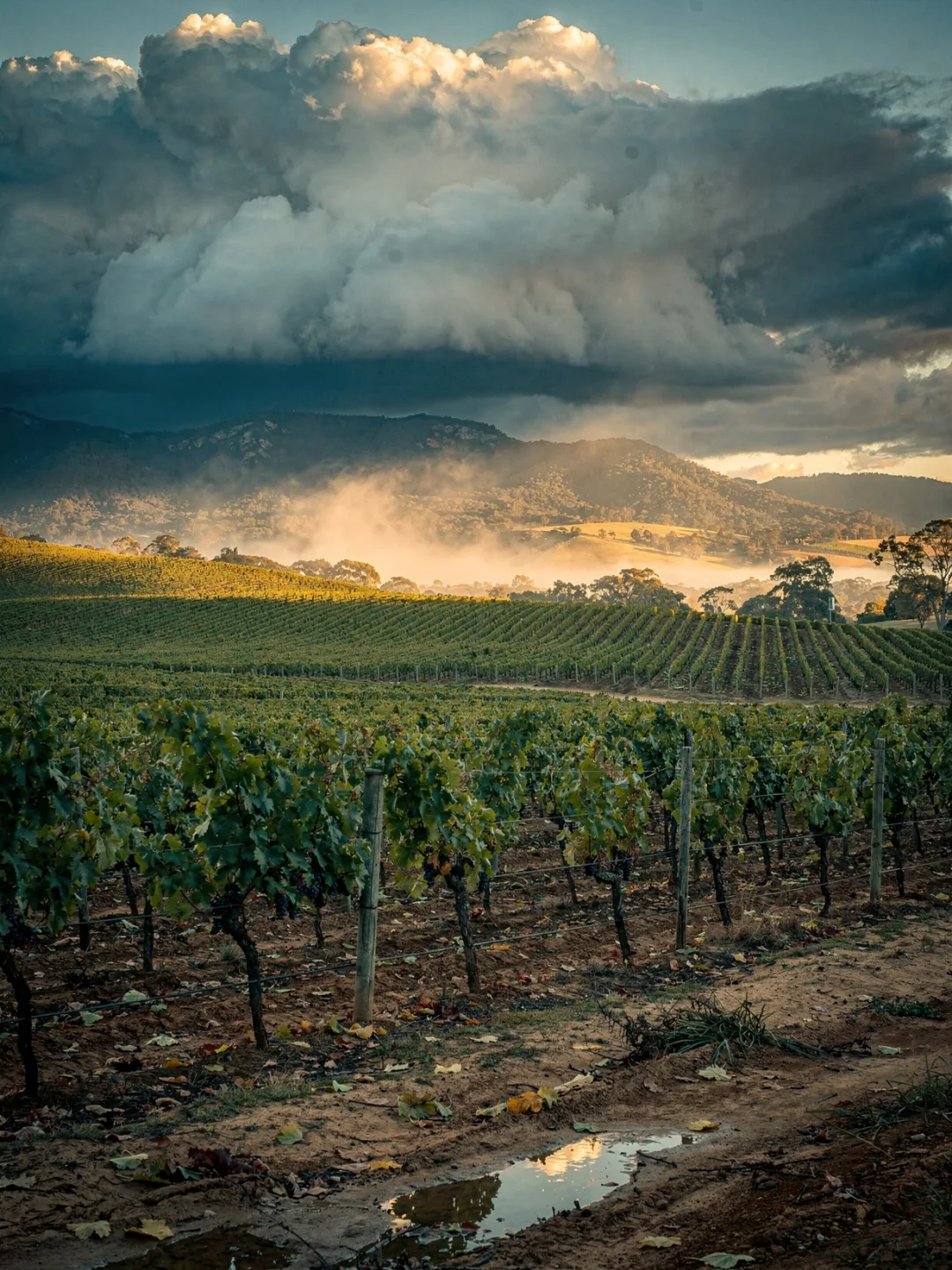
That sounds counterintuitive, but it's self-defense. Around 750 millimeters of rain fall each year, most of it between January and March, precisely when the grapes are meant to ripen. Sometimes a tropical low-pressure system moves in from the north and dumps more rain within a few hours than a vineyard can handle at this stage. If a grower waits too long, downpours and storm fronts can rot the crop right on the vine.
That's why Hunter growers already pick their first Semillon grapes in mid-January, earlier than anywhere else in the country. Harvesting at this point means sacrificing sugar to save acidity, a trade-off that later makes all the difference in the glass. Experts long considered the climate too humid to produce serious table wine at all.
Still, the climate isn't entirely without mercy. Afternoon clouds and a sea breeze off the Pacific temper the peak heat. Average afternoon relative humidity sits around 49 percent, enough to soften grape heat without tipping every year into fungal disease. Without this afternoon cooling, ripe, aromatic wine would barely be possible here.
Even so, differences exist between the sub-regions. The Upper Hunter receives noticeably less rain at harvest time than lower-lying Pokolbin, and its vintages are therefore considered more reliable. Anyone in the valley looking for a safe vintage looks there first.