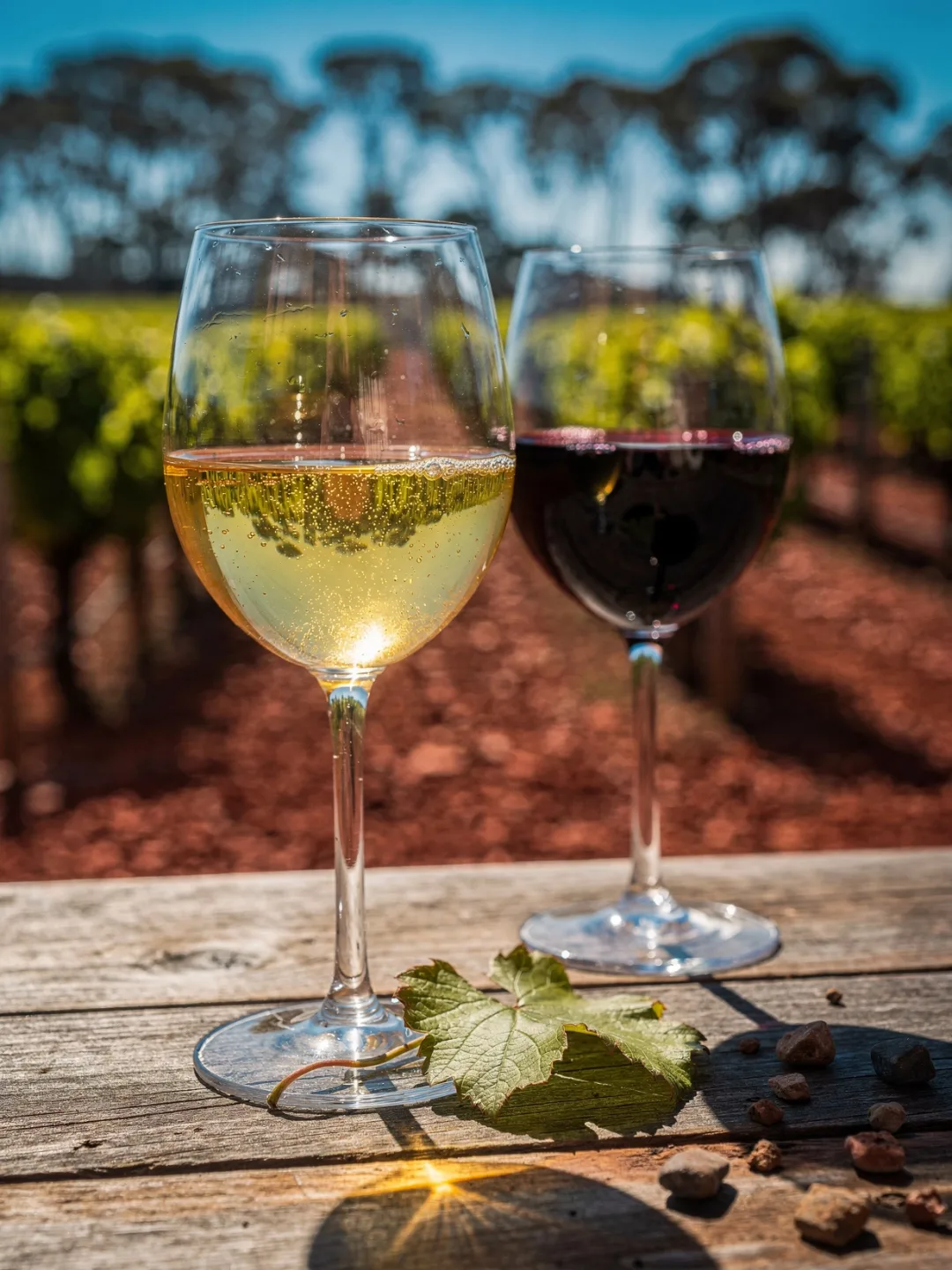
Cabernet Versus Chardonnay
Tasting
Set two glasses from Margaret River side by side, and it's immediately clear that no single style rules here. In one sits a dark, dense Cabernet blend; in the other, a pale-yellow, concentrated Chardonnay. Hardly any other region produces two such contrasting wines from the very same earth.
With the Cabernet blend, start at the rim of the glass. Young, it glows violet-black; after ten years the rim turns brick-colored, and the best drinking window lies somewhere in between. Smell first for blackcurrant and cedar. Only on the second swirl does something minty often appear, a hint of eucalyptus drifting in from the karri and eucalyptus forests surrounding the vineyards.
In the mouth, track two things separately. Hold the acidity along the sides of your tongue, and feel the tannin as a dry, almost chalky coating on the gums—an echo of the ironstone gravel the vines are rooted in. Together they make the wine taut, not hard, so long as there's enough fruit behind it.
With the Chardonnay, the first nose is often a surprise: a whiff of struck match or flint before grapefruit and toasted cashew follow underneath. That comes from barrel aging, not a fault in the wine, and it usually blows off after a minute or two in the glass. What remains is an acidity that keeps the wine lean despite the oak.
In the end, count the seconds after swallowing for both wines. A good Chardonnay from the region holds its flavor for ten to fifteen seconds; a mature Cabernet blend from Wilyabrup often twice that long. That length can't be built in later in the cellar—it comes from the grape alone.