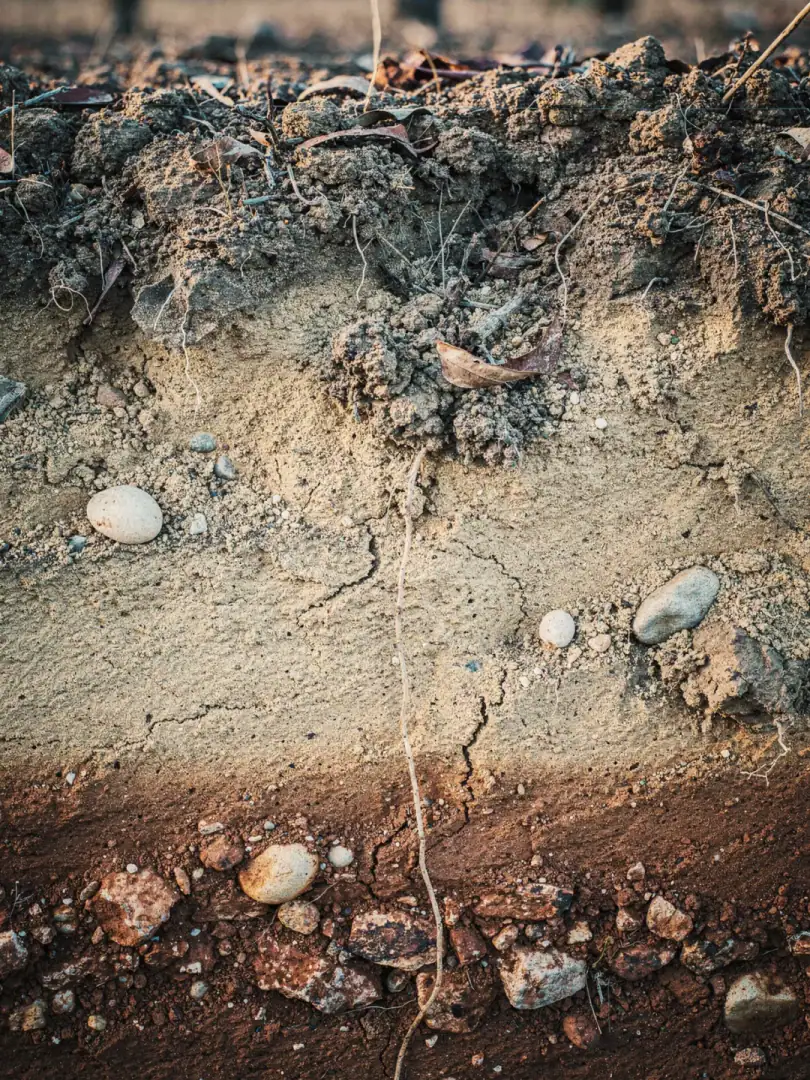
Sand & Ironstone
Soils
Dig a hole in Blewitt Springs, and you'll find the sand so fine and so deep that you can dig nearly a meter down with your bare hands before hitting a single stone. Geologists have dated this material to between 750 and 1,600 million years old. It's wind-blown quartz sand, ancient and fine. Back then, there were no plants on Earth yet, let alone vines, the very vines that now root exactly in this sand.
Five kilometers away, on the hills of Seaview, the soil looks completely different. There, a thin layer of topsoil sits over hard ironstone, barely enough to sink a shovel into, with quartz gravel scattered between the stones like broken glass. The McLaren Vale Geology Survey has mapped over forty distinct soil types here, more than in almost any other region in Australia.
This diversity determines which variety makes sense where. In the deep sand of Blewitt Springs, roots drive meters down in search of moisture, and the vine stays weak in vigor. This is exactly what produces the fragrant, pale Grenache the area is famous for. On the heavy clay of McLaren Flat, it's the reverse. The soil holds water well into midsummer, the vines grow more vigorously, and the Shiraz tastes correspondingly denser.
An ice-age river left its own mark here too, since water once flowed through around two million years ago, depositing what's known as Pirramimma sandstone, a fine-grained rock now found only in narrow bands. None of this shows up as minerality in the glass, though. What the soil delivers is water, warmth, and the depth it forces the roots to reach.
Dark sand rich in humus from decades of fallen vine leaves, rarely more than a hand's depth before the pale sand below begins.
The root: This is where the fine feeder roots sit, soaking up the first rains after summer.