Sea, Wind, Heat
Climate
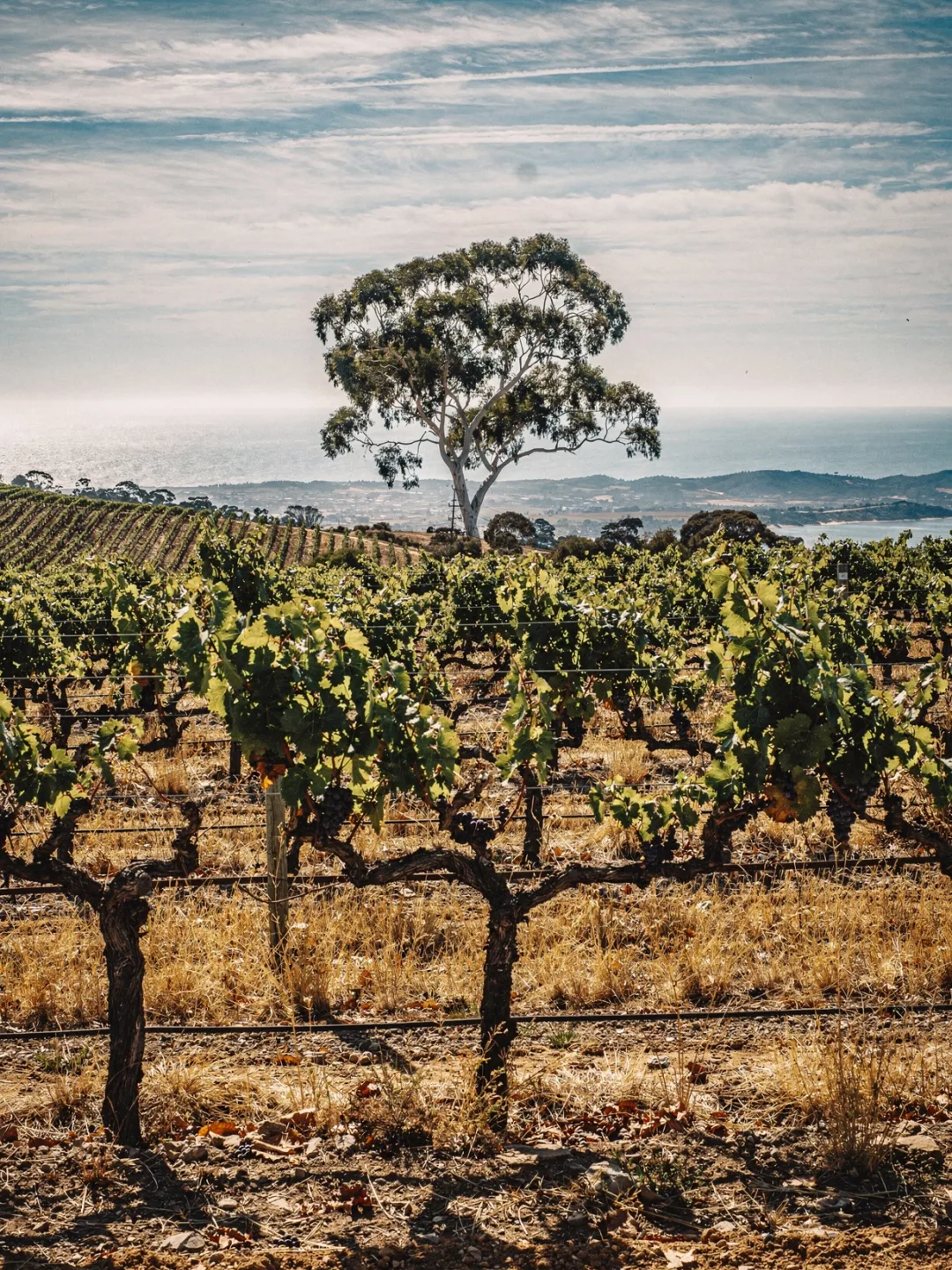
McLaren Vale sits on a weather boundary, with cool downslope winds falling into the valley from the Mount Lofty Ranges at night, known as gully winds, chilling the vines overnight. From the west, sea air pushes in from Gulf St Vincent during the day. Both winds cool the vineyards, but at different times.
This gives the vines a breathing space they would otherwise completely lack in a summer with very little rain and high evaporation. Without the breeze off the gulf, the grapes would build up sugar faster than the acidity could keep pace. The wine would then taste heavy and flat, since rainfall and drought in McLaren Vale follow a fixed pattern: dry, warm summers, mild, wet winters, and low humidity.
Rain falls mainly between May and September, exactly when the vines are dormant anyway and need no water, while harvest time usually stays dry. This keeps rot at bay, but it also means irrigation isn't optional in many vineyards, it's a necessity for the plant's survival.
Elevation further amplifies these differences between individual sites. Clarendon sits up to three hundred meters above sea level. Seaview, by contrast, perches on an exposed ridge, where thin soil and constant wind produce lean, spicy wines, quite different from sites closer to the gulf, which stay noticeably milder and moister. The same variety can therefore produce two entirely different wines just a few kilometers apart. Winemakers now use this deliberately. Shiraz and Grenache are usually planted lower down and closer to the gulf, where it's warmer, while Cabernet sits higher up in Clarendon.