From Reynella to the Grenaissance
Region & History
Twenty kilometers south of Adelaide, a settler named John Reynell planted the first vines in 1838, barely after his ship had docked from England. The place soon became known as Reynella. Here, wine was never a luxury reserved for the wealthy from the very start. It was a trade good, just like sheep and wheat.
In 1850, Reynell took a young immigrant named Thomas Hardy under his wing, who learned the cellar trade from German workers on the same property. In 1853, Hardy bought his own land near Tintara, and by 1876 he had taken full control of the Tintara Vineyard Company there, turning the apprentice into a wine baron.
Unlike almost every European wine region, South Australia escaped phylloxera in the nineteenth century, the pest that wiped out half of Europe's vineyards. In McLaren Vale, that protection was never needed. Vines here still grow on their own roots to this day, rather than grafted onto resistant American rootstock. One vineyard near town still carries Grenache vines planted in 1848 and is considered the oldest continuously farmed planting of this variety in the world.
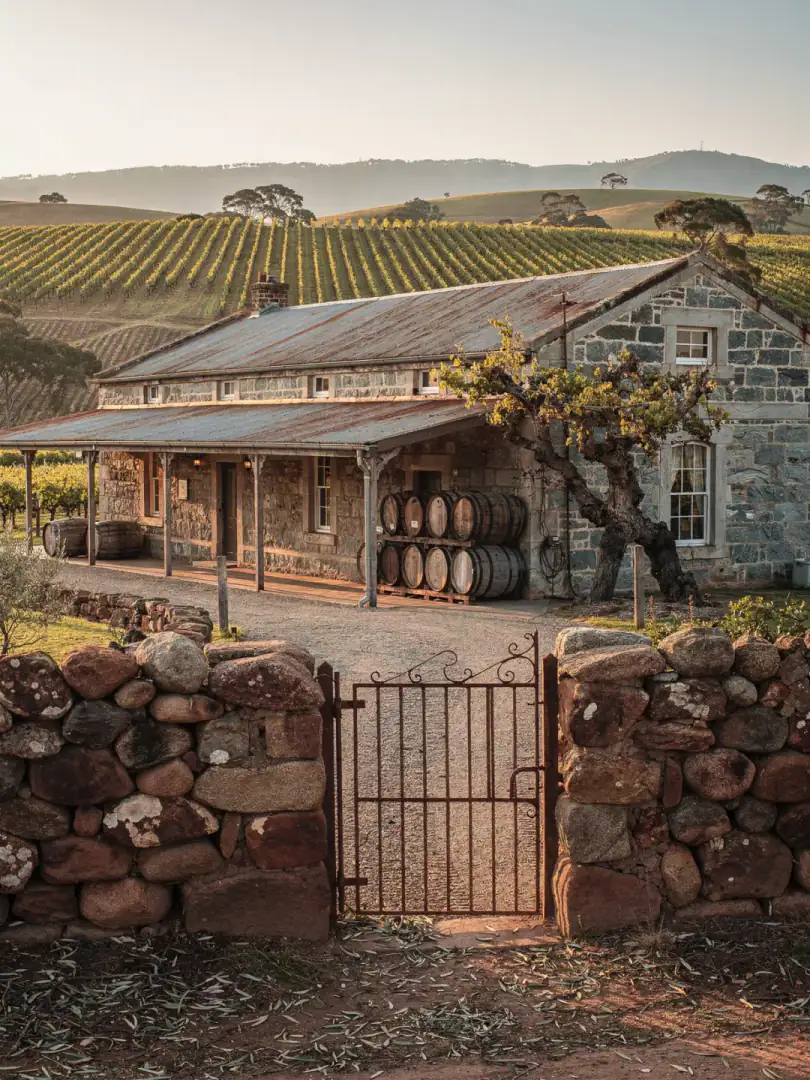
New names soon sprang up around McLaren Vale. Wirra Wirra opened its doors in 1894 and was revived by Greg Trott in 1969. D'Arenberg planted its first Shiraz in 1912. Chapel Hill even built its cellar door into a stone chapel from 1865, which still serves as a tasting room today. In 1973, local winemakers revived a medieval English custom, Bushing Day. Innkeepers once hung an ivy branch over the door once the new wine was ready, and in McLaren Vale this became an olive branch instead. To this day, the October wine show crowns the region's best winemaker, who is then named Bushing King or Bushing Queen.
Until the 1990s, Grenache counted for little. Much of the harvest went into cask wine and brandy rather than fine bottles. That changed when a new generation of winemakers rediscovered the old bush vines of Blewitt Springs and began crafting fragrant, refined wines instead of cheap bulk wine. Today this shift is known as the Grenaissance. In 2012, McLaren Vale became Australia's first certified sustainable wine region, and nearly half of its vineyards now use recycled water.