Shiraz & Grenache
Grape Varieties
54 percent of the vineyard area here is planted to a single variety, and McLaren Vale has been a Wine Australia-protected Geographical Indication within the Fleurieu zone since 1997, covering roughly 7,300 hectares of vines. Shiraz ripens to a deep, dark blue here, usually as early as the beginning of February. No other Australian region commits so heavily to it. Nearly nine out of ten vines in McLaren Vale carry red wine varieties at all, a share almost no other Australian region reaches.
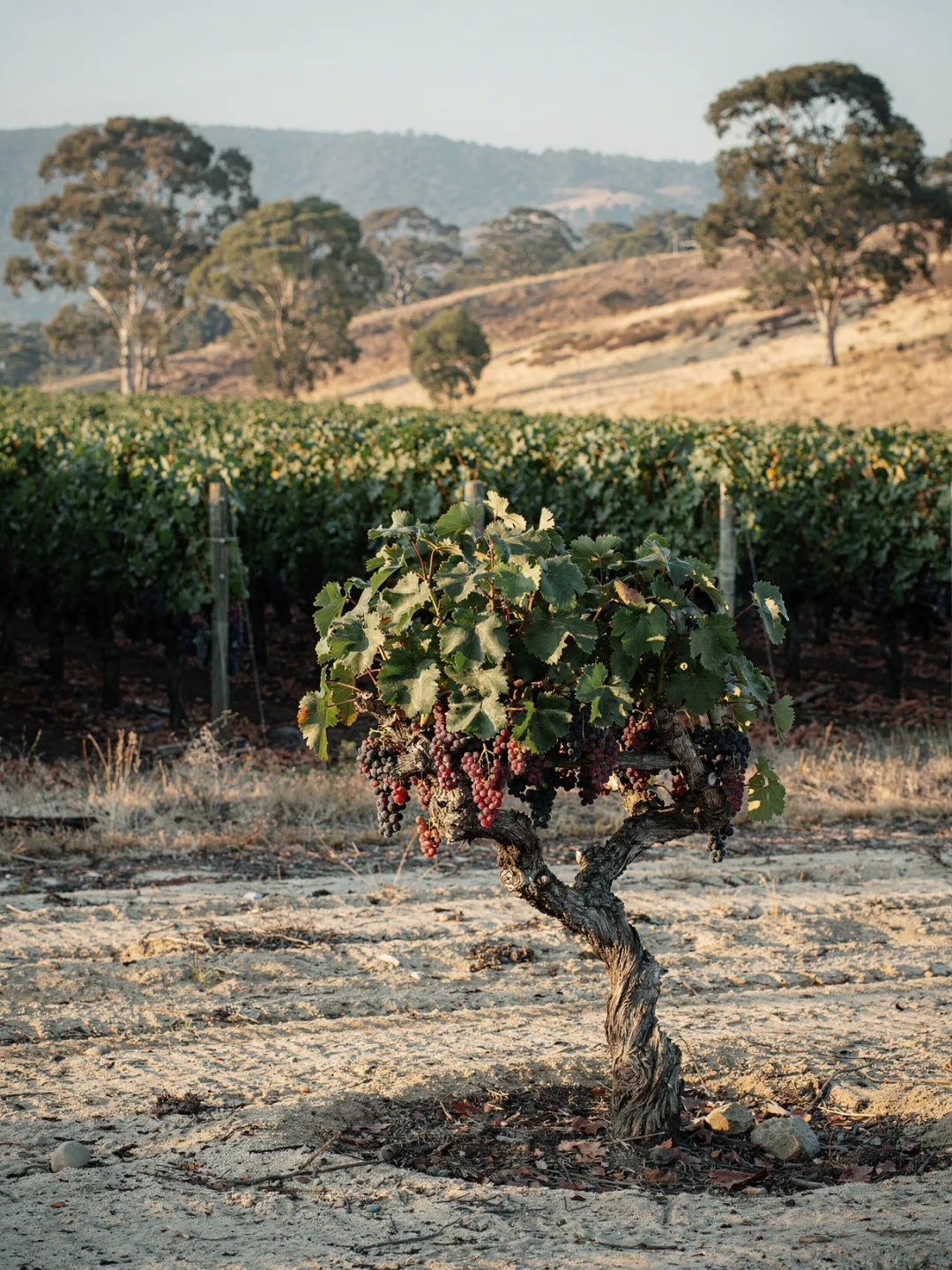
Alongside it stands the second major variety, and its reputation is currently being rewritten. Grenache was long dismissed as a cheap blending grape, since it mostly grew as a low, unirrigated bush vine without wire or stake, and it's precisely this old, labor-intensive method of growing that is now seen as a stroke of luck. Together with Shiraz and Mourvèdre, it forms the GSM blend. This is McLaren Vale's answer to southern French red wine, just with more sunshine in the glass.
Cabernet Sauvignon, by contrast, needs cooler sites, and it finds them in the hills around Clarendon, three hundred meters above sea level. There it ripens more slowly and retains noticeably more acidity than down in the valley. Its wines come across as more austere and angular. A Cabernet from Clarendon and a Shiraz from McLaren Flat barely taste like they come from the same region at all.
Since the turn of the millennium, a third group has joined the mix. Winemakers are now planting varieties that sound more like Sicily or southern France, Fiano, Vermentino, Nero d'Avola, and the reason is simply the climate. Where summers regularly hit over forty degrees Celsius, Mediterranean varieties often deliver more freshness than classic Bordeaux varieties like Cabernet. McLaren Vale has since become one of the pioneers of this movement in Australia.