Old Bush Vines, Dry
Winemaking
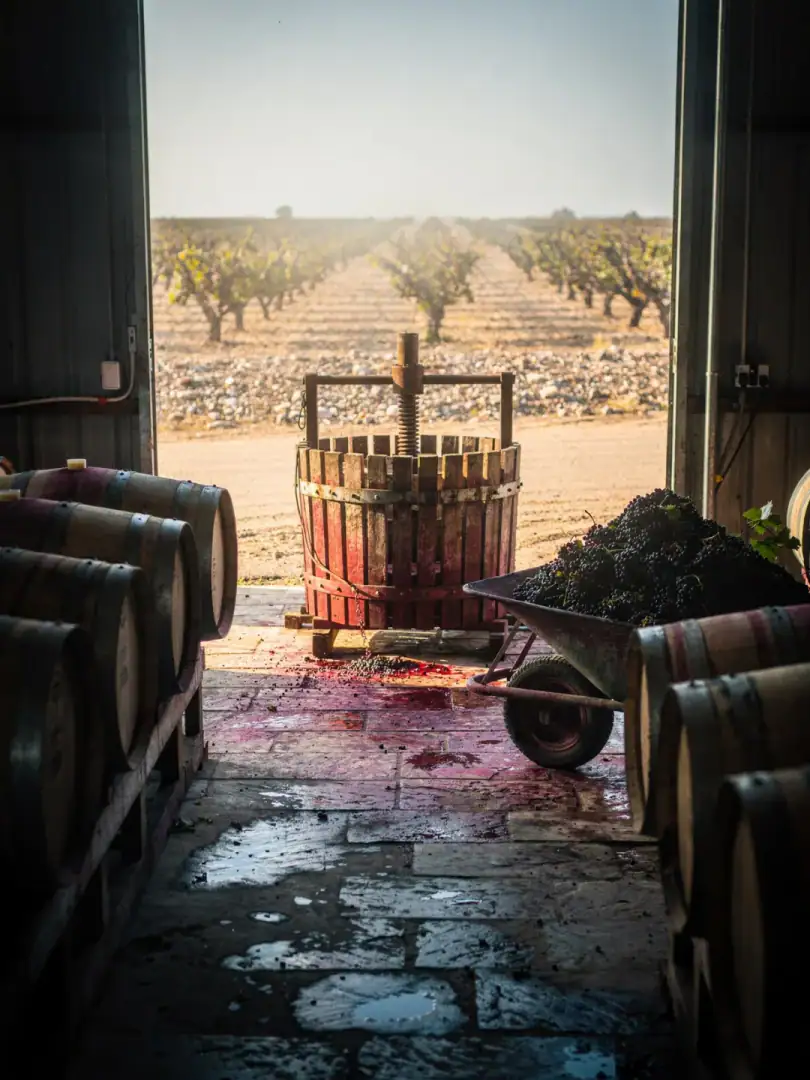
You'll search in vain for wire and stakes here, since the oldest Grenache vines in McLaren Vale grow as free-standing bush vines out in the field, with no trellis, no supports, and none of the modern equipment, just as they did over a hundred years ago. The Trott family still farms such bush vines in Blewitt Springs today, vines planted more than seventy years ago. Now tended by the third generation, they still receive no irrigation whatsoever, just as the grandfather once farmed them.
The vine finds its own water entirely on its own. This is known in English as dry-grown. Such a vine yields less fruit, but far more concentrated. A hectare of old bush vines often produces only a third of what a young planting delivers.
A lot changed for the region in 2012. McLaren Vale became the first Australian wine region where winemakers collectively adopted their own sustainability program, well ahead of most of their neighbors. Since 2019, this has been part of the nationwide Sustainable Winegrowing Australia system, developed together with the Australian Wine Research Institute. Nearly half of the region's vineyards are now irrigated with recycled wastewater instead of the town's scarce drinking water.
About 38 percent of vineyard land is now certified organic or biodynamic, well above the Australian average. At Chapel Hill, for example, the Vicar Shiraz is grown under biodynamic principles, with compost preparations replacing synthetic fertilizer in the soil. How much of this is science remains a matter of debate, but in the vineyard itself, it has at least made McLaren Vale cleaner. Old vines, though, forgive nothing.