Extended Lees Aging
Production
Good sparkling wine begins badly. That's the first lesson learned in Pipers River, because the base wines for bottle fermentation are picked with high acidity and almost no sugar, often as early as late February. A sweet base wine causes problems. There's no room left for freshness once the second fermentation kicks in.
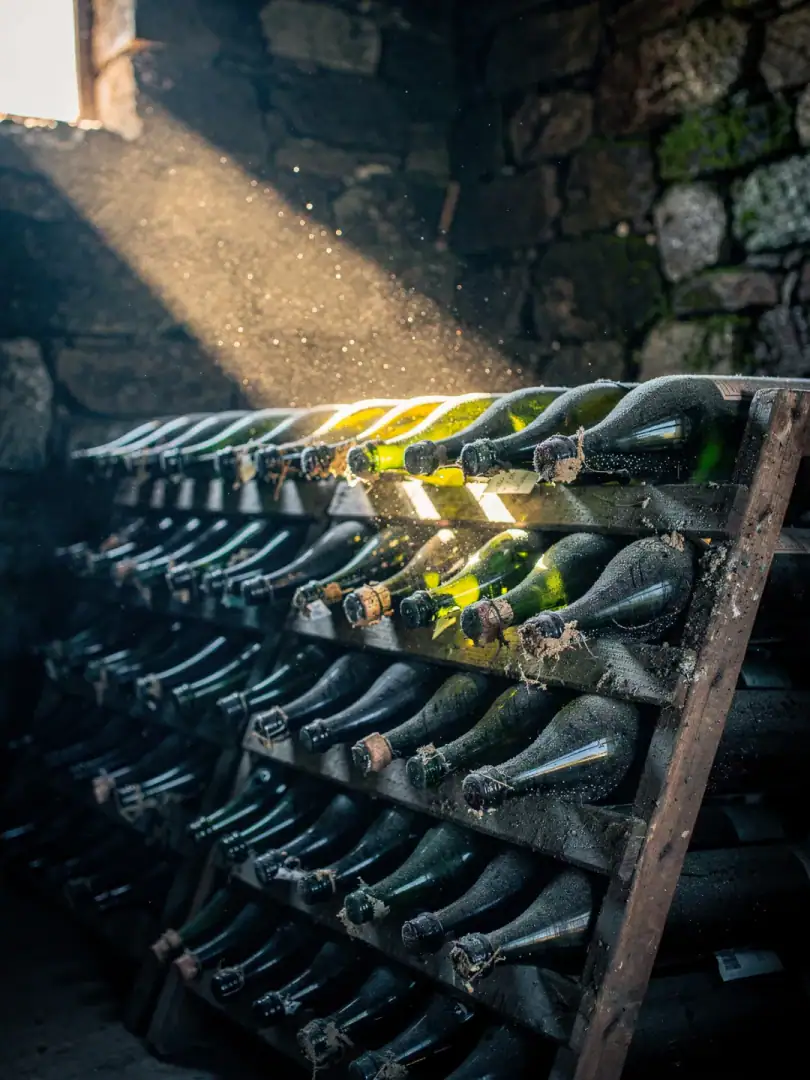
Then comes the bottle. Yeast and sugar go in, the bottle is sealed, and a second fermentation releases carbon dioxide that this time can't escape, since no cork lets it out. The yeast cells die. They sink to the bottom and slowly break down, a process called autolysis, which over the years produces notes of bread crust.
Ed Carr takes it further. Chief winemaker at House of Arras since 1998, he ages his vintage wines on the lees for at least six years before they're even riddled, and certain releases like the late-disgorged E.J. Carr Late Disgorged 2008 spent as long as thirteen years in this state. Riddling comes next. Disgorgement follows, in which the frozen plug of yeast sediment is shot out, and Ed Carr sources grapes from seven regions for this, from the Coal River Valley to the Huon Valley.
The dosage decides everything. Before the final cork goes in, a tiny addition of wine and sugar determines the style, turning a bone-dry base wine into a Brut or an Extra Dry. Things are calmer with Pinot Noir. Many producers now ferment with a portion of whole clusters and without added yeasts, cool and slow, so the delicate aromas aren't overwhelmed by too much heat.