Tulip, Not Coupe
Glassware
A glass can ruin a great deal. Six years on the lees are quickly wasted if, in Pipers River, where House of Arras ages its cuvées, the wrong glass ends up on the table regardless. Some vintages rest there for thirteen years. In that time, fine, slowly rising bubbles form, ones a wide coupe would shatter within seconds.
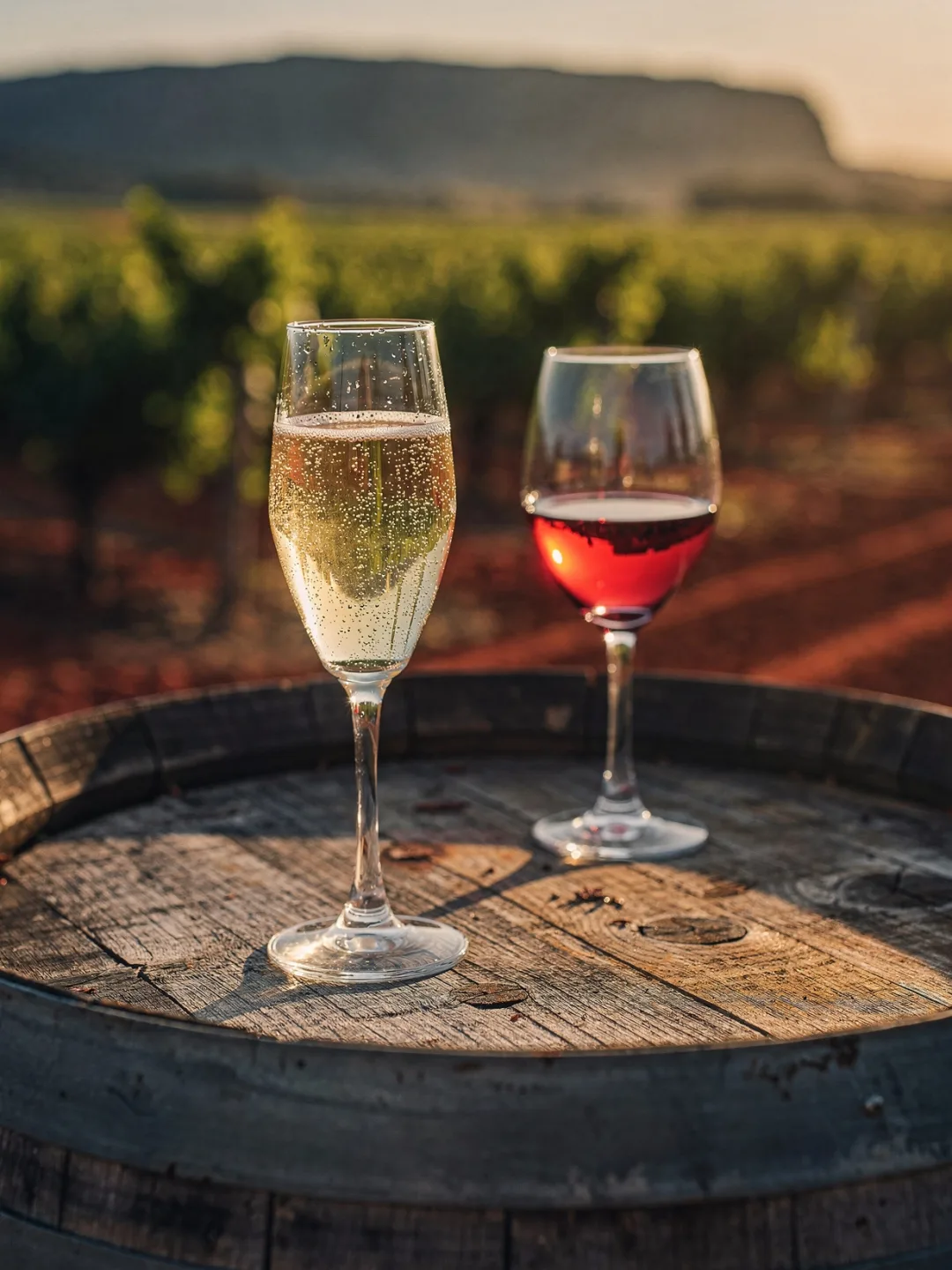
A coupe forgives nothing. That's why a tall, narrow tulip glass belongs with Tasmanian sparkling wine, its narrow opening keeping in the carbon dioxide that would otherwise vanish completely from a shallow coupe within a minute. The shape concentrates the aroma. Toasty notes of brioche and yeast need exactly this narrowness to become perceptible at all after years in the cellar.
Pinot Noir needs the opposite. With Pinot Noir from the Tamar Valley or the east coast around Freycinet, the colour is pale, almost translucent, yet the aromas of redcurrant and forest floor stay delicate and fleeting if the glass doesn't offer enough surface area for them to open up. A rounder-bowled glass helps. This way the alcohol, usually only around thirteen percent anyway, stays in the background rather than pushing forward as sharpness.
Riesling calls for the opposite approach. A slender shape keeps the wine cool and channels the acidity straight to the palate, since a wide glass would warm it up and age the fruit faster than anyone would like on a mild evening. Two wines, two glasses. Anyone tasting both on the same evening needs them side by side, not out of pretension, but because otherwise both wines simply taste worse.