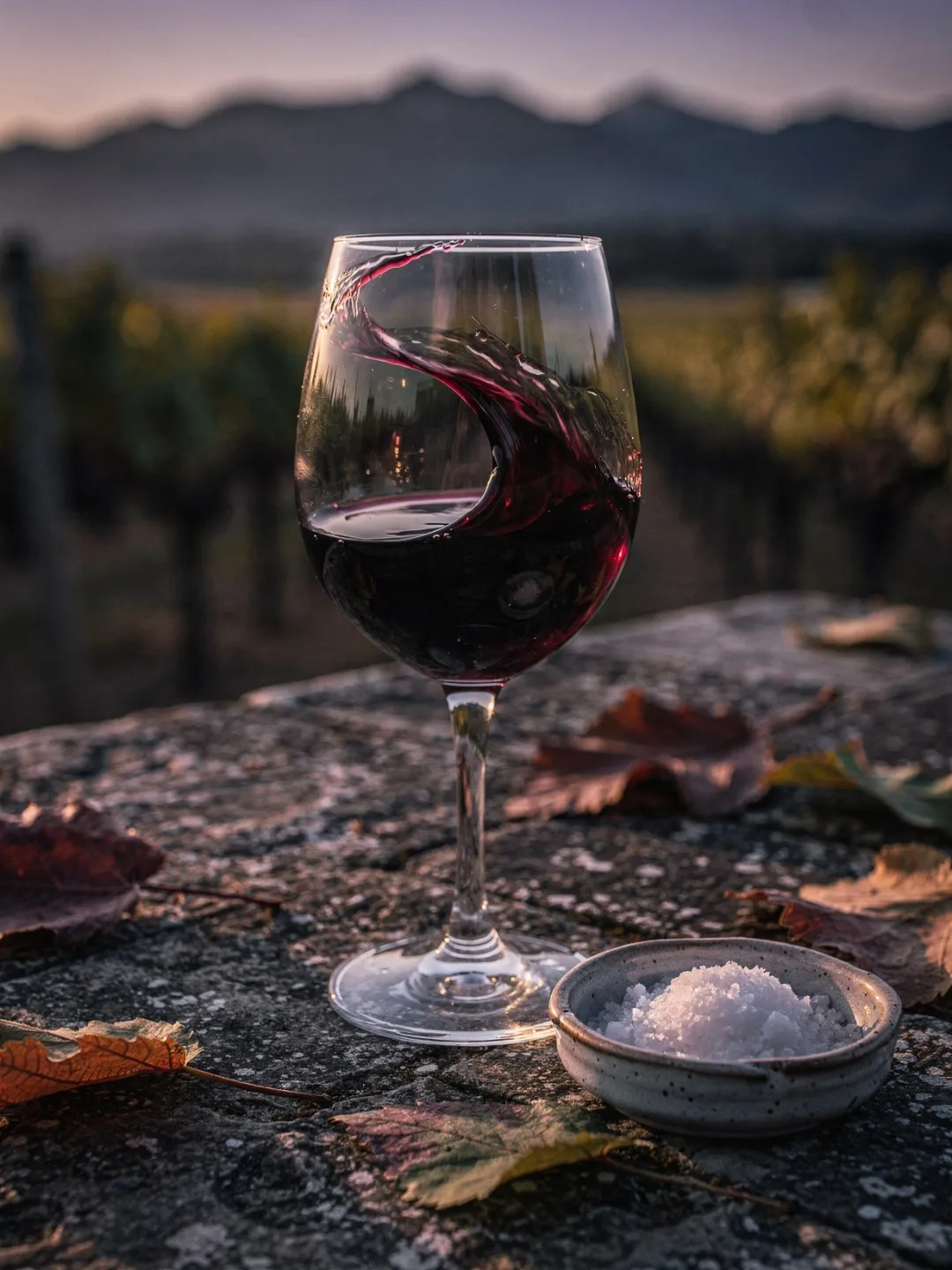
On a Cabernet
Tasting
Hold a glass of Cabernet Sauvignon from the Aconcagua Valley up to the light. You'll see almost nothing through it. The color ranges from deep ruby to nearly black-violet, far denser than a Sangiovese from Italy or a Pinot Noir from the coast. This depth comes from thick skins that must defend themselves against the strong Panquehue sun.
On the nose, blackcurrant comes first, followed by cedar and a hint of toasted bread from the barrel. In many wines from the valley, something else creeps in that surprises newcomers: a cool, almost medicinal note of eucalyptus. The reason stands at the edge of the field. Eucalyptus trees grow as windbreaks along many vineyards, and their essential oil travels through the air and into the grape skin itself. It's an aroma you'll never find in Bordeaux, no matter how hard you look.
On the palate, acidity announces itself first, along the sides of the tongue. It's vigorous enough to get your saliva flowing after the first sip. Right behind it comes the tannin, a dry, gripping texture on the gums that in a young wine from Panquehue can genuinely recall sandpaper. That's not a flaw. Cabernet Sauvignon from the valley is made for the bottle you'll open in ten years, not for a Tuesday night.
Finally, count the seconds the flavor lingers after you swallow. For a simple wine, that's three or four seconds; for a Seña or a mature Don Maximiano, easily over twenty—and that long finish separates the valley's great wines from the ordinary ones more reliably than any medal ever could. Once you've counted it yourself, you'll measure every wine against that standard from then on.