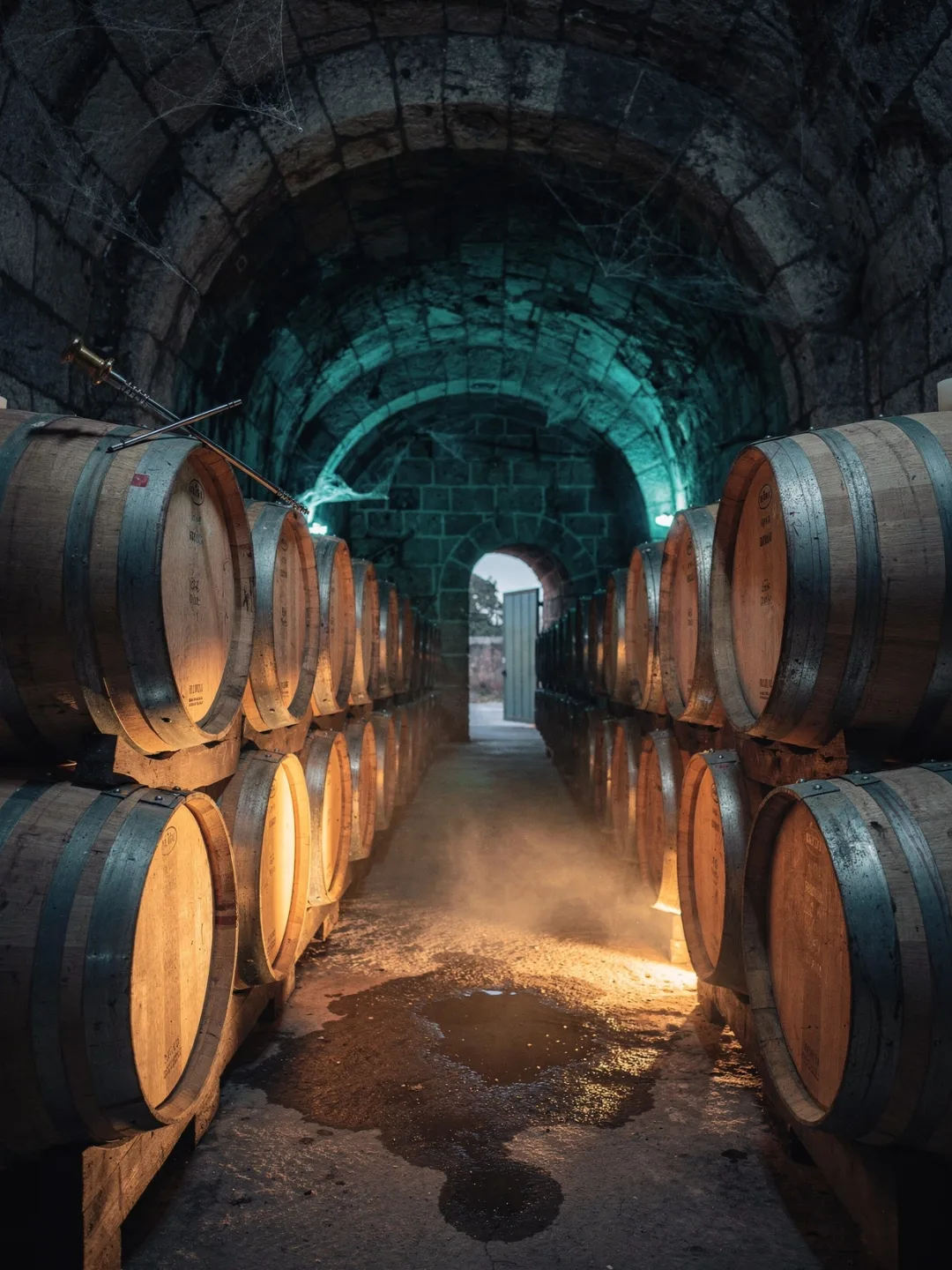
Barrique and Patience
Winemaking
Hand-picked, sorted, destemmed. That's how every harvest begins for the serious wines of the Aconcagua Valley, well before the first grape ever reaches the press. Machine harvesting would be difficult anyway on the stony terraces near Panquehue, but with Cabernet Sauvignon and Carmenère there's a second reason: only by hand can every damaged or underripe berry be sorted out before fermentation. Nothing gets overlooked.
After fermentation, the must often stays on the skins for three to four weeks. During this time, color, tannin, and most of the aromatic compounds migrate from the grape skin into the wine. This extended contact explains exactly why a young Cabernet from the valley tastes so much harder than a Merlot from milder sites. Press too early and you get a wine without backbone. Wait too long and you risk bitter, harsh seed tannins.
Next comes the barrel, almost always French oak and almost always small: 225-liter barriques have replaced the large casks once typical of Italy. At Seña, the wine spends eighteen to twenty-two months in barrel, roughly seventy percent of it new oak. This lends vanilla and toasted notes and helps the tannin round out, while a portion also ages in large foudres that impart barely any aroma yet still give the wine structure. Oak remains a means, not an end in itself.
Since 2005, the estate behind Seña has also farmed biodynamically. It uses compost from its own operation and follows a calendar that times vineyard work to lunar and stellar phases. Whether this genuinely changes the wine is something winemakers argue about worldwide. What's beyond dispute: the soil between the rows is more alive today than it was twenty years ago, with more earthworms and less compaction. A healthy soil, in the end, shows up in the glass.