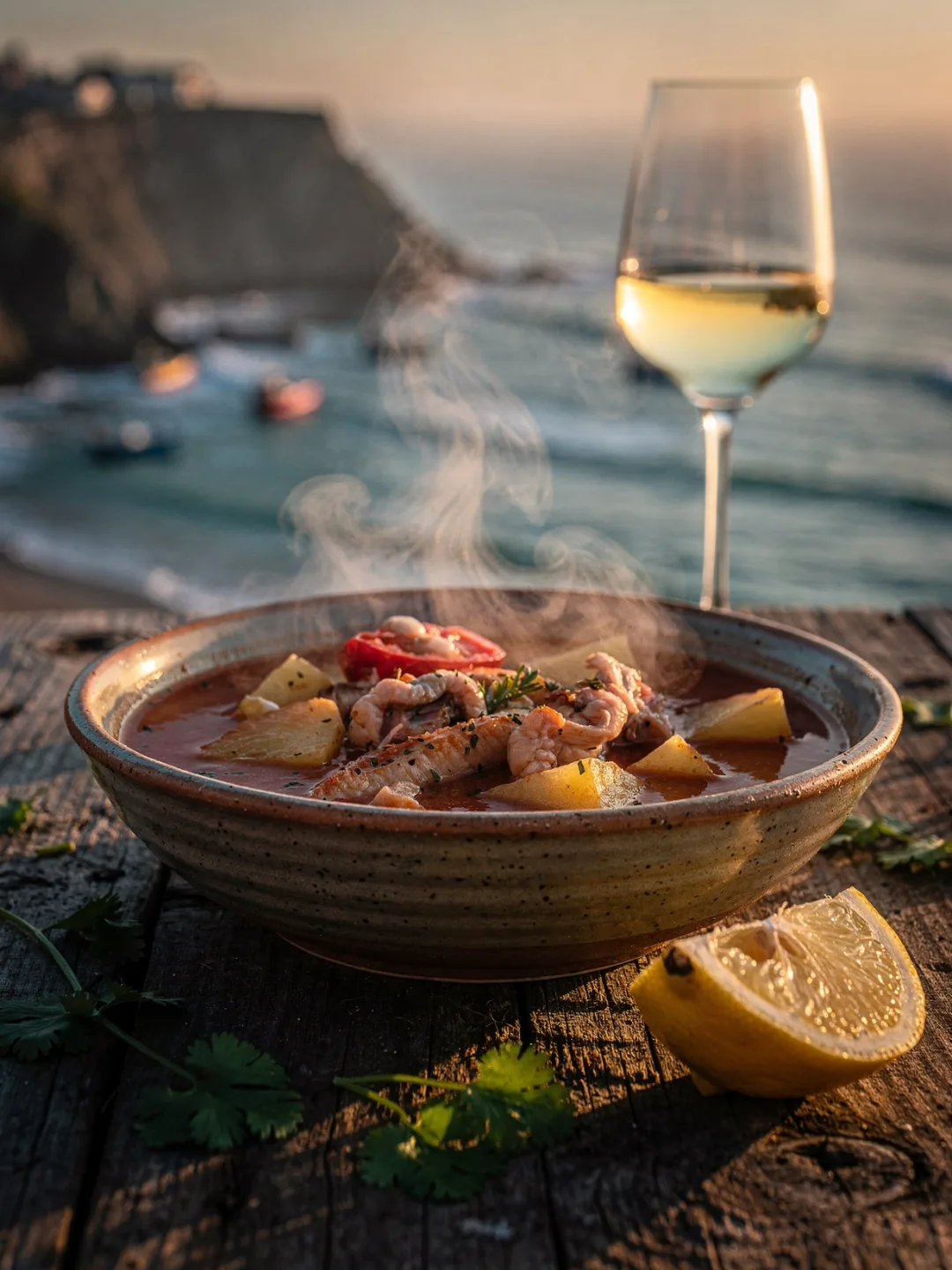
Congrio meets Sauvignon
Wine & Food
The cuisine that belongs to Casablanca comes from the sea. Not from the valley itself, but from the coast that sends it fog every morning. Along that same coast near Valparaíso lie the fish markets where the valley's restaurants source their goods, often before the morning fog has even lifted.
No fish takes center stage there quite like congrio, a conger eel with firm, white flesh. In 1954, Pablo Neruda dedicated an entire ode to it, the Oda al Caldillo de Congrio, after eating the dish for years at a small restaurant in El Quisco, less than an hour's drive from Casablanca's vineyards. A Chardonnay with a touch of oak pairs better than a purely stainless-steel-aged wine with the hearty, slightly tangy broth of congrio, tomatoes, and potatoes.
Locos traditionally arrive at the table with mayonnaise. This sea snail is cooked until it turns from tough to butter-soft. The acidity of a Casablanca Sauvignon Blanc cuts right through that richness, much as a squeeze of lemon would, turning a heavy dish light again.
Ceviche calls for the same principle. Raw white fish, marinated with lime and red onion, meets plenty of acidity in the glass. Served with pebre—the Chilean salsa of cilantro, onion, and smoky Merkén chili—the wine can even handle a good deal of heat, as long as its own fruit isn't too reserved.
Not every coastal dish needs white wine. Grilled salmon or tuna pairs better with the pale Pinot Noir from Casablanca. Its tannin barely intrudes, and its fruit carries the fat rather than fighting it. Taste both side by side, and you'll understand why, in this valley, each of the three great wines finds its own place at a different stall of the fish market.