The short answer
With real chili heat, a wine with low alcohol helps, often paired with a bit of sweetness. A very bold red wine tends to intensify the burn rather than tame it.
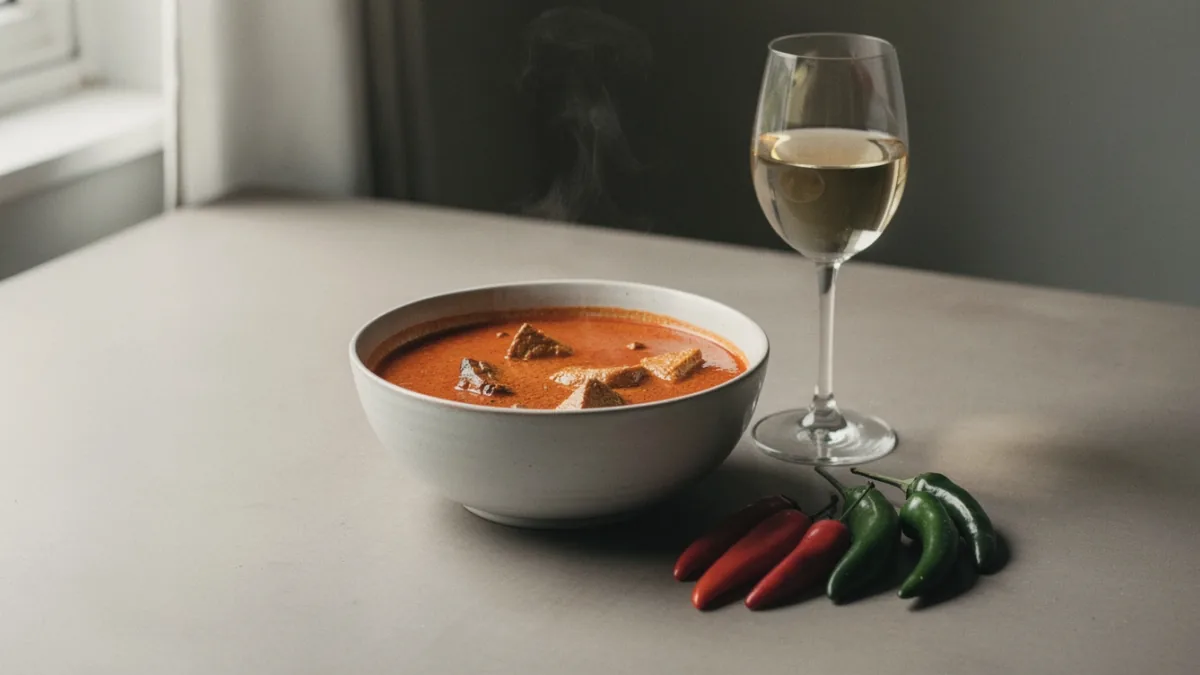
Distinguishing 'spicy hot' from 'aromatic'
Cinnamon, coriander, or fresh herbs make a dish aromatic, but not spicy hot. The burning sensation comes from chili. Alcohol can intensify this burning feeling, while sweetness can soften it. That's generally how it works — though it's no guarantee for every recipe.
Whether a dish is spicy only becomes clear once you taste it. The ingredient list won't tell you. Chili builds up slowly, lingers on the tongue, lips, and throat, and fades only gradually. Herbs, cinnamon, or coriander you mainly smell — they don't create heat. So a dish can smell intensely aromatic and still be completely mild.
This also explains why alcohol stands out so much here. It brings its own warming sensation, which can burn a little on its own. When that warmth meets a tongue already irritated by chili, the two sensations add up. Sweetness works in the opposite direction and softens the burn somewhat. How much depends on the dish, the amount of chili, and your own sensitivity.
A possible selection
For a moderately spicy dish, a Riesling with a touch of residual sweetness would be worth trying. Residual sweetness means: some sugar remains in the wine, and you can taste it. What matters is the actual sweetness and alcohol content. The grape variety name alone isn't enough. If you generally don't enjoy sweetness in your glass, don't force it — try a different drink instead.
For a very spicy dish, I wouldn't plan an expensive, delicate bottle as a mandatory pairing. When ordering, explicitly mention the heat level. 'Asian food' is too vague for this — a mild vegetable dish and a fiery curry don't call for the same answer.
Both factors can be estimated before opening the bottle. Alcohol content is listed as a percentage by volume on every bottle. How sweet a wine tastes is indicated by the taste description on the label, or through a quick chat with the merchant. The grape variety name alone doesn't tell you this. There are Rieslings with no noticeable sweetness at all, and Rieslings where it comes through clearly.
In a restaurant, a specific request helps more than the name of a national cuisine. Say that you'd like the curry properly spicy. Or that the soup should be only mildly seasoned. The staff can work with that. And if no wine really suits a fiery dish anyway, that's not a failure. Water alongside, and the lovely bottle afterward — that works just as well.
Which wine goes with which preparation of spicy food?
From these three lines, you mainly learn what to watch for with heat: the wine's alcohol warmth and its sweetness. Its overall power is secondary. The suggestion in the middle is always just an example that brings this particular quality.
| On the plate | Suggestion to try | What matters here |
|---|---|---|
| Chili heat | Restrained alcohol warmth | Bolder isn't automatically the better match here. |
| Spicy and sweet at once | A touch of residual sweetness for comparison | Sweetness and acidity need to work together for you too. |
| Aromatic, but not fiery | Choose based on herbs, sauce, and intensity | Aromatic doesn't necessarily mean chili-hot. |
Why alcohol intensifies the heat
The most persistent misconception: bold food needs a bold wine. This equation doesn't work with chili. A powerful, high-alcohol red wine tends to intensify the burn rather than balance it. The second misconception concerns sweetness. Here, it's a tool against the heat, not a sign of a simple wine. If you generally dislike sweetness, you're better off reaching for something else entirely.
The reverse assumption is also wrong. Not every dish from a cuisine known for spiciness actually burns. Many dishes are simply aromatically seasoned and stay mild. There, the usual considerations for wine pairing apply. Residual sweetness and especially low alcohol aren't an issue then.
Testing heat and residual sweetness yourself
You'll learn the most by keeping the dish the same and only changing the wine. Cook something with a clearly measured level of heat, like a curry. Set two glasses side by side: a wine with noticeable sweetness and moderate alcohol, and next to it a dry wine with clearly higher alcohol. Take a bite, try both glasses, wait a moment, and repeat.
Pay attention to the burn, not the aromas. Does it get stronger, weaker, or stay the same? After two or three rounds, you'll get a feel for how much alcohol still feels comfortable at a given heat level. Drink a sip of water in between. Otherwise the heat builds up and, in the end, you're only tasting your own exhaustion.