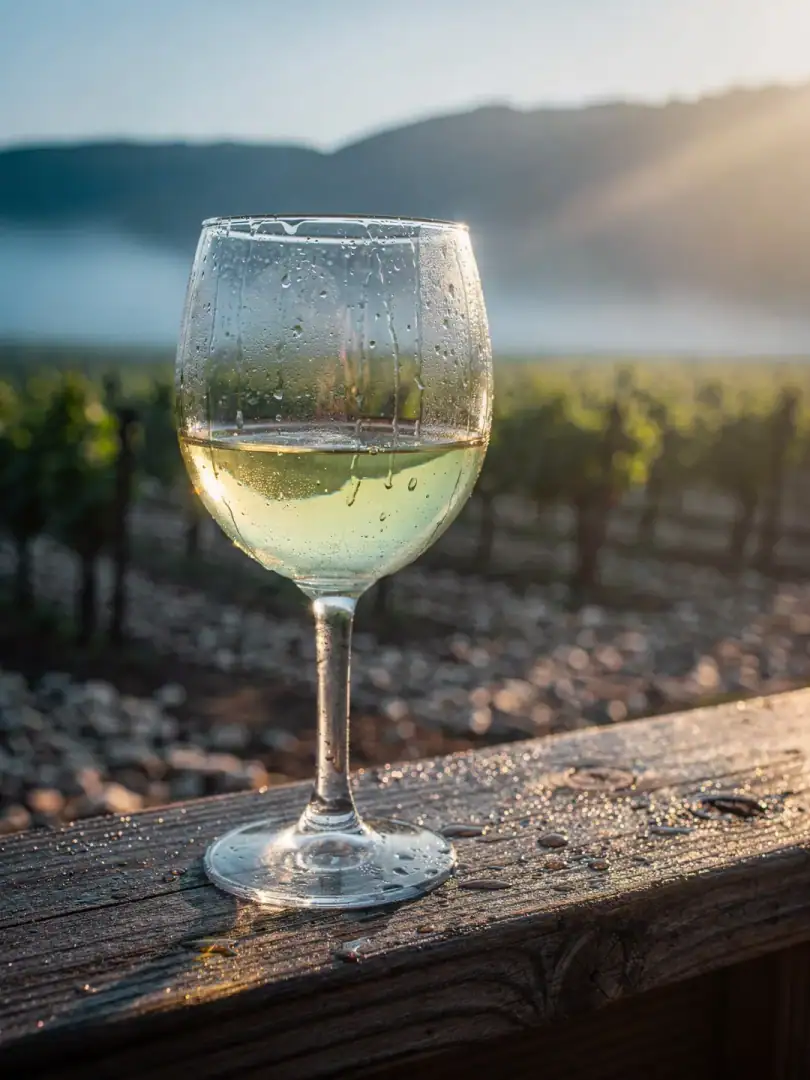
Grapefruit in the glass
Tasting
Hold a glass of Casablanca Sauvignon Blanc up to the light. The color reveals its origin almost on its own. It's pale green to straw yellow, lighter than Sauvignon Blanc from warmer regions, because the camanchaca fog gives the grapes time to ripen without browning in the sun.
On the nose, grapefruit comes first. Then passion fruit, and somewhere in between that green note of blackcurrant leaf that connoisseurs immediately recognize as a Sauvignon Blanc signature. Swirl the glass once more, and a mineral whiff appears, one some compare to wet stone, even though it stems more from fermentation than from the soil.
On the palate, acidity strikes first. It sits along the sides of the tongue and immediately gets the saliva flowing, a sign of just how coolly these grapes actually ripened. Almost no residual sugar remains. Alcohol usually sits at a moderate twelve and a half to thirteen and a half percent, and it's exactly this combination that makes the wine so refreshing.
Taste a Pinot Noir from Casablanca alongside it, and you experience the same valley from a different angle. The color is pale ruby red. The aroma recalls red cherry and pomegranate with a hint of violet, and the tannin stays fine rather than angular. On the palate it feels almost fragile compared to a Pinot Noir from warmer sites, and it's exactly that fragility that connoisseurs now consider a hallmark of quality.
Finally, count how long the flavor lingers after you swallow. In a good Casablanca Sauvignon Blanc, the citrus freshness holds on remarkably long, even though the wine itself feels light—a paradox only a truly cool climate can pull off.