Narrow for acidity
Glassware
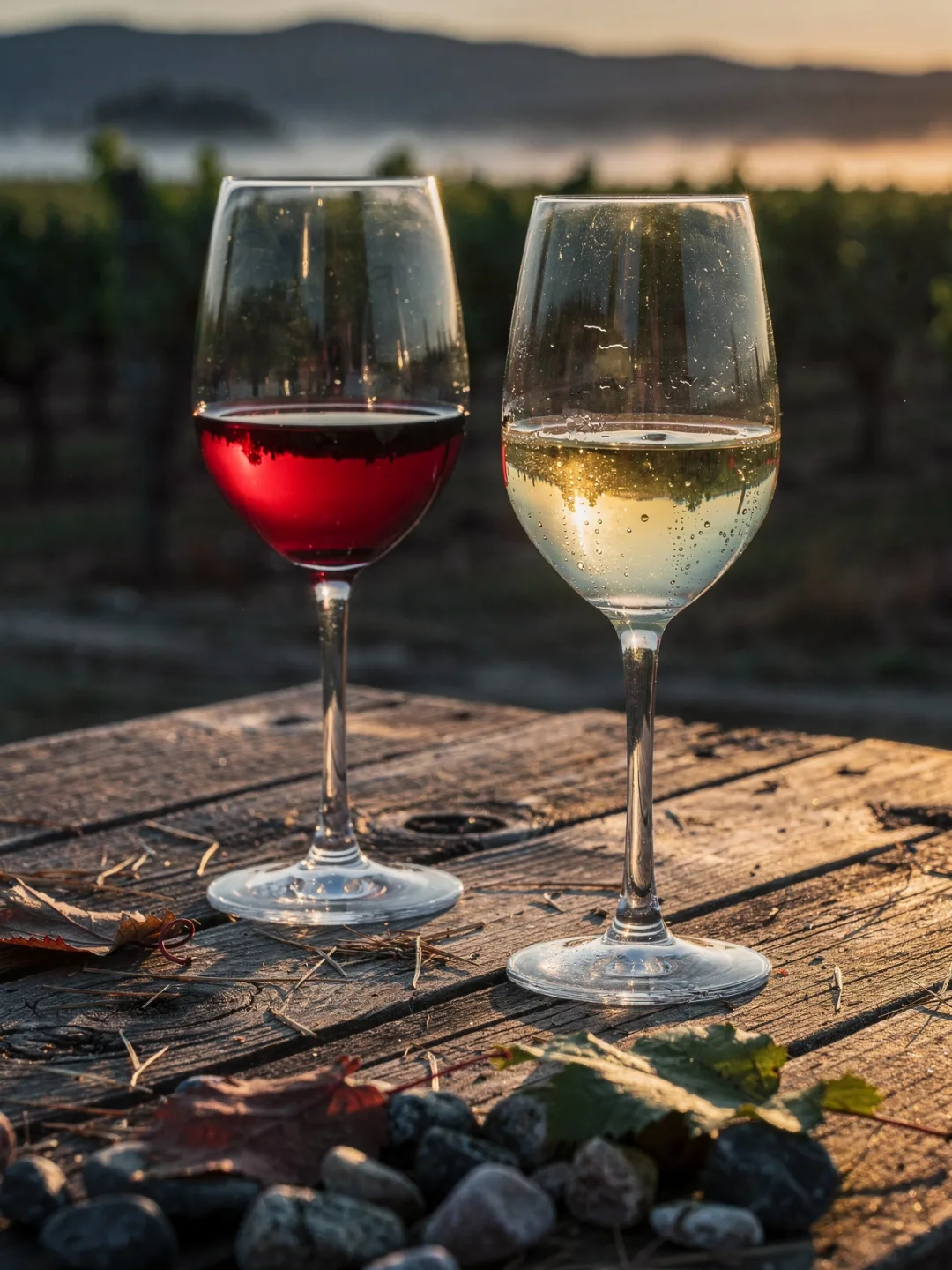
A Sauvignon Blanc from Casablanca doesn't forgive the wrong glass. Its acidity is so pronounced that a glass that's too wide and bowl-shaped makes it seem sharp and cutting, while the delicate notes of grapefruit and gooseberry simply dissipate into the large volume of air. A narrow, tulip-shaped white wine glass helps here. It concentrates the aroma right where the nose first encounters it, letting the acidity act as a backbone rather than an assault.
Fog plays a role in temperature too. Because the camanchaca lets the grapes ripen slowly and coolly, acidity stays high in the finished wine, and high acidity tastes crisp and fresh at eight to ten degrees Celsius (46–50°F), but merely sour and thin at room temperature. Twenty minutes in the refrigerator is usually enough.
Chardonnay gets a bit more room than Sauvignon Blanc—though not as much as a heavy Burgundy. A glass with a slightly rounder bowl lets the vanilla and toasty oak notes come through without smothering the citrus fruit that this wine also carries from its cool origins. Ten to twelve degrees Celsius (50–54°F) suits it best.
Pinot Noir from Casablanca is lighter and paler than its reputation from Burgundy might suggest. Still, it needs the same large, bowl-shaped glass. Its aromas of red cherry and violet only unfold with plenty of air contact. It's served cooler than a full-bodied red wine, at around fourteen to sixteen degrees Celsius (57–61°F), otherwise this delicate wine quickly turns flat and tired.