Maceration and Barrique
Winemaking
Hand-harvested, the grapes in Colchagua move into small bins and onto the sorting table before the berries are separated from the stems. Part of the must is then left to rest cool for several days. This protects the delicate must. This cold soak draws color and aroma from the skins even before fermentation begins.
The main fermentation lasts about a week to ten days. This is usually followed by a second, gentler fermentation in stainless steel tanks or concrete: malolactic fermentation, in which bacteria convert sharp malic acid into softer lactic acid, a process that can take up to three weeks for the valley's powerful red wines.
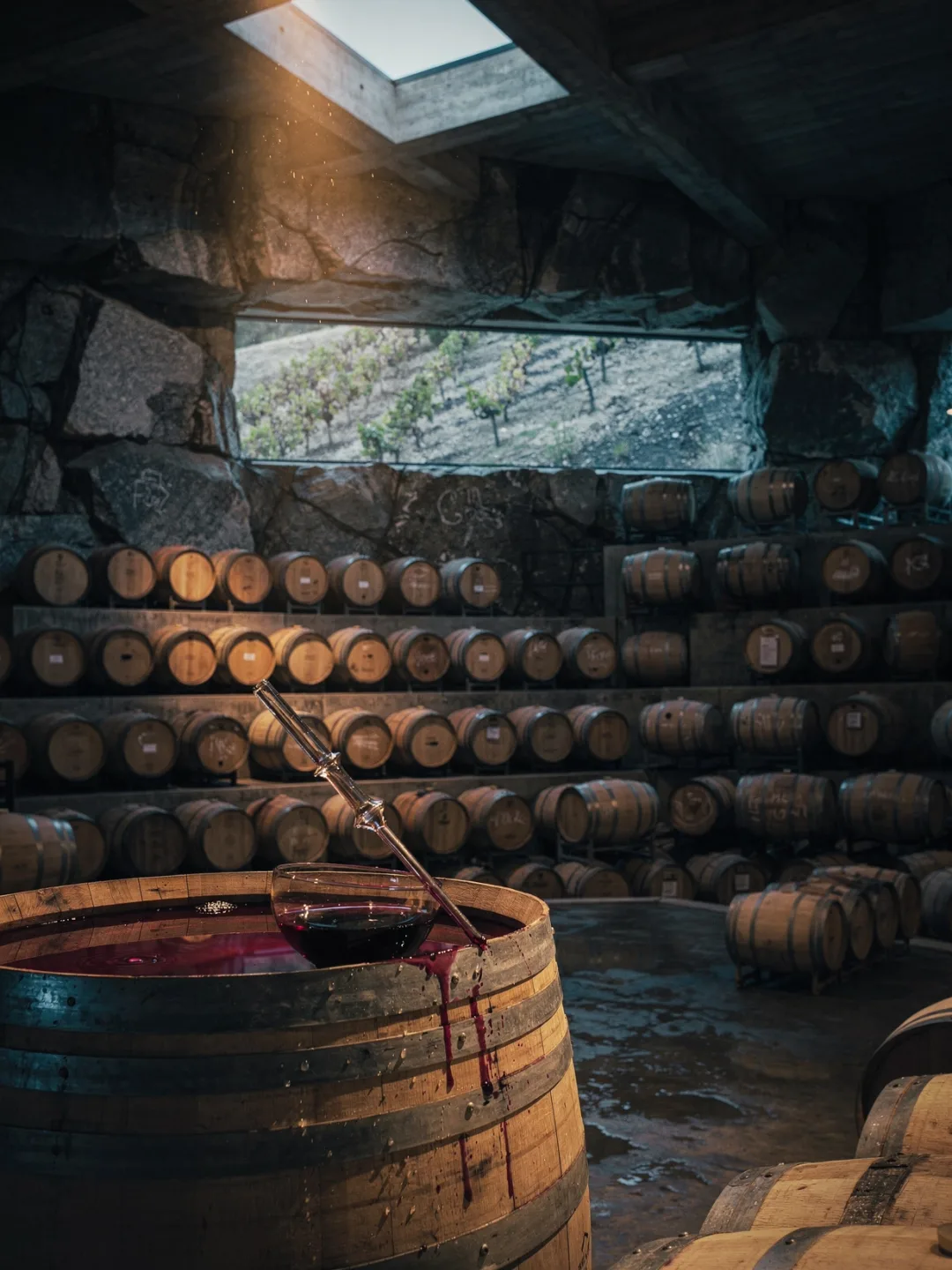
Part of the wine then goes into oak. Typical blends of Cabernet Sauvignon, Syrah, and a touch of Carmenère often age about two-thirds in French oak for twelve months, using a mix of new and already-used barrels so the toasty oak notes don't overpower the fruit. Vineyard yields are kept deliberately low, often around seven tons per hectare. Icon wines like Clos Apalta, crafted since 2004 in a six-story gravity-flow winery, get almost entirely new barrels and considerably more time. Gravity replaces every pump there.
On the label, Reserva and Gran Reserva mean less than they sound in Chile: the law only requires a minimum alcohol content, not any specific barrel-aging time or tasting evaluation. The place of origin itself is more reliable. It's regulated by the SAG authority. A wine labeled Valle de Colchagua must actually come from the valley for at least seventy-five percent.