On a Cabernet Blend
Tasting
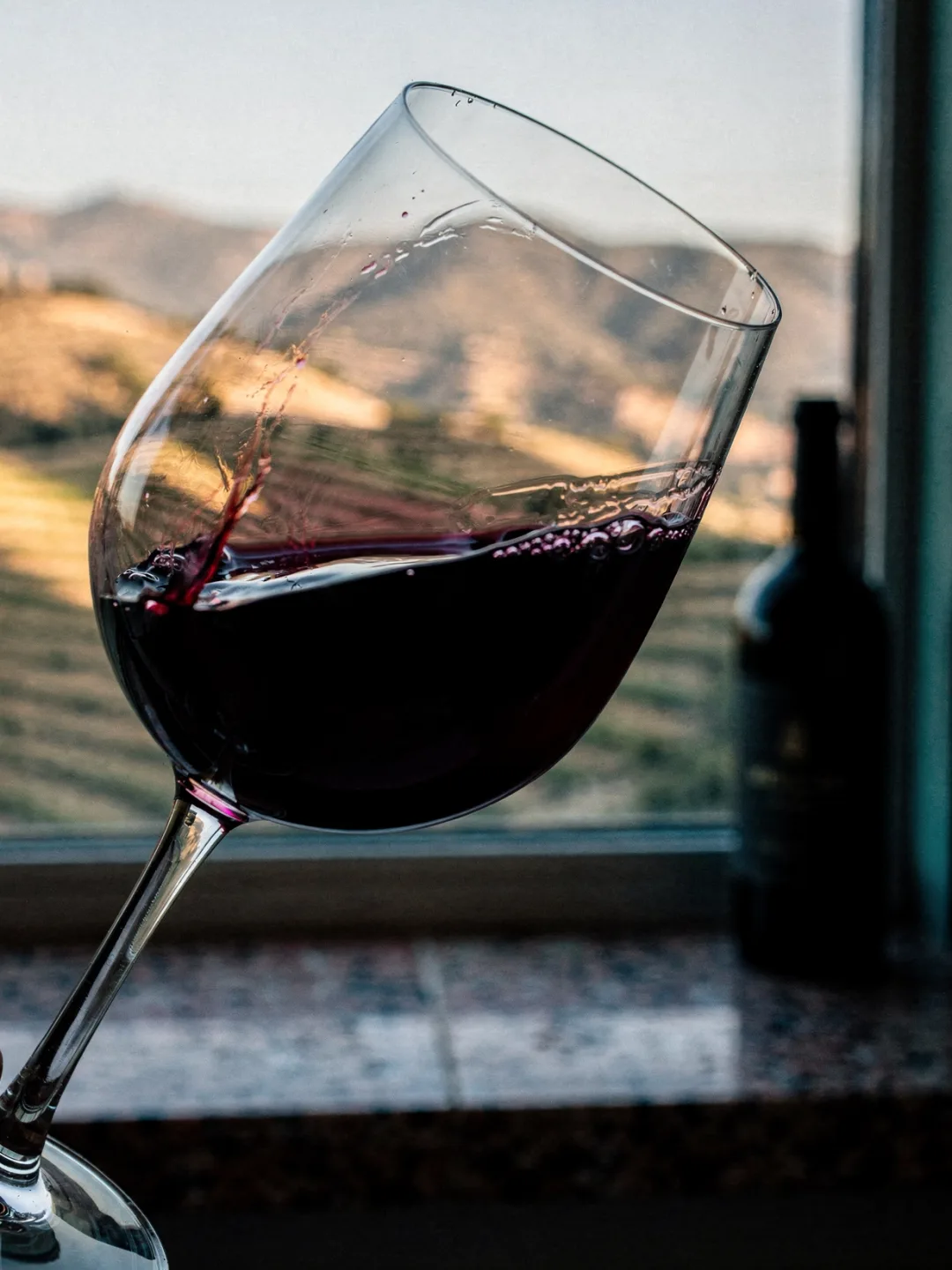
Hold a glass of Colchagua red wine against a bright background and tilt it slightly. A closer look is worth it. The color ranges from deep crimson to nearly black-violet, denser than in most other Chilean red wines: an early sign of the small, concentrated berries from the granite slopes.
On the nose, ripe dark fruit like plum and cherry comes first, sometimes a hint of cooked raspberry syrup, and swirling the glass brings out tobacco, leather, and a sweet toasty note from the barrel. If the wine also smells of violet or dark berry, there's likely a dash of Syrah in the blend. If Carmenère is part of the blend, it's worth searching for a subtle green note of bell pepper or black pepper. If it's almost entirely gone, the grape was truly ripe at harvest.
In the mouth, a good wine from the valley feels round and soft at first, then the tannin arrives: firm but rarely hard, since the warm ripening period softens seeds and skins. The body is full. You notice it immediately. Fourteen percent alcohol or more is common, giving the wine weight and warmth on the finish.
At the end, the flavor lingers long, often thirty seconds or more with the densest wines from Apalta. That's no coincidence. This is exactly how you recognize the origin. Small berries deliver more tannin and pigment per sip than larger, juicier grapes from the flat valley floor, no matter how carefully the wine was made in the cellar.