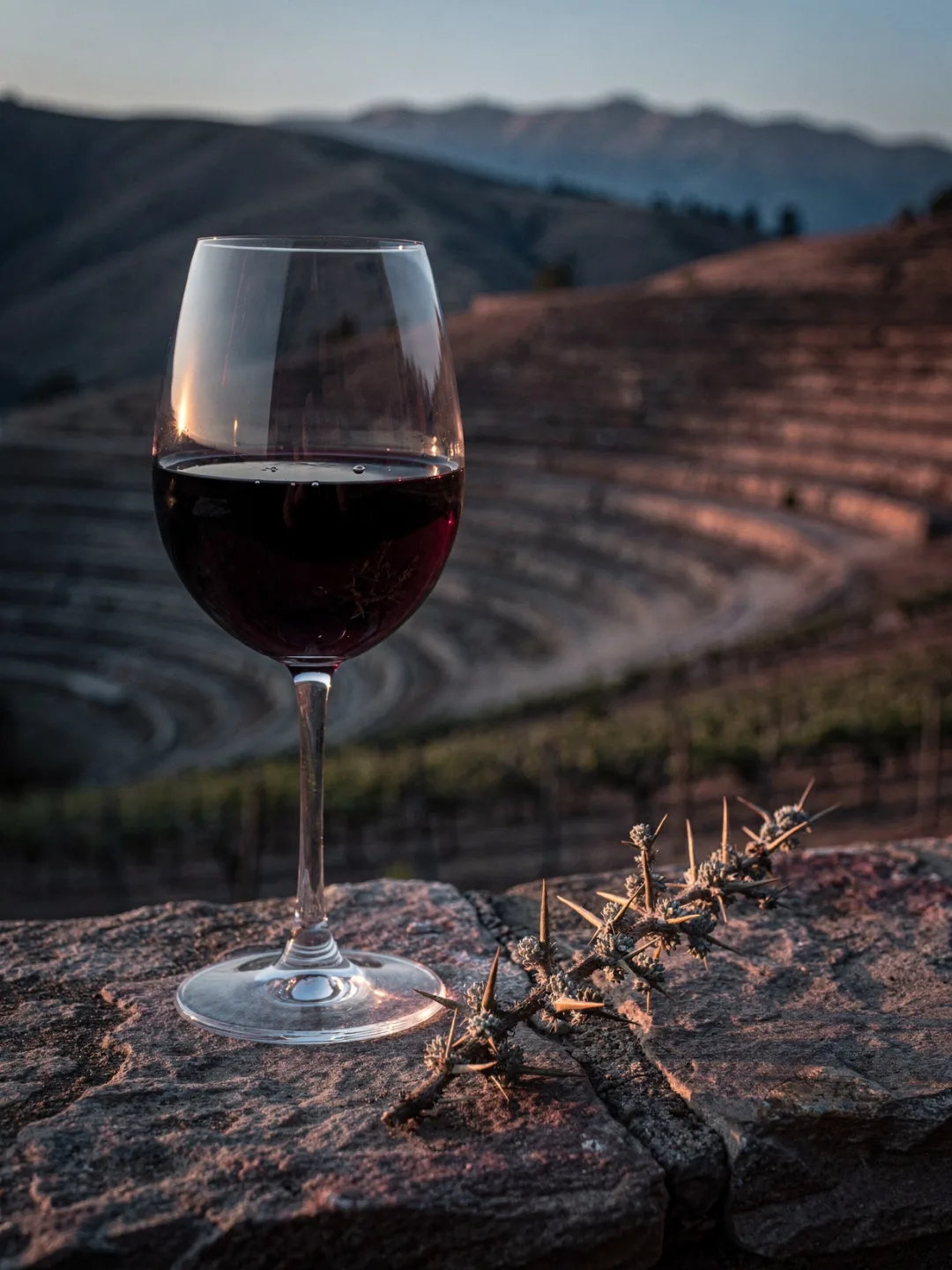
Bordeaux Glass for Cabernet
Glassware
Choose a large glass with a broad, sweeping bowl, the kind you'd use for Bordeaux, for a wine from Colchagua, since Cabernet Sauvignon, Carmenère, and Syrah here bring plenty of tannin and bold fruit. Both need room. Only then can the wine unfold in the glass before it reaches the nose.
This pays off especially with Carmenère. If the grape isn't fully ripe, its skin holds an aroma compound called pyrazine that smells of green bell pepper, and a narrow glass traps this smell and pushes it straight to the nose. A wider glass, by contrast, lets it blend with the air while cherry and cocoa move to the fore.
As for temperature, wine in Colchagua, as everywhere, is often poured too warm. Seventeen to nineteen degrees Celsius suits a bold Cabernet blend from the valley, noticeably cooler than normal room temperature. Otherwise the alcohol comes across as brash and the tannin bitter rather than juicy. An ice bucket is usually all it takes.
Young wines from Apalta or Marchigüe almost always benefit from half an hour in a decanter, even if they're not yet ten years old, because the dense fruit and firm tannin need that time to open up. A mature Clos Apalta, on the other hand, can handle a full hour without tiring. Rarely does it need more. The same Carmenère tasted from a narrow water glass and from a large Bordeaux glass can seem like two different wines.