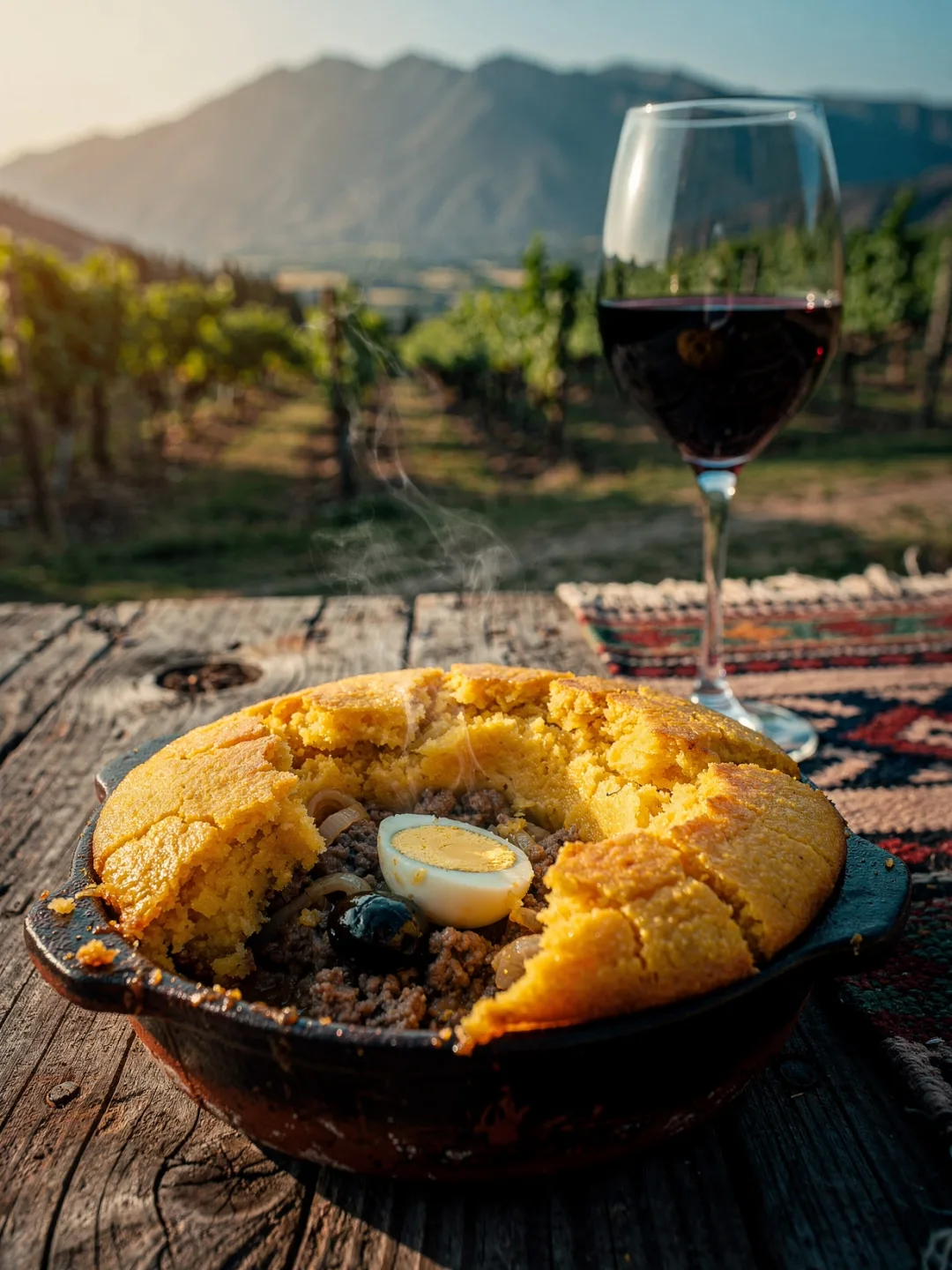
Asado and Choclo
Wine & Food
Chilean cuisine and the powerful red wines of the Maipo Valley seem made for each other. On the grill, the asado, beef usually takes center stage, often cut thick and seasoned with nothing more than coarse salt. That calls for a wine with enough tannin and fruit to hold its own against the fat and the charred, roasted flavors. Otherwise it comes across thin and lost next to the meat.
Fat binds tannin and softens it. That's why a young, still-angular Cabernet Sauvignon suddenly feels round alongside a well-marbled cut of beef. The dark roasted aromas from the grill, in turn, find an echo in the wine's barrique notes, with vanilla and smoke meeting rather than clashing. That's why, at an asado, people almost automatically reach for the boldest red wine in the house, not the lightest.
The case is different with Pastel de Choclo. This casserole, topped with sweet corn purée, covers a filling of ground beef, onions, olives, and hard-boiled egg. Here, a hard, tannic Cabernet would be too much of a good thing. A softer Carmenère works better, its dark fruit and mild sweetness playing along with the sweet corn rather than fighting it. Its spice note is black pepper, which also complements the slightly smoky flavor of the olives.
The empanada de pino, filled with ground beef, onions, raisins and a black olive, doesn't call for a heavyweight wine either—a medium-bodied Cabernet-Carmenère blend does the job perfectly. In the end, it all comes down to the same principle: fat and roasted aromas can handle plenty of tannin, while sweet and mild dishes need more fruit than grip. In the Maipo Valley, where both grape varieties grow side by side, you don't even need to leave the region to find the right match.