On a Cabernet
Tasting
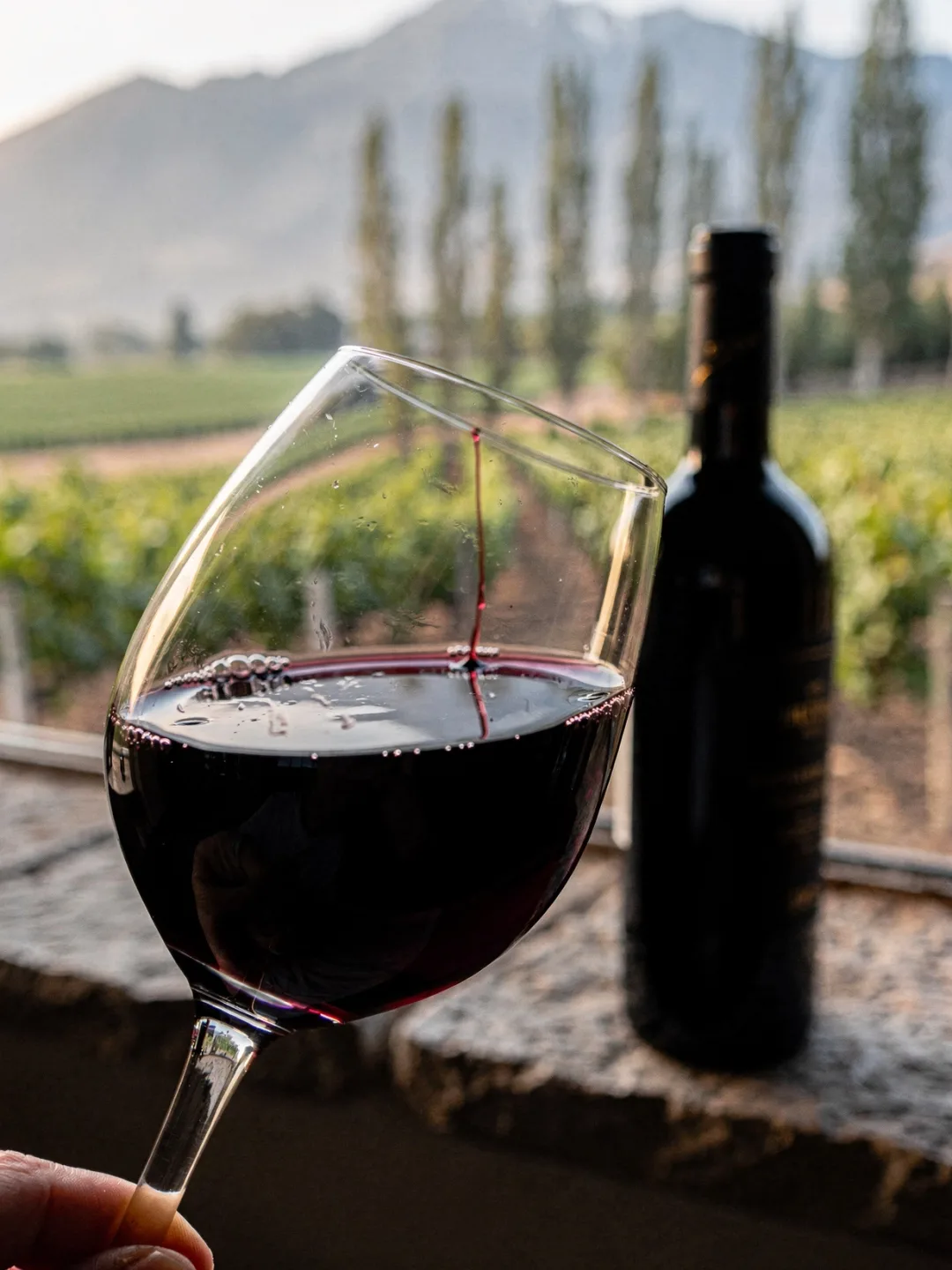
Take a glass of Cabernet Sauvignon from the Maipo Valley and tilt it against something light-colored. A young wine appears almost opaque, dark ruby to purple right to the rim, thick as ink. Only after many years in the cellar does the color at the outermost edge shift toward brick red, while the center often stays dark for decades.
Smell it twice: once with the glass still, once after swirling. At first, blackcurrant usually comes forward, dense and sweet, sometimes with a hint of tobacco. After swirling, many Maipo wines reveal a cool, almost camphor-like note: eucalyptus or mint, caused by an aroma compound called cineole that migrates into the grapes from the eucalyptus trees along the field edges. Once you've learned to recognize this note, you'll keep finding it in Maipo Cabernets.
In the mouth, pay attention to two things separately. You'll feel the tannin as a dry, almost chalky coating on the gums, firm but rarely coarse. The acidity pushes back along the sides of the tongue, fresh enough to keep the dense fruit from feeling heavy. If Carmenère is part of the blend, a note of black pepper often joins in. Sometimes a faint trace of green bell pepper lingers, a sign that the grapes weren't left to reach full ripeness.
Finally, count. How long does the flavor linger after you swallow? With a Cabernet from Alto Maipo, grown on the lean gravel of the foothills, twenty seconds or more is not unusual. Dark fruit slowly gives way to herbs and toasty oak notes. This length comes from small, concentrated berries and from vines that had to dig deep into the soil just to find enough water.