Chancho and Choclo
Wine & Food
Maule's cuisine is country cooking, hearty and without much fuss, and Secano wine fits it perfectly. Both come from people who had little water and plenty of patience. A wine with high acidity and firm tannin calls for food with fat or spice, or it comes across as harsh. That's exactly what the region delivers in abundance.
Chancho en Piedra shows up on almost every table, a coarse stone-mortar paste of tomato, garlic, onion, and hot chili, eaten with fresh bread. A young Cinsault or a chilled Pipeño cuts through the heat without getting scorched itself. A heavy, tannin-rich wine would struggle against this heat and lose, since its tannin would only amplify the spice rather than tame it the way the Cinsault's lighter, fresher acidity does.
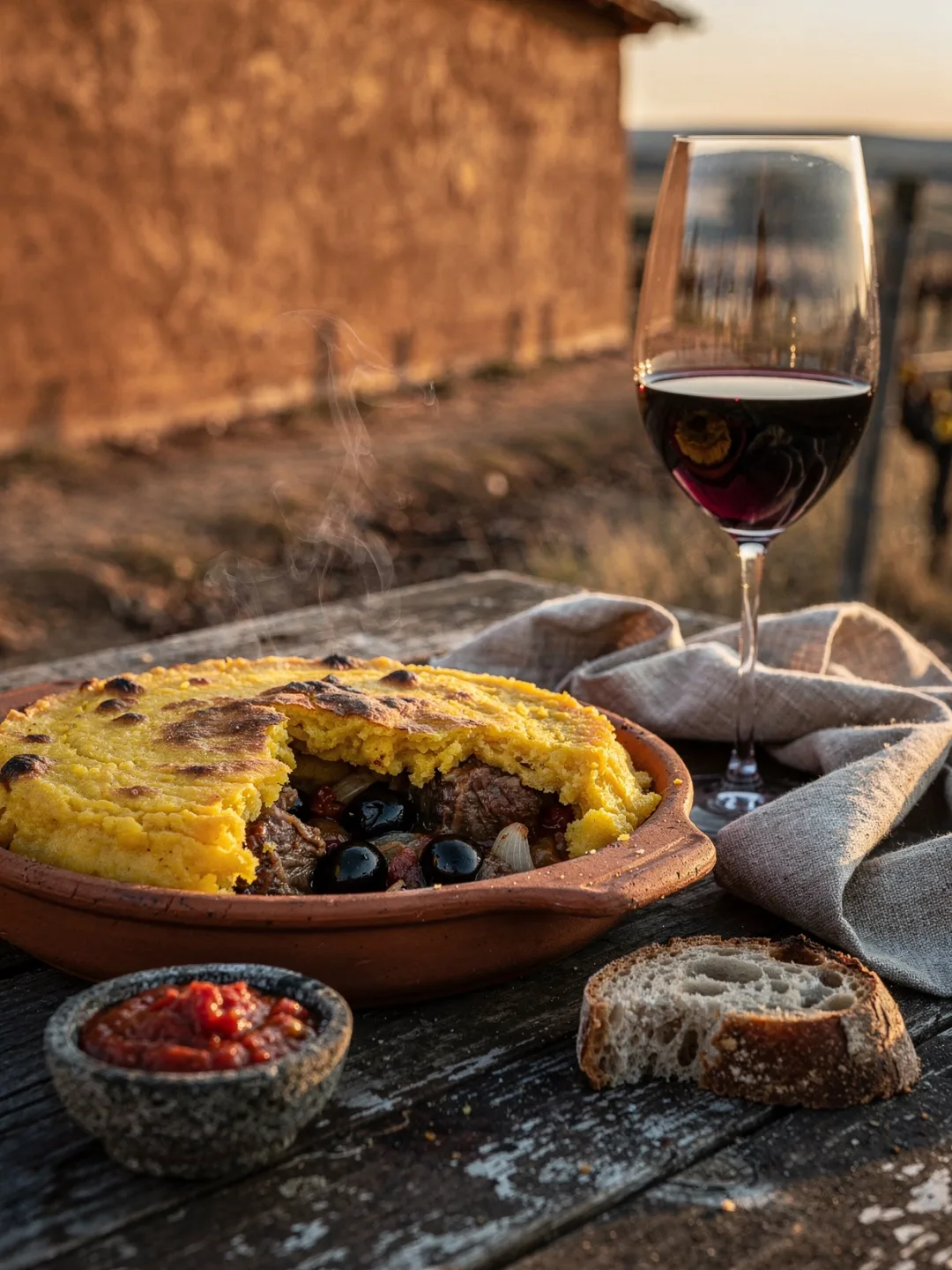
Pastel de choclo, on the other hand, calls for a VIGNO Carignan. Beneath a sweet cap of mashed corn lies ground meat, chicken, an olive, and a raisin. Sweet, salty, and rich all at once, everything on a single forkful. The tannin of the old-vine Carignan holds its own. Its fruit harmonizes with the sweetness of the corn rather than fighting against it.
On the coast near Constitución, where the Maule flows into the sea, Lisa a la Teja is cooked between two glowing roof tiles, seasoned only with salt, garlic, and butter. The heavy Carignan from the hillside would be out of place here. Better suited is a young, chilled wine from the valley floor. It carries the butter instead of overwhelming it.
In September, when Chile celebrates its Fiestas Patrias, the ramadas fill up with anticuchos, empanadas, and liters of Pipeño. Some mix it with pineapple ice cream and grenadine to make what's called a Terremoto. The name means earthquake. Anyone who knows the history of this valley won't find that a coincidence, but a fitting reminder of everything the Maule has endured for its wine.