Sauerbraten & Game
Wine & Food
The cuisine on the Ahr is hearty, and the wine that goes with it is too. Both have grown at the same table over centuries, not been paired together afterward. Whoever eats in the Ahr Valley mostly eats what the vineyard leaves behind: game, potatoes, beef.
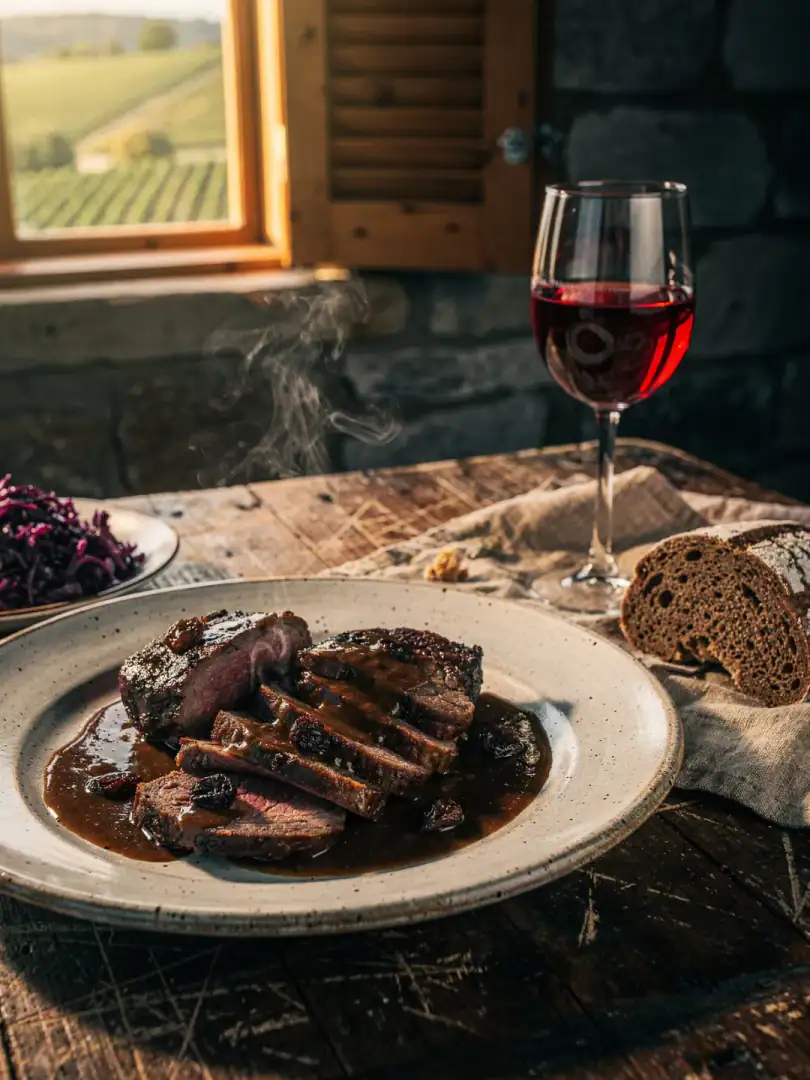
Rhenish Sauerbraten, marinated for days in vinegar and spices and lightly sweetened with raisins, calls for a wine that can absorb its sweet-and-sour character. It shouldn't fight against it. A Frühburgunder, with its pale, fruity nature, often suits it better than the more powerful Spätburgunder, whose tannin can come across as harsh against the sweetness of the roast.
With Döppekooche, the hearty potato cake made of grated raw potatoes, egg, and onions, a simple, uncomplicated village wine is the right match. The potato flavor needs no competition, just a partner. It's different with venison or wild boar from the forests of the Eifel. Here, a powerful, barrique-aged Spätburgunder from a Große Lage is called for, its tannin able to stand up to the game's flavor.
Even a hearty homemade bratwurst from the wine festival doesn't ask for much: a simple, young Spätburgunder from Dernau or Rech does the job perfectly, as long as it's served cool enough. With spicy cheese, the same rule applies here as everywhere else: salt softens tannin. A young, still slightly rough Spätburgunder suddenly seems rounder and more approachable next to mature hard cheese—almost like a different wine altogether.
If you only remember one sentence, make it this one: on the Ahr, people eat hearty food because the wine brings the acidity and tannin that fat and sweetness need to avoid tasting flat. That was true long before anyone coined the term food pairing.