On a Spätburgunder
Tasting
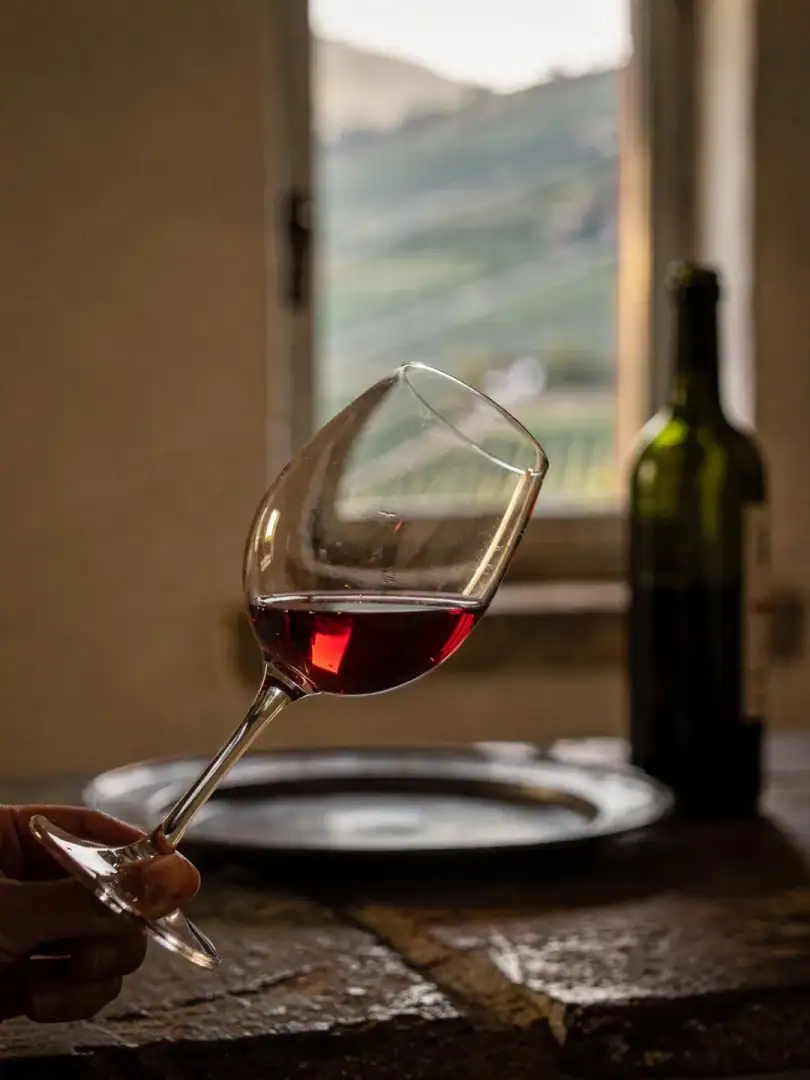
Hold a glass of Ahr Spätburgunder at an angle against something white. The color is pale for a red wine, often more ruby than garnet, almost translucent at the rim. This isn't a weakness — it's the nature of this grape on this rock.
Smell first into the still glass, then after swirling, because each reveals something different. At first, fruit usually comes forward: sour cherry, sometimes wild strawberry, and in young wines, redcurrant too. After swirling comes what evaporates less readily — a hint of cocoa from the barrique, occasionally something earthy. Many describe this as a slate note, though the root itself doesn't simply pass minerals straight into the glass, because what arrives there is only a detour through the soil's warmth and water balance, not a direct transport from rock into grape.
In the mouth, pay attention to the acidity first. It sits along the sides of the tongue, gets the saliva flowing, and makes the wine lively rather than heavy — a legacy of the cool nights that keep the grape fresh. The tannin, by contrast, you feel as a fine, almost velvety coating on the gums. It rarely feels hard or coarse, because the berry's thin skin simply doesn't supply enough of it to turn edgy.
Set a Frühburgunder next to it. The difference is immediately obvious. It's paler, more fragrant, almost reminiscent of raspberry, with less tannin and greater drinkability. This is a wine for the first sip on a warm evening in the Ahr Valley, while the more powerful Spätburgunder belongs more with food.
Finally, count how long the flavor lingers after you swallow. With a simple village wine, it might be five seconds. With a Spätburgunder from a VDP.Große Lage, it can be twenty seconds or more. This length can hardly be manufactured in the cellar — it comes from the steep site and nothing else.