From Hand to Barrel
Production
No harvesting machine drives on slopes as steep as the Ahr's. Where the gradient reaches fifty percent, every grape is cut by hand. It travels down the slope in tubs or on someone's back — a labor investment many times greater than what's standard on flat land.
In the cellar, time on the skins decides almost everything. Spätburgunder's color is naturally pale. That's why many winegrowers once let the mash sit only briefly — resulting in the pale, sweetish wine the Ahr was long known for. Since Werner Näkel had it macerate longer and age in barriques in the 1980s, things have stood differently. Grapes today often sit on the skins for two to three weeks, sometimes with a portion of whole clusters, stems included, for extra tannin.
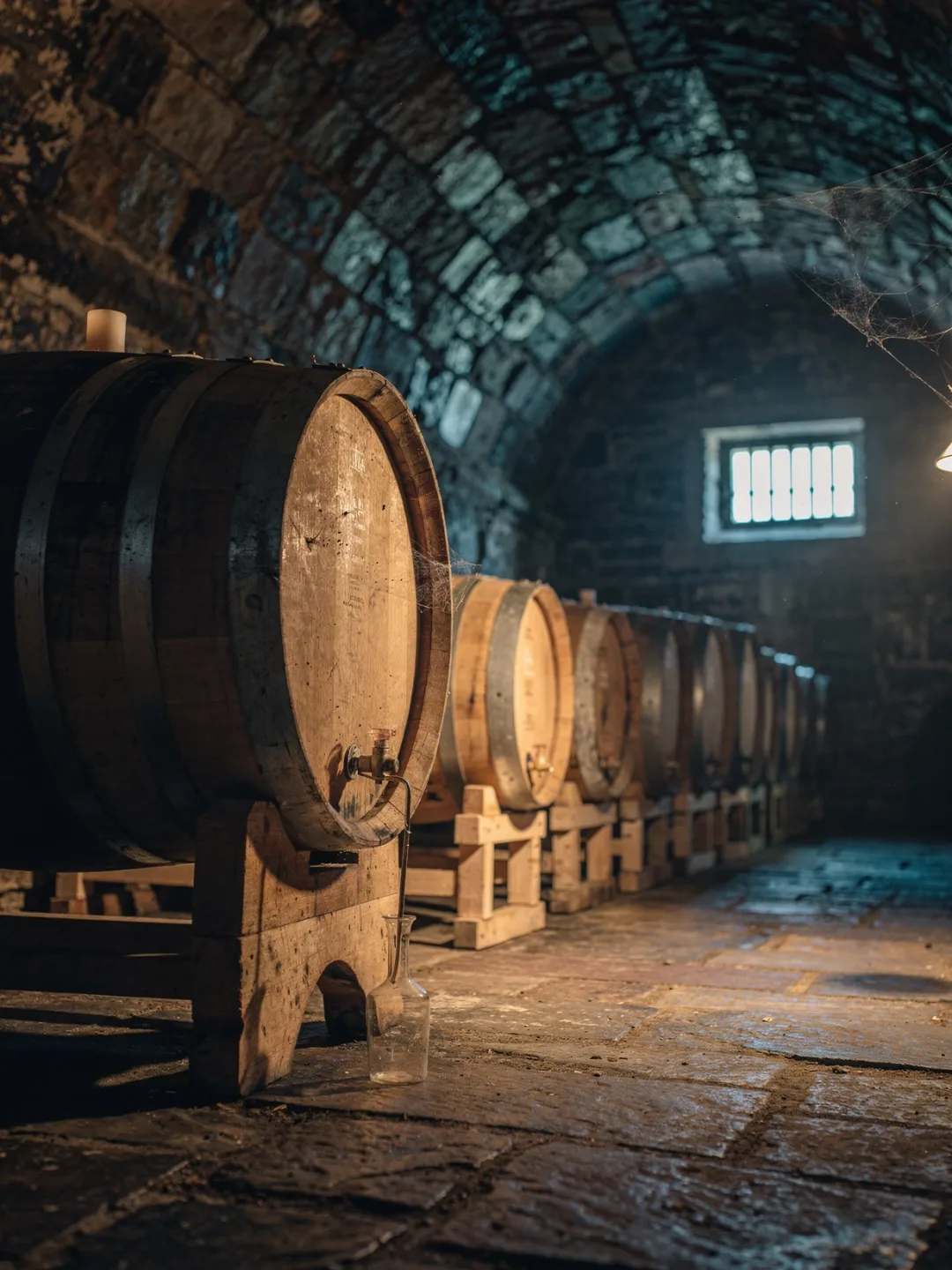
After that comes the wood, and estates go different ways. Many age their Spätburgunder in small 225-liter barriques, a good share of them new. This contributes toasted aromas and delicate vanilla notes. Others rely on larger, used casks that impart hardly any flavor of their own and merely allow slow maturation — more purist, but less conspicuous in the result.
Frühburgunder demands more sensitivity than its later-ripening relative. Its berries are small and thin-skinned, the yield low. Press too hard or macerate too long, and you lose exactly the fine, pale fruit that distinguishes this rare variety. That's why it remains largely handwork, in the smallest quantities.
For some years now, the Ahr has also ranked its best sites through the private VDP classification. Only Spätburgunder and Frühburgunder may compete there as VDP.Große Lage, the highest tier. It's reserved for dry-style wine from a single, precisely named site. A middle tier called Erste Lage deliberately doesn't exist on the Ahr — with 43 individual sites across a good five hundred hectares, the distinctions would be too fine for a clear difference.