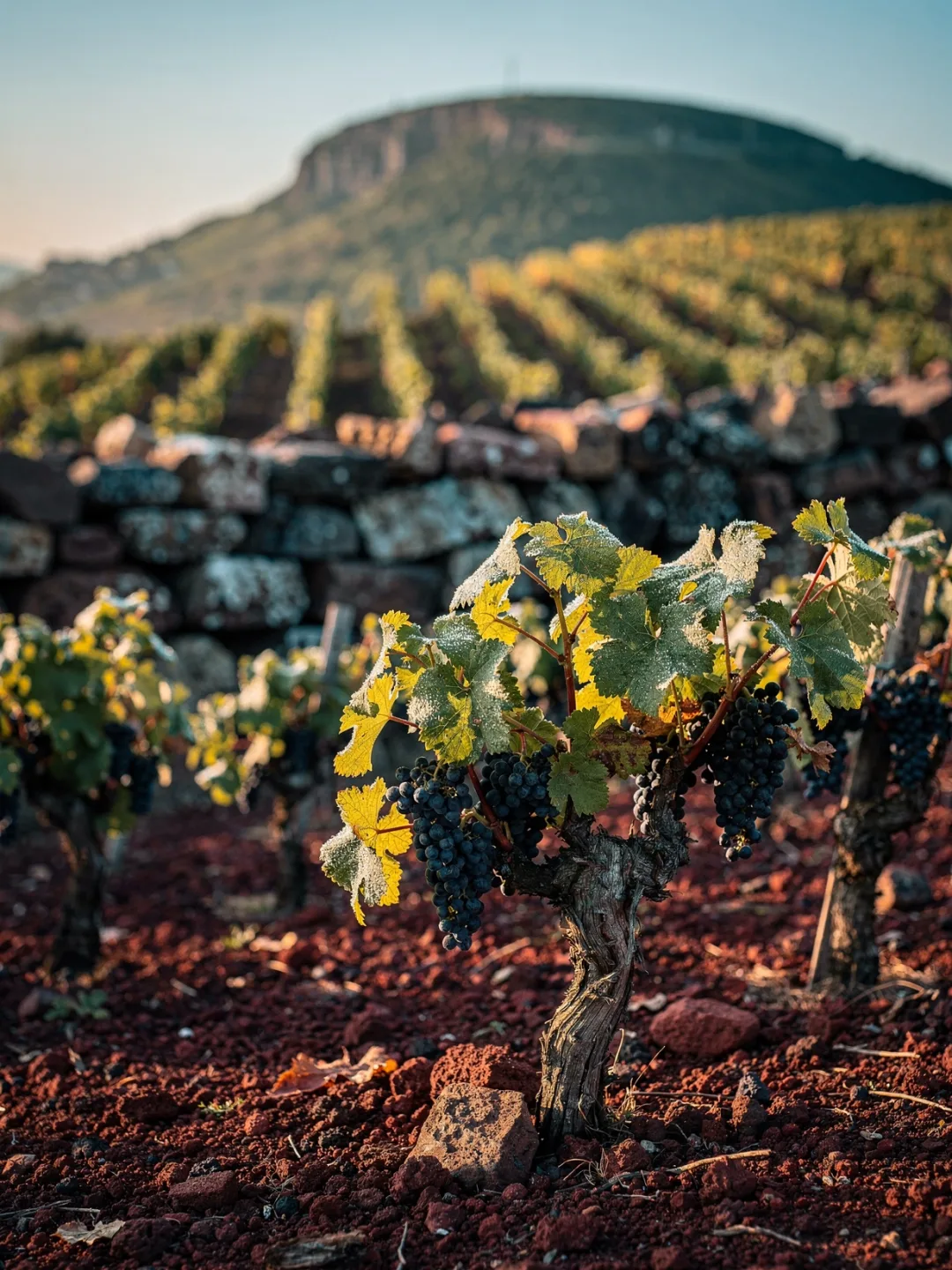
Spätburgunder and Gutedel
Grape Varieties
One grape variety shapes Baden like no other. Spätburgunder grows on roughly five thousand hectares, nearly a third of Baden's total vineyard area of about fifteen thousand hectares, more than in any other German wine region. Add up the entire Pinot family, including Pinot Gris and Pinot Blanc, and you reach nearly two-thirds of the total area. Plainly put, Baden is Pinot country.
In the far south, a different rule applies. In the Markgräflerland, between the Kaiserstuhl and Basel, Gutedel dominates, a mild, robust white variety with low acidity and easy drinkability. Until around 1830, it crowded out almost every other vine there, even Spätburgunder itself. When a Markgräfler winemaker talks about "the wine," they almost always mean Gutedel.
In the Ortenau, everything revolves around Riesling instead, known locally as Klingelberger after the steep slope by Schloss Staufenberg in Durbach. Granite weathering makes it softer and less austere than its cousins from the Mosel, with more ripe apple aroma than green citrus zest. The people of Durbach even have their own name for the Traminer grown there: Clevner. Two villages, two nearly private grape-naming traditions.
Up north, in Tauberfranken and the Kraichgau, it's a different world again. There, Müller-Thurgau and Silvaner set the tone, unspectacular and dependable, made for the everyday table rather than the wine list. Less than a hundred and fifty kilometers separate a Klingelberger from Durbach and a Silvaner from the Tauber valley, yet they belong to two completely different wine landscapes.