Germany's Warmest Corner
Climate
Baden is the only German wine region legally classified as warm. The European Union divides winegrowing into climate zones. Every other German region belongs to the cooler Zone A; only Baden falls into the warmer Zone B, alongside Alsace. The rule behind this is simple: in Zone A, must may be enriched with up to three percent alcohol by volume, but in Zone B only two. Baden's winemakers therefore have less room to boost their wine's strength in the cellar afterward, because their grapes already bring that strength in from the vineyard.
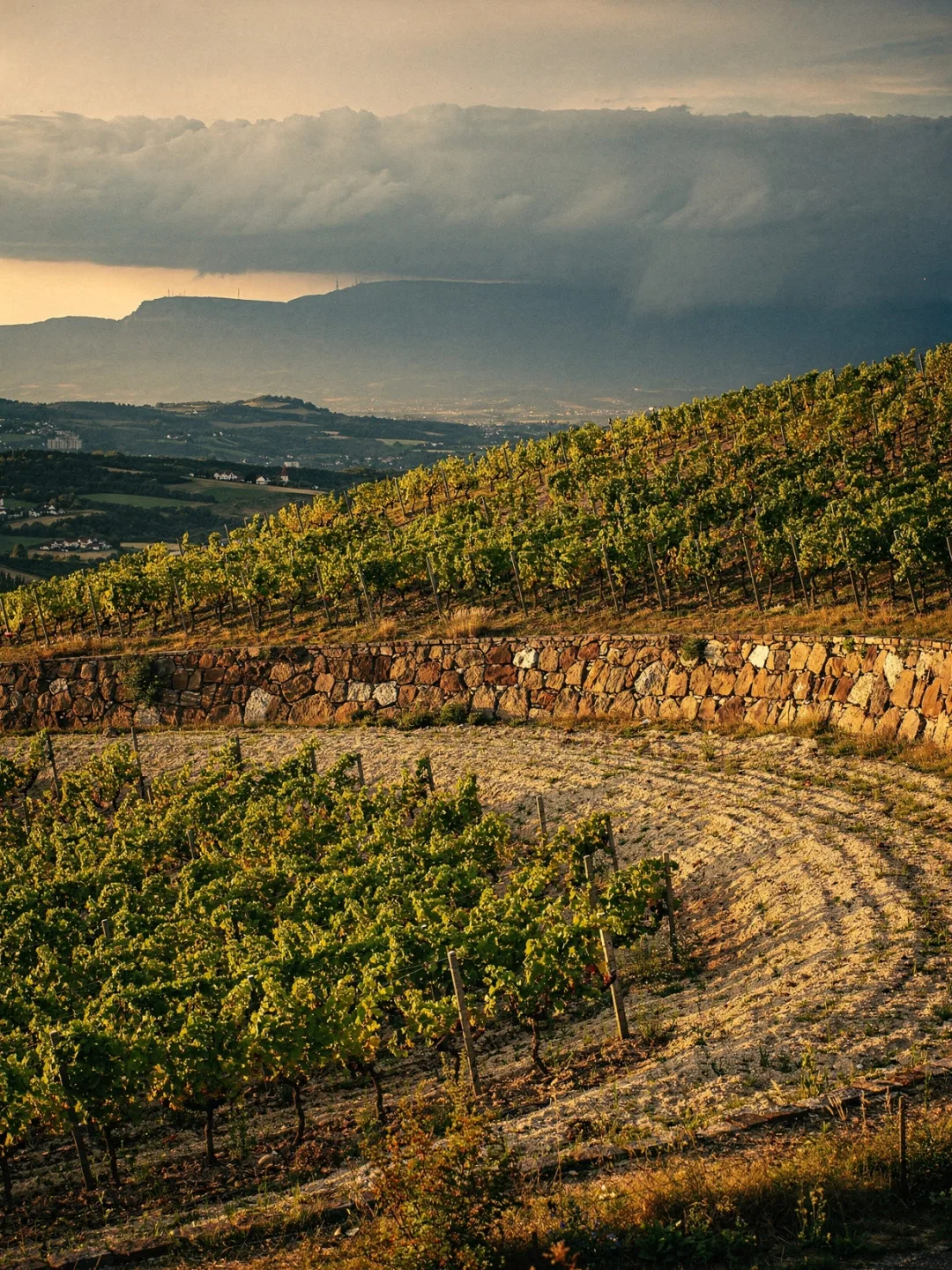
This shows most clearly at the Kaiserstuhl. With more than seventeen hundred hours of sunshine a year, it's the sunniest corner of Germany. The town of Ihringen, at the foot of this volcanic hill, is unofficially considered the warmest spot in the whole country, though the German Weather Service doesn't confirm this officially. The Vosges Mountains to the west intercept much of the rain before it reaches the Upper Rhine. What does arrive often comes as a dry, warm downslope wind.
Still, it's not a gentle climate. At the Kaiserstuhl, the average difference between the coldest and warmest month is a good eighteen degrees Celsius. Even single days swing wildly, because the stony, dark soil absorbs heat during the day and releases it again at night, so the vines never fully rest. For Spätburgunder, that's a stroke of luck: ripening advances during the day, while the acidity doesn't simply melt away at night.
Four hundred kilometers to the north, in Tauberfranken, the equation looks different. There, the climate is noticeably more continental, with colder winters and a shorter ripening season. It's just one more reminder that Baden doesn't have a single climate, but a long chain of them, stretching from Lake Constance to the Tauber valley.