On a Spätburgunder
Tasting
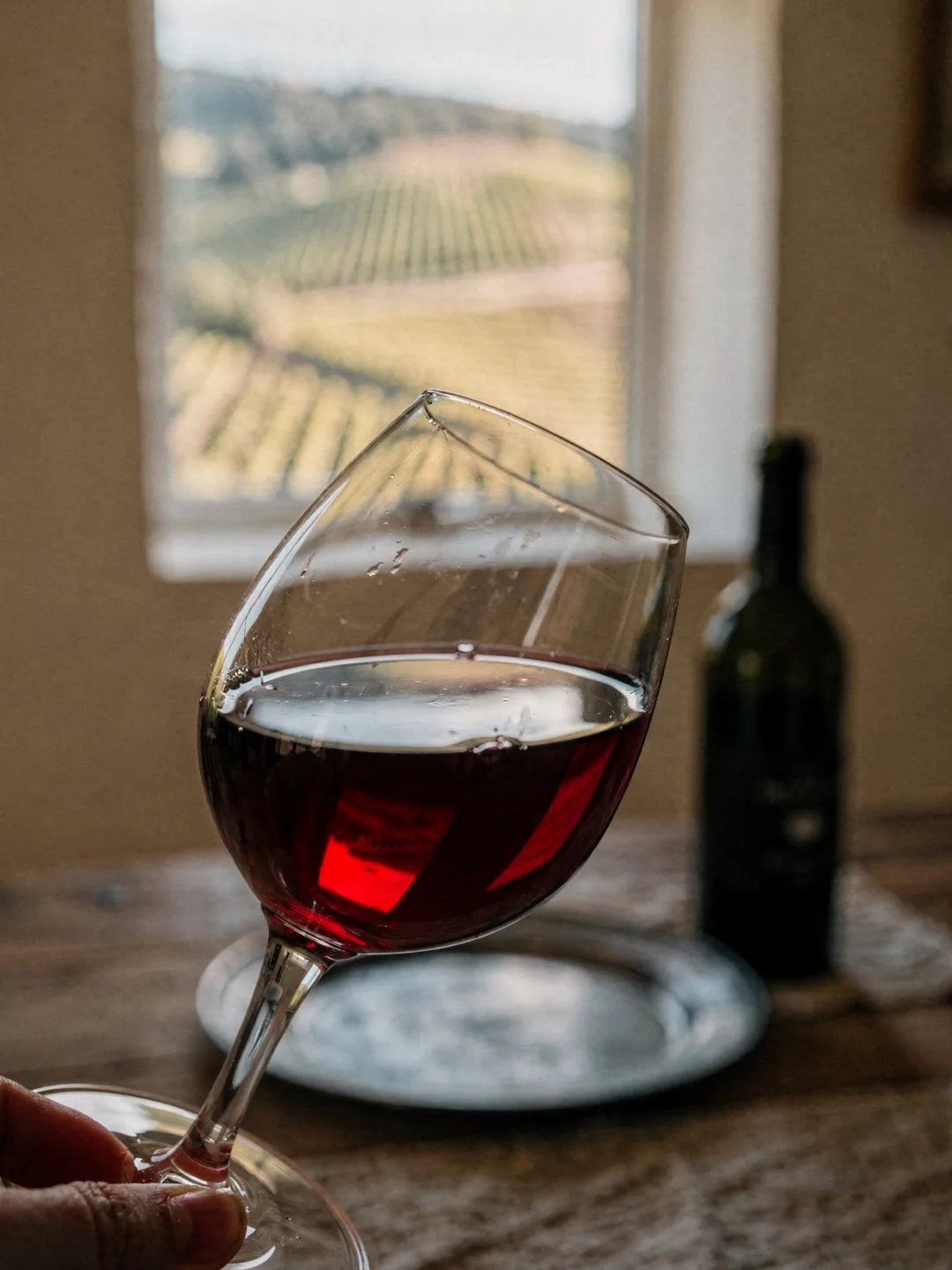
Take a glass of Baden Spätburgunder from the Kaiserstuhl and hold it against something white. The color is paler than a Bordeaux. But it's more intense than a Spätburgunder from the Ahr, a compromise forced by the warm climate. Young vintages shine ruby red with a violet rim, and after ten years the color shifts toward brick red.
On the Kaiserstuhl, Spätburgunder grows on volcanic soil, and some tasters claim to detect a smoky, almost earthy note that's absent elsewhere. Whether this really comes from the rock or rather from grape ripeness and barrique aging is a matter of debate even among experts. What's certain is the core: sour cherry, sometimes wild strawberry, and in the background a hint of warm spice from the oak cask.
On the palate, the origin reveals itself through balance. The acidity is there, but more subdued. Compared to a cool-climate Spätburgunder from the Mosel, this is a side effect of the sunshine hours that give the Kaiserstuhl its reputation as the warmest corner of Germany. The tannin is usually fine and almost sweet, since the grapes ripen effortlessly in warm years.
For comparison, it's worth trying a glass of Gutedel from the neighboring Markgräflerland. It barely has a nose. It tastes of little beyond clear, cool water with a hint of almond, and that's exactly its purpose: an everyday wine that doesn't want to be the center of attention. Between these two glasses lies the entire range of Baden wine, from top vineyard sites to the simple Straußenwein meant just to accompany good conversation.