Fränkisch Trocken
Production
As almost everywhere, Franconian wine is first divided by color. The rule is always the same: if the skins stay in during pressing, the wine turns red; if the juice is drawn off the skins immediately, it stays pale. With Silvaner and the other white varieties, which cover a good four-fifths of the acreage, the answer is clear. Off to the press as soon as the grapes reach the cellar.
After that, it's mainly about one thing: preserving freshness. Silvaner usually ferments in stainless steel tanks at cool temperatures, without any wood contact, which would otherwise mask its fine apple and herb notes. The tank stays neutral. Some estates leave part of the wine on the lees, the spent yeast cells left after fermentation, because this gives the wine more fullness. A compromise between freshness and weight that every cellar resolves differently.
One Franconian peculiarity concerns sugar. German wine may be labeled "trocken" (dry) if no more than nine grams of residual sugar per liter remain, provided the acidity balances it out. The term "fränkisch trocken" is stricter: no more than four grams, with no exception for high acidity. Roughly a quarter of Franconia's annually certified wines meet this stricter standard, and you can taste the difference as a clearer, less rounded finish.
Above the basic quality tier, a dedicated vineyard classification has existed for some years. The Verband Deutscher Prädikatsweingüter (VDP) divides Franconia's best vineyards into four tiers — Gutswein, Ortswein, Erste Lage, Große Lage. They are named for the precision of their origin, not the sugar content of the grapes. Dry wine from a Große Lage is called Großes Gewächs; from an Erste Lage, Erstes Gewächs. For the highest tier, only four varieties are permitted in Franconia: Riesling, Silvaner, Spätburgunder, and Weißburgunder.
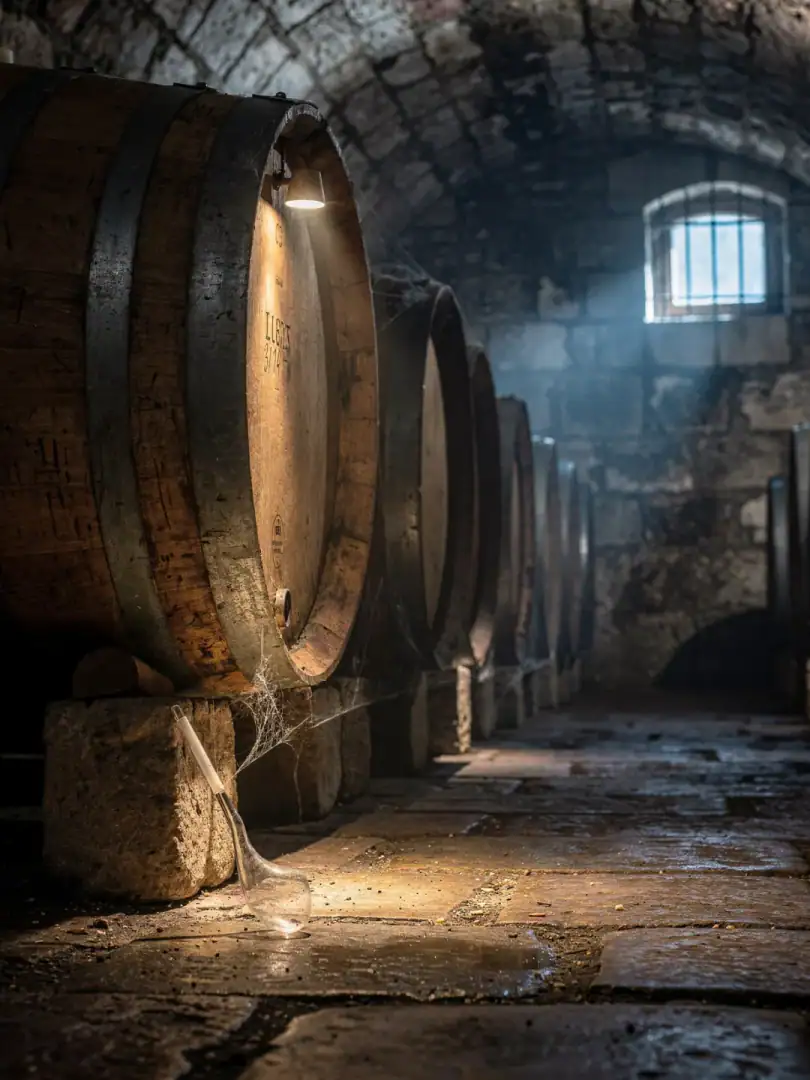
With Domina and Spätburgunder, by contrast, the skins remain in the vat for days so that color and tannin transfer into the wine. Many estates then age their red wines in small oak barrels, some in large old Stückfass casks that impart almost no flavor of their own. In the end, it always comes down to the same choice: how much of the cellar should still be tasted in the glass, and how much of the limestone, the Main, and the sun must remain. None of that can be forced.