On a Silvaner
Tasting
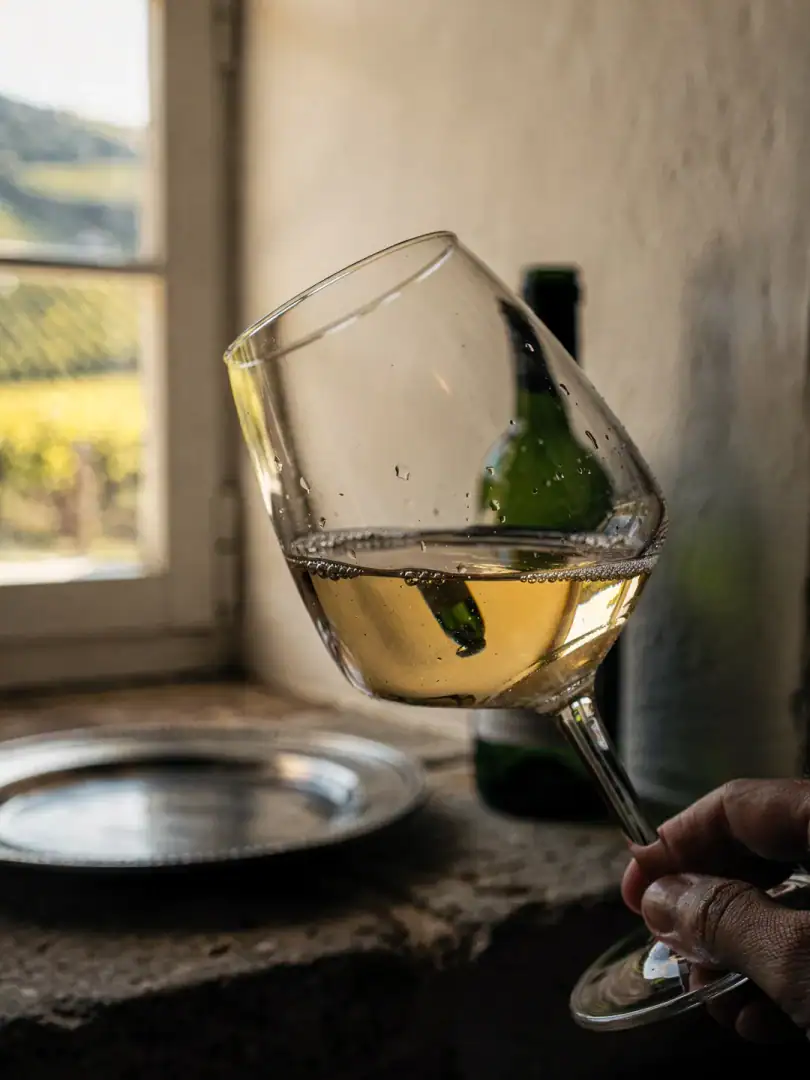
Hold a glass of Franconian Silvaner against a white sheet of paper. The color ranges from pale straw yellow to a delicate green-gold. The paler it is, the younger the wine usually is — Silvaner darkens little with age, unlike many other white wines.
The aroma requires patience. Silvaner doesn't push itself forward, so swirl the glass twice before judging: once gently, once vigorously. Usually green apple comes first, then something herbal — freshly mown grass, sometimes a hint of mint — and underneath, barely perceptible, an impression of stone. Anyone comparing this quiet aroma to a loud Sauvignon Blanc will be disappointed. That's not the point of this variety.
On the palate, it becomes clear why the soil matters so much. Silvaner from Muschelkalk vineyards like the Würzburger Stein has a noticeably saline note on the finish, which has nothing to do with table salt but everything to do with the way limestone retains water in the soil. The acidity is moderate, never as sharp as in Riesling. Instead, the wine carries more weight on the tongue — you can tell there's substance here, even if the aroma remained reserved.
In the end, count. How long does the flavor linger after you swallow? With a simple Silvaner, it's a few seconds; with a Großes Gewächs from Muschelkalk, often more than twenty. This length can't be faked in the cellar — it comes from the vineyard, or not at all.
If you taste a Domina afterward, the picture flips completely. Dark cherry-red instead of straw yellow, noticeable tannin instead of salinity, an aroma of ripe cherry instead of green apple. Two wines from the same region that could hardly differ more in the glass — and that's exactly what shows how wide Franconia's range truly is, from Silvaner to red wine.