Asparagus and Steinkopf
Wine & Food
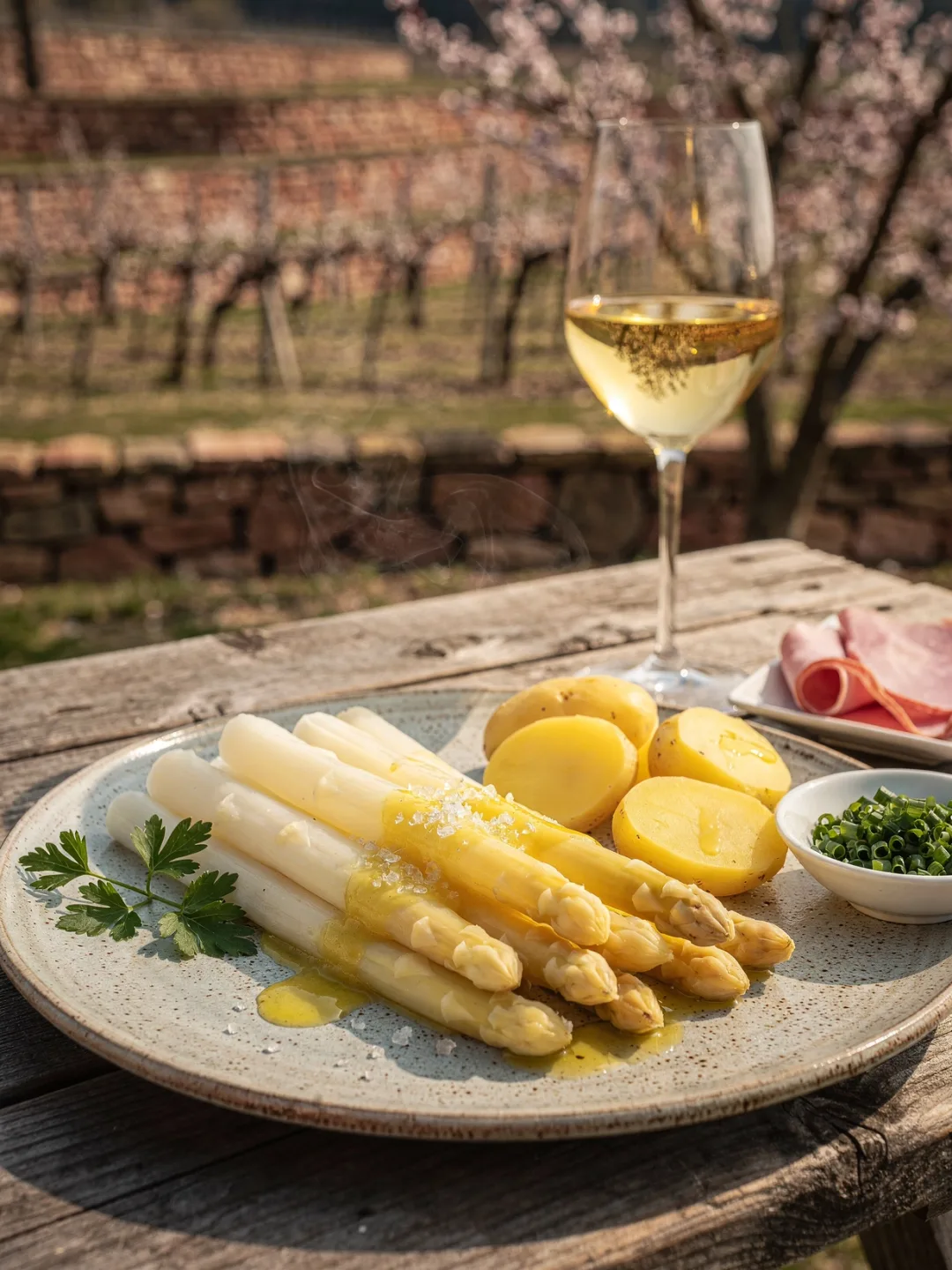
When the almond blossoms fade along the Bergstrasse in April, the region's second season begins: asparagus. White and green asparagus grow here on the same sandy, warm soils that the vines also love. Riesling has been its natural companion for generations. Its acidity cuts through the butter or hollandaise sauce that asparagus is usually served with, without masking its delicate, slightly bitter note.
The principle behind this is simple: fat needs a counterpart, or a dish ends up feeling heavy and dull, and a Riesling from Steinkopf, with its powerful, almost razor-sharp acidity, does exactly that. It cleanses the palate between bites, so the next one tastes just as fresh as the first.
Later in the year, cherries and strawberries arrive from the same orchard meadows that carry the almond blossoms in spring. A dry Riesling no longer suits a dessert of Bergstrasse cherries. Here, an Auslese is needed. Or, in good years, the Eiswein from Heppenheim, whose concentrated sweetness must surpass that of the fruit, or the wine will taste thin and sour next to it.
Handkäs mit Musik, on the other hand, pairs better with Roter Riesling. This hearty soured-milk cheese with onions, caraway, and a vinegar-oil marinade is a fixture on every Hessian menu. Its richer, more full-bodied character holds up better against the sharpness of the onions and the tangy acidity of the cheese than a lean, light white wine could.
Anyone eating and drinking along the Bergstrasse quickly notices: both come from the same slopes. The asparagus grows in the same mild climate in which the Riesling ripens. The cherries blossom along the same roads where the almonds bloomed back in March. This is no coincidence, and it's not marketing either. It's simply the landscape landing on the plate the same way it lands in the glass.